
The Definitive List of Integrated Manufacturing Control Platforms
Your Shop Floor Is Generating Data — But Is Anyone Acting on It?
An all-in-one manufacturing control tool is a unified software platform that connects production planning, scheduling, inventory, quality, and maintenance into a single system — replacing the patchwork of spreadsheets, standalone apps, and paper logs that slow most shop floors down.
If you're evaluating options right now, here are the core capabilities an integrated manufacturing control platform should provide:
Capability Best For Key Strength Inventory Integration Mid-size manufacturers Real-time stock control + accounting sync Demand Forecasting Growing operations ML-powered predictive analytics Autonomous Scheduling Large-scale production AI-driven recommendations for floor optimization Cloud Scalability Scalable operations Unlimited users and modular growth Real-time Visibility Teams outgrowing spreadsheets Fast implementation and instant stock data Compliance & Quality Precision shops Integrated quoting and quality standards Digital Lean Lean-focused shops Real-time process tracking without ERP replacement
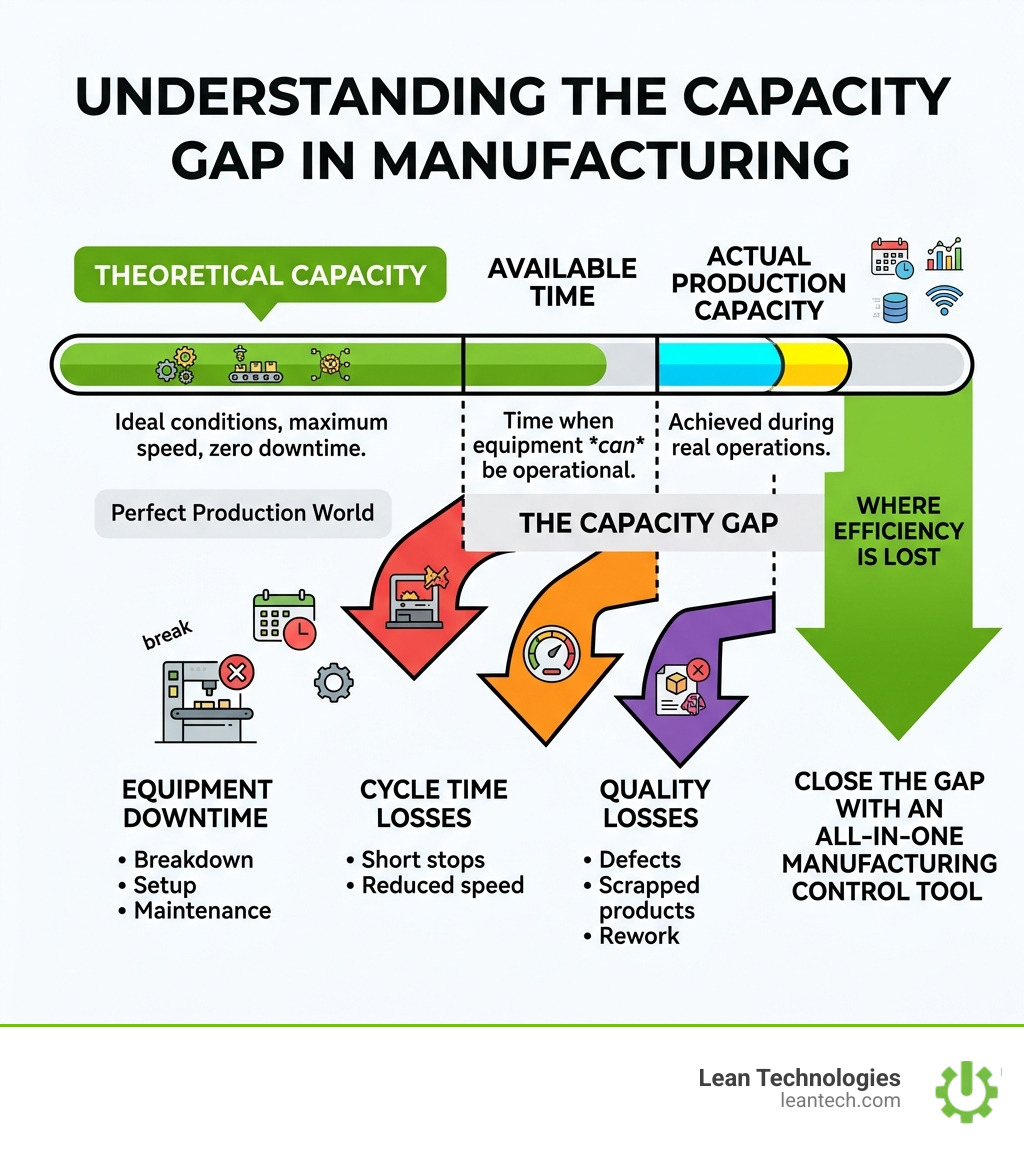
Here's the problem most operations managers run into: the tools exist, but the data doesn't.
Production plans get built on theoretical capacity. Operators log stoppages from memory at the end of a shift. Small stops and quality losses go unrecorded. By the time a planner sees the numbers, the window to act has already closed.
Real-time beats real-late — and that gap between what a plan assumes and what the floor actually delivers is where efficiency gets lost.
A modern all-in-one manufacturing control tool is designed to close that gap. It connects the people, the processes, and the data — so your team isn't reacting to problems, it's anticipating them.
What Defines a Modern All-in-One Manufacturing Control Tool?
In the past, manufacturers were forced to buy separate software for every department. You had an ERP (Enterprise Resource Planning) for the front office and finance, an MES (Manufacturing Execution System) for the shop floor, and maybe a standalone CMMS for the maintenance guys.
The result? Data silos. The office didn't know the machine was down, and the floor didn't know the ship date had moved.
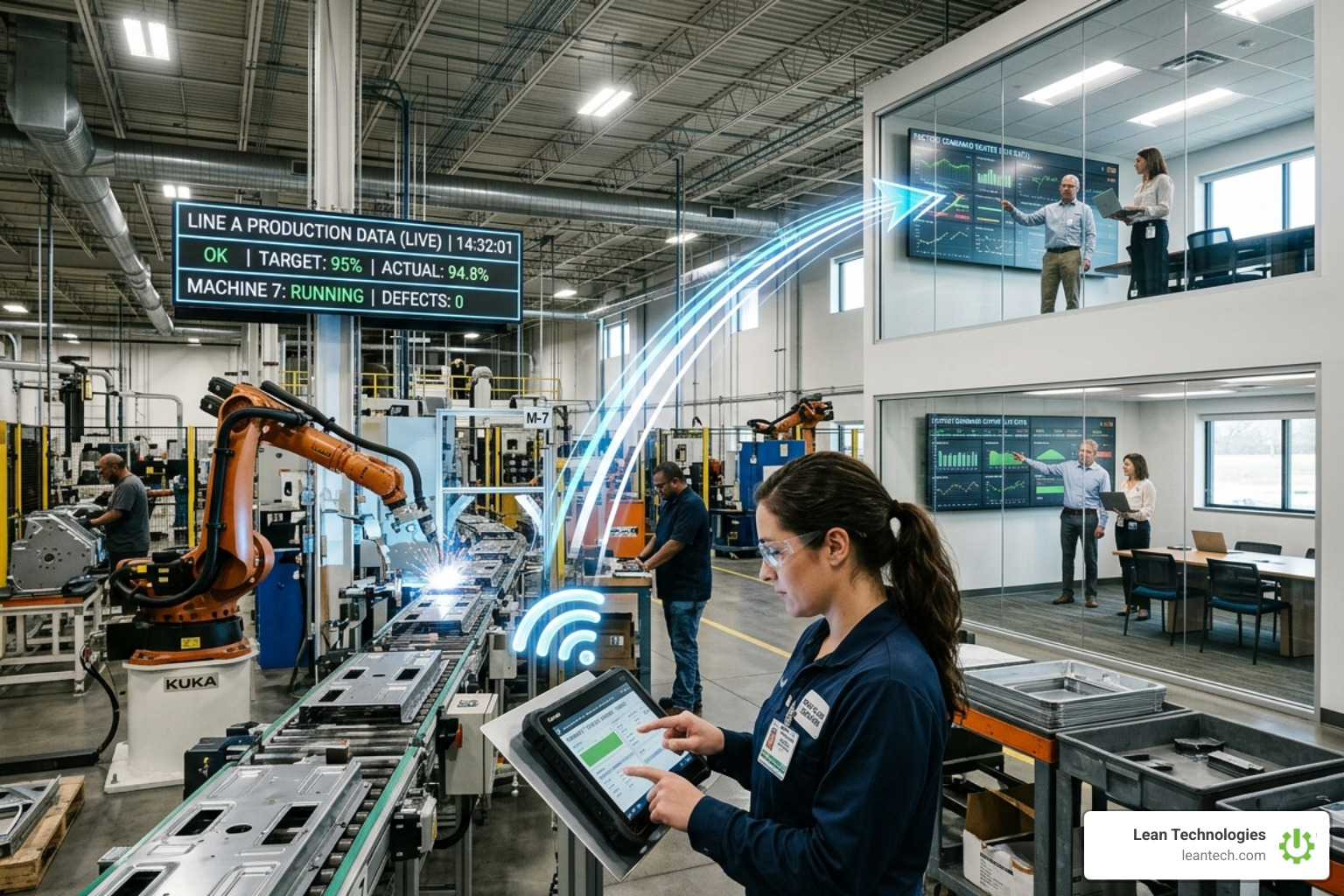
A modern all-in-one manufacturing control tool changes the game by centralizing these functions. Instead of jumping between tabs, your team operates from a single source of truth. This integration ensures that when an operator logs a defect on a tablet, the quality manager, production planner, and even the maintenance team are notified instantly. This level of manufacturing efficiency isn't just a luxury anymore; by April 2026, it's the baseline for staying competitive.
The Shift from Standalone to Unified Systems
Standalone tools create friction. When information is siloed, cross-functional collaboration dies. A unified platform breaks these barriers. For example, if a maintenance technician updates a work order in the CMMS, the production scheduler sees the reduced capacity immediately. This prevents the "over-promising" that leads to late deliveries and frustrated customers.
Real-time Visibility vs. End-of-Shift Reporting
Most shops are "real-late." They rely on paper logs that get keyed into Excel at 5:00 PM. By then, you’ve already lost eight hours of productivity. Unified tools prioritize mobile data entry. When operators can log issues on a tablet the second they happen, the leadership team gains immediate problem-solving capabilities. You move from "What happened yesterday?" to "What is happening right now?"
Core Functions of Integrated Control Platforms
What exactly does an all-in-one manufacturing control tool do? It’s more than just a digital calendar. It’s a comprehensive engine that drives every aspect of the shop floor.
Production Planning: Moving beyond gut feelings to data-driven forecasts.
Inventory Control: Tracking raw materials, WIP, and finished goods so you never run out of critical components.
Maintenance: Managing maintenance services and planned maintenance to maximize uptime.
Quality Assurance: Digital checklists and audits that ensure parts are right the first time.
Project Management: Tracking complex jobs through project management and project tracking modules.
Real-time Scheduling as an All-in-One Manufacturing Control Tool Feature
The heart of control is scheduling. Modern tools use constraint-based scheduling. This means the software doesn't just look at the calendar; it looks at machine availability, labor skills, and material arrival. If a machine breaks, the tool can perform dynamic routing, automatically shifting jobs to other available centers to keep the line moving.
Inventory and Material Coordination
Inventory is cash sitting on your floor. An integrated tool provides a "word of truth" for your stock levels. By linking parts management directly to work orders, the system can generate purchasing suggestions and requisitions before a shortage stops production. You gain visibility into Work-in-Progress (WIP), knowing exactly where every dollar is tied up at any given moment.
Solving the "Data Problem" with Automated Instrumentation
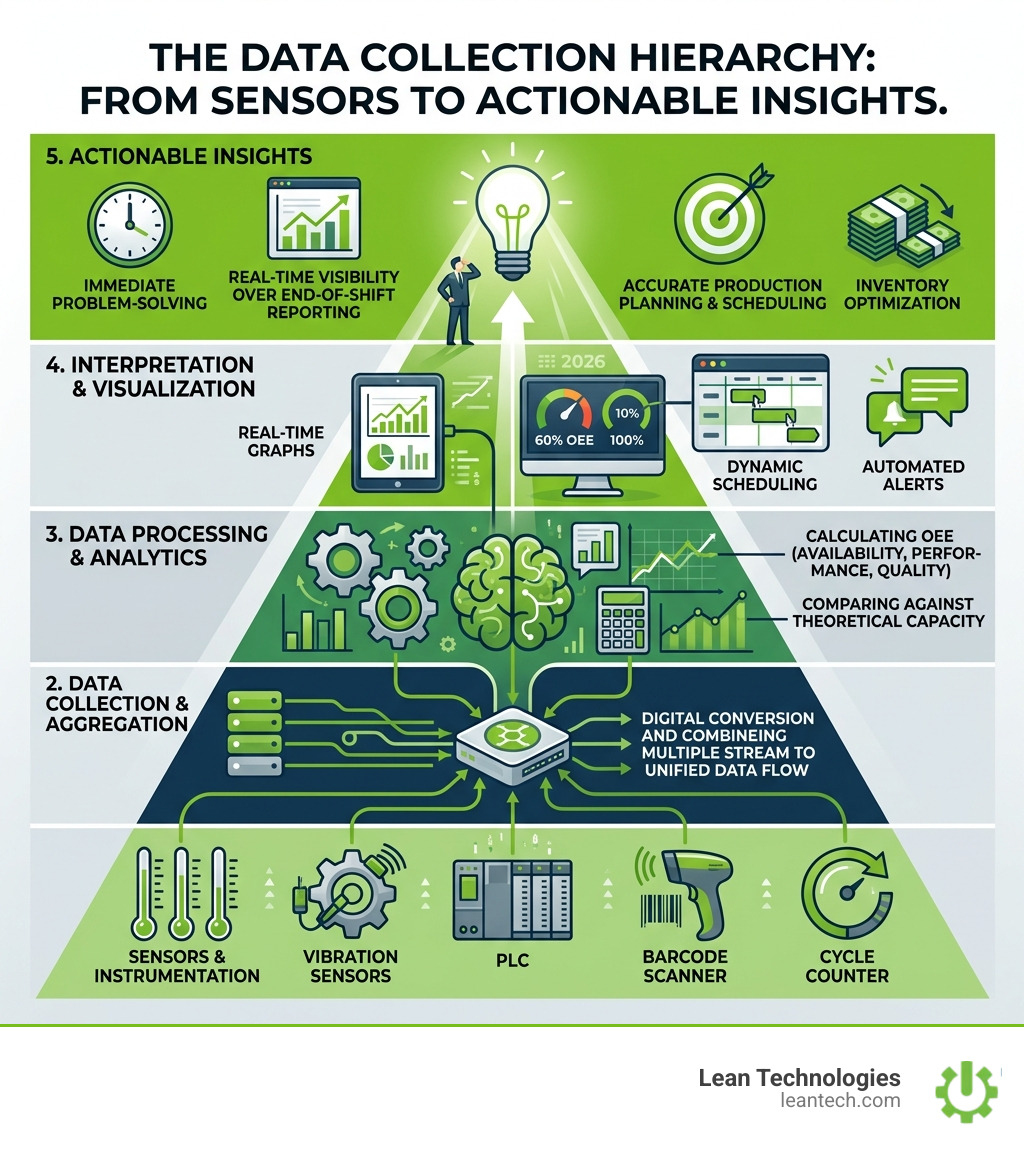
The biggest failure point in manufacturing software isn't the code—it’s the data. Manual logging is a recipe for errors. If an operator is trying to remember why a machine stopped three hours ago, they’ll probably just guess.
To solve this, many all-in-one tools now integrate with automated instrumentation. This includes:
PLC Readers: Pulling data directly from machine controllers.
Sensors: Monitoring vibration, temperature, or cycle counts.
Barcode Scanning: Using equipment asset tracking to eliminate manual typing.
The Role of OEE in Production Accuracy
Overall Equipment Effectiveness (OEE) is the gold standard for measuring capacity. Most planners schedule against "theoretical capacity" (e.g., this machine should run 100 parts an hour). But OEE tracks Availability, Performance, and Quality. If your actual OEE is 60%, but you’re scheduling at 100%, your plan is guaranteed to fail. An integrated tool pulls real-time OEE data so you can schedule against what the floor can actually handle.
Eliminating Manual Workarounds
Paper "travelers" get lost, stained, or ignored. Digital workflow tracking replaces them. When a job moves to the next station, the system updates automatically. If a quality issue arises, defect scrap tracking and nonconformance logs trigger automated alerts to the supervisor’s phone. No more walking the floor to find out what’s wrong.
Emerging Trends: AI and Sustainability in 2026
As of April 2026, we are seeing a massive shift toward Agentic AI. This isn't just a chatbot; these are AI agents that can look at a production delay and autonomously recommend a new schedule.
AI-Powered Capacity Planning
Modern integrated platforms are now using machine learning for multivariate forecasting. They look at historical sales, market trends, and even weather patterns to predict demand. For project-heavy shops, AI-driven what-if scenario analysis allows you to see the impact of taking on a new "hot" job before you say yes to the customer.
Sustainability and Compliance Readiness
With the rise of the Digital Product Passport in the EU and similar regulations globally, manufacturers must now track their carbon footprint. Integrated tools are adding features for energy-efficient scheduling—running power-hungry machines during off-peak hours—and providing detailed materials compliance reporting to meet safety and environmental standards.
How to Select Your Integrated Platform
Choosing an all-in-one manufacturing control tool is a high-stakes decision. You need a tool that fits your current size but can scale as you grow.
Feature Standalone Tools (Excel/Apps) Integrated Platform Data Entry Manual/Duplicate Single Entry/Automated Visibility Siloed/Delayed Centralized/Real-time Scalability Difficult/Messy Modular/Seamless Reporting Static/Manual Dynamic/AI-Powered
Evaluating the Best All-in-One Manufacturing Control Tool for Your Shop
Look for a mobile-first UX. If your operators find the software hard to use, they won't use it. Period. You also want to consider the Total Cost of Ownership (TCO). A "cheap" tool that requires $50k in custom coding to talk to your accounting software isn't actually cheap.
Implementation Best Practices
Implementation fails when it's treated as an "IT project." It must be a "Manufacturing project." Form a cross-functional team including maintenance, quality, and production. Use change management strategies to ensure the folks on the floor understand why the tool is being implemented.
Frequently Asked Questions about Manufacturing Control Tools
What is the difference between an ERP and an all-in-one manufacturing control tool?
Think of an ERP as the "brain" for the business office—it handles the money, the customers, and the high-level demand. An all-in-one manufacturing control tool is the "nervous system" for the shop floor. It handles the actual execution, the work request queue, and the minute-by-minute movements of the machines and people.
Can small manufacturers benefit from integrated control platforms?
Absolutely. In fact, small shops often benefit the most because they have fewer people wearing more hats. A tool that automates purchasing suggestions or training program tracking frees up the owner to focus on growing the business rather than chasing down paper logs.
How does real-time data improve production planning?
Without real-time data, you are planning based on "averages." Averages are dangerous. If a machine is trending toward a breakdown (which you'd know from PM gap reports), real-time data tells you to schedule the big job elsewhere. It turns your plan from a wish list into a reality.
In Summary
Stop managing your shop floor through spreadsheets and wishful thinking. The transition to an all-in-one manufacturing control tool is the single fastest way to gain visibility into your operations and hold your team accountable.
At Lean Technologies, we developed Thrive specifically for small to mid-size manufacturers who need to digitize their lean work processes without the nightmare of a multi-year ERP overhaul. Whether you need to tighten up Thrive Quality control, manage maintenance, or simply get your project management out of a notebook and into a dashboard, we’re here to help.
What to do next:
Audit your current logs. How much of your data is entered more than 4 hours after the event?
Identify your biggest bottleneck. Is it scheduling, maintenance, or quality?
Check out our Guide to Digital Lean Manufacturing to see how to start your digital transformation without the fluff.
Want faster problem-solving? It starts with better visibility. Let your team run lean—with real-time visibility and fewer workarounds.