
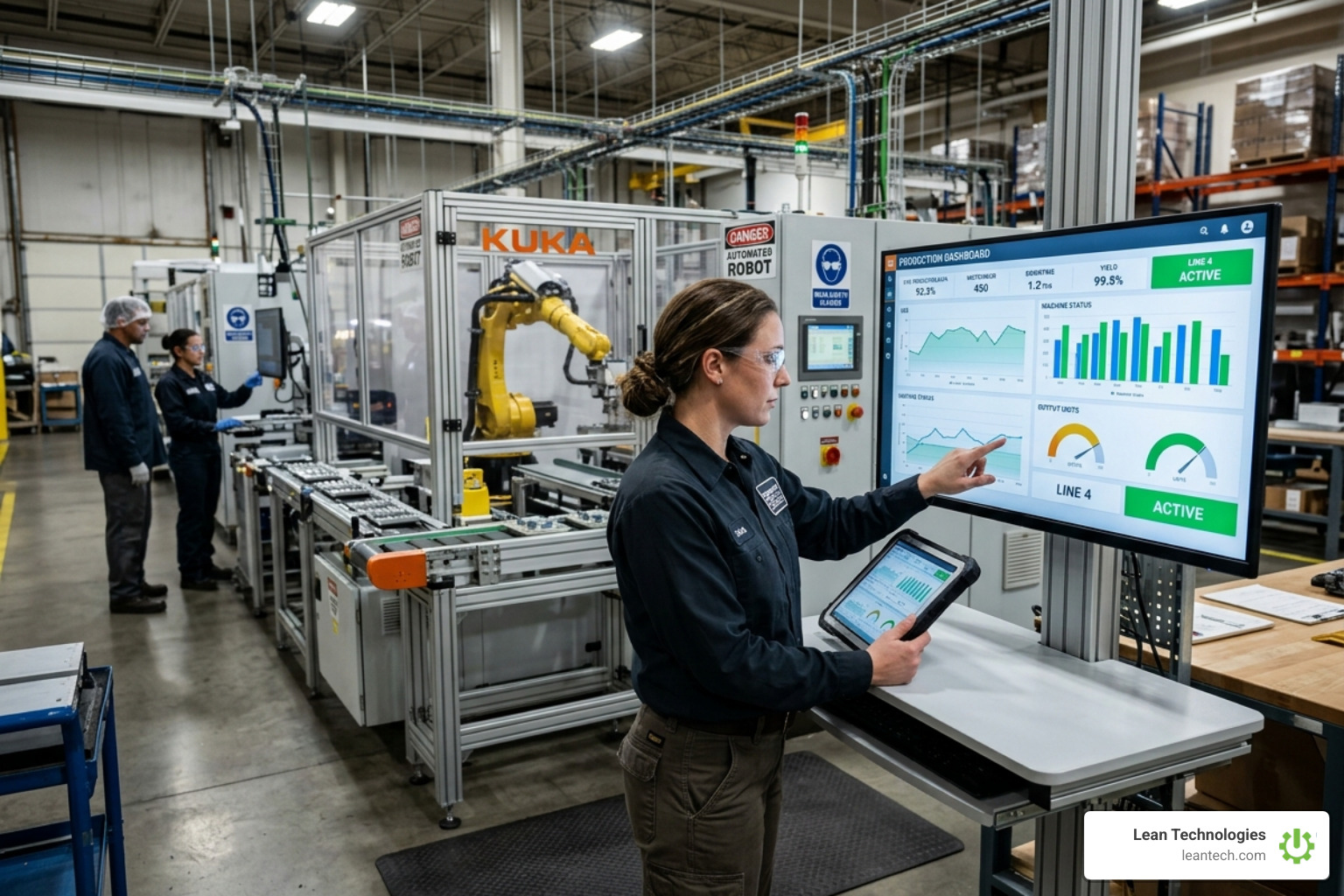
Cloud Based Production Software That Actually Works
The "Real-Late" Data Trap: Why Your Shop Floor Needs Cloud Based Production Software Now
Cloud based production software gives manufacturers real-time visibility into production, downtime, quality, and team accountability — from any device, without replacing your ERP.
Modern shop floor tools like Thrive are built specifically for SMB and mid-market manufacturers, focusing on digital lean principles and real-time visibility that traditional systems often miss.
Picture this: it's 4:45 PM. Your line stopped at 2:00 PM. You find out at the shift-change meeting — scrawled on a paper log that nobody could read.
That's not a visibility problem. That's a real-late data problem.
According to a 2024 PwC survey, 74% of top-performing manufacturers reported improved profitability after adopting cloud-based solutions, and 72% saw measurable productivity gains. The gap between those companies and the ones still running on clipboards and end-of-shift spreadsheets is widening — fast.
The core issue isn't that your team doesn't care. It's that the tools they're using can't keep up with the pace of the floor. Paper logs get filled out late. Excel sheets sit on someone's desktop until Friday. By the time a manager sees the data, the moment to act has already passed.
Cloud-based production software changes that equation. Instead of collecting data after the fact, your operators log it as it happens — on a tablet, a phone, or a workstation right on the floor. Instead of emailing reports up the chain, supervisors see live dashboards. Instead of hunting down who owns a corrective action, the system tells you — and holds them accountable.
Real-time beats real-late. Every time.
This isn't about replacing your ERP or ripping out your existing systems. It's about filling the gap between what your ERP tracks (orders, inventory, financials) and what actually happens between the planned and the actual on your shop floor.
Why Manufacturers are Switching to Cloud Based Production Software
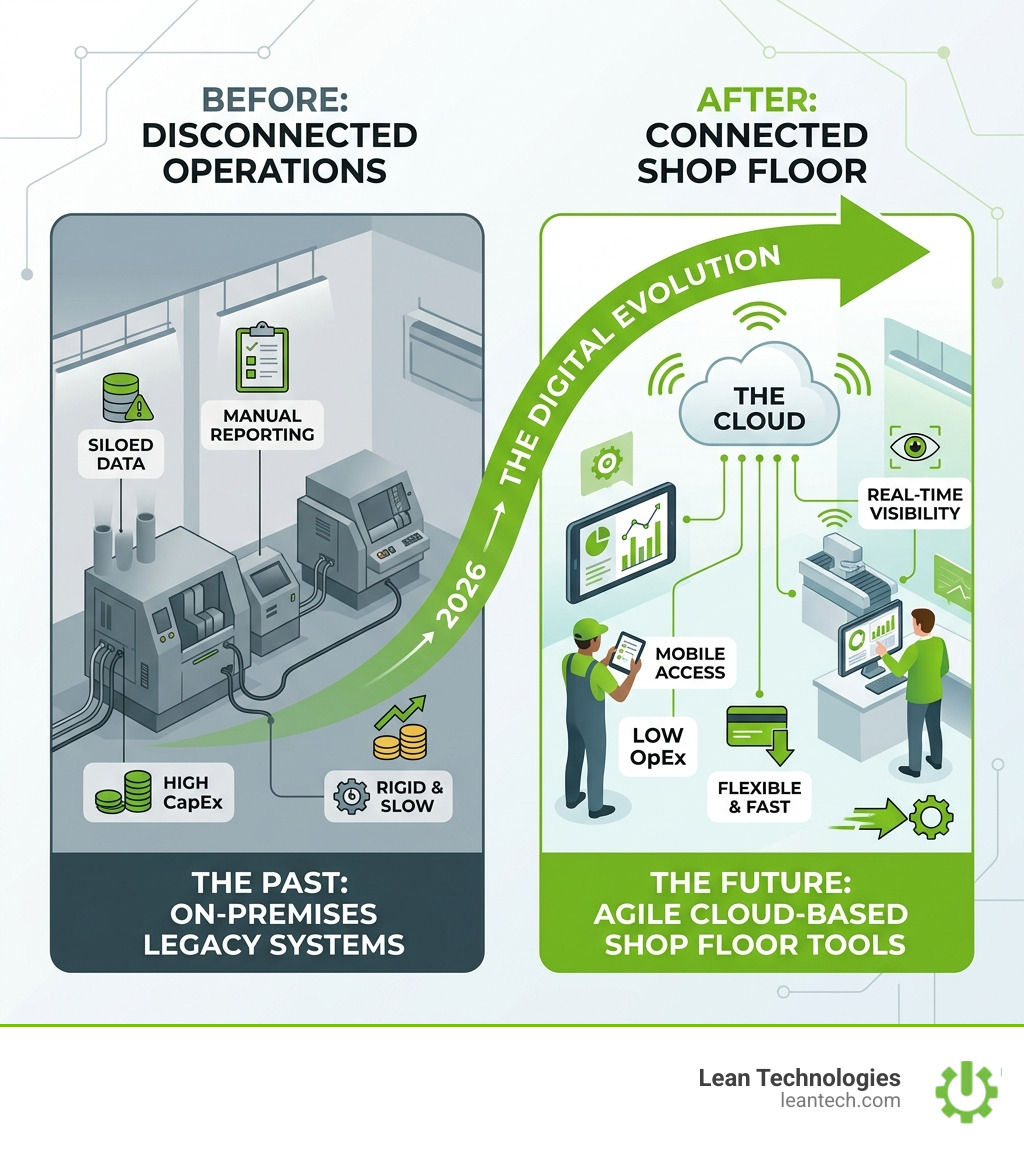
For years, the mid-market was stuck with two bad options: expensive, rigid on-premises legacy systems that required an army of IT consultants to maintain, or a "Frankenstein" system of spreadsheets and whiteboards.
In April 2026, the landscape has shifted. Modern operations leaders are ditching heavy Capital Expenditure (CapEx) for flexible Operational Expenditure (OpEx). Instead of a $250,000 upfront server bill, you pay for what you use. This shift allows SMBs to access enterprise-grade tools without the enterprise-grade debt.
Scalability for the mid-market is no longer a pipe dream. If you add a new production line or open a second facility, a cloud-based system scales with a few clicks. There are no new servers to buy or local networks to configure.
Perhaps the biggest win is remote visibility. Whether you are at a supplier meeting across the country or just in the front office, you can see exactly what is happening on the floor. You don't have to walk the line to know that Line 3 is down; the notification is already on your phone. This level of transparency is the foundation of digital lean manufacturing, moving teams away from "gut feel" and toward data-driven decisions. For a broader overview of how cloud manufacturing works, the Wikipedia article on cloud manufacturing provides helpful background.
What "Actually Works" Looks Like on the Shop Floor
We’ve all seen "shelfware"-software that looks great in a demo but sits unused because it’s too complicated for the people actually making the parts. To avoid this, you need to focus on the tools your operators will actually adopt:
Real-Time Downtime Tracking: Stop guessing why the line stopped. When an operator can tap a reason code on a tablet in five seconds, you get clean data. When they have to write it in a notebook, you get "Unknown."
Digital Action Management: A problem without an assigned action is just a complaint. Cloud tools allow you to assign tasks, set deadlines, and track completion in real time.
Mobile-First Interface: In a modern plant, the "workstation" is wherever the operator is. If the software isn't optimized for tablets and mobile, it’s not going to be used at the source.
Standardized Workflows: Stop relying on "tribal knowledge." By digitizing your workflow tracking, you ensure that every shift follows the same process, regardless of who is on the clock.
Evaluating the ROI of Shop Floor Visibility
The ROI of cloud based production software isn't just about saving paper; it’s about reclaiming lost capacity. Manufacturers using these systems frequently see a 20% reduction in downtime simply because they respond to issues faster.
Beyond downtime, cloud tools help mitigate the ongoing labor shortage. By simplifying operator tasks and providing digital parts management and clear instructions, you reduce the "cognitive load" on your team. This makes onboarding new hires faster and keeps your veterans focused on high-value work.
Finally, AI-driven insights are turning raw shop floor data into actionable continuous improvement (CI) projects. Instead of a manager spending four hours a week compiling a report, the software flags anomalies and suggests where to focus your lean efforts.
Bridging the Gap Between Your ERP and the Shop Floor
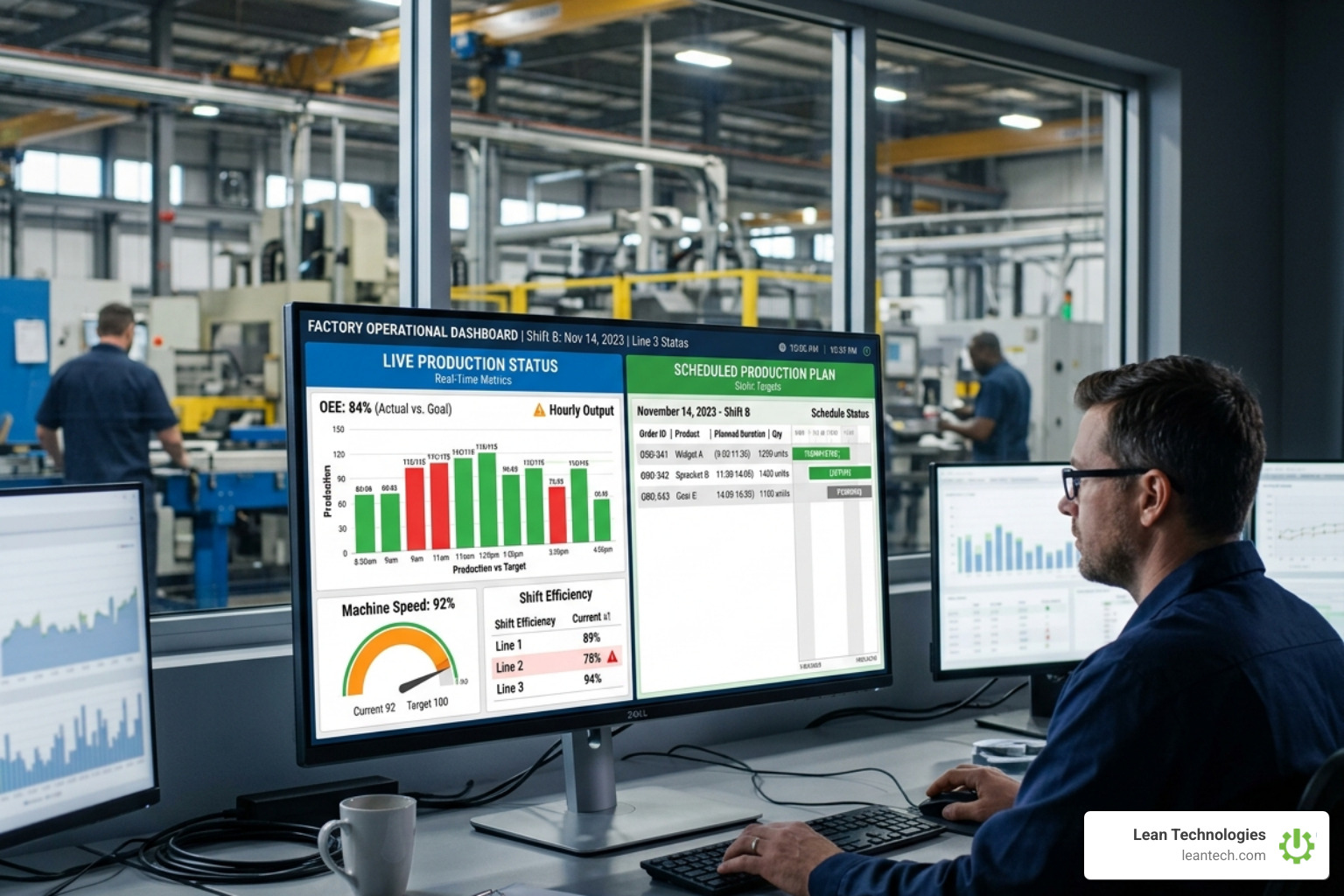
One of the most common mistakes is trying to make an ERP do something it wasn't built for. Your ERP is great for accounting, purchasing, and long-term planning. It is terrible for the "minute-to-minute" chaos of the shop floor.
Think of it this way: the ERP tells you that you need to make 10,000 units this week. The cloud based production software tells you that the motor on the conveyor is overheating right now and you’re trending to miss that goal by 15%.
This is especially true for discrete vs. process manufacturing. Whether you’re assembling complex machinery or mixing batches of chemicals, the "black box" of the production cycle is where money is lost. Cloud tools provide real-time accountability, holding teams to the plan as it happens.
If a safety audit fails or a maintenance task is skipped, the system alerts the right people immediately. You aren't waiting for a weekly review to find out that your safety protocols were ignored or that nonconformance rates spiked on Tuesday.
Implementation: From Zero to Live in Weeks
The "Big Box" ERP rollout is famous for taking 12 to 18 months and costing double the original estimate. Agile cloud implementation is a different animal entirely.
Feature Legacy ERP Rollout Agile Cloud (Thrive) Timeline 12+ Months 4-6 Weeks Primary Focus Financial Compliance Operator Productivity Customization Heavy Coding ($$$) "Clicks, not code" Adoption Forced by Management Driven by Ease of Use
The key to a fast launch is "Operator-First" design. If the software makes the operator's job easier—by replacing a tedious paper log or providing instant access to work order history—they will use it.
Cloud platforms also excel at connectivity. Using API integrations, you can feed your shop floor data directly into your accounting tools like QuickBooks, Shopify, or Xero. This ensures that your project tracking and purchasing suggestions are based on what is actually happening at the machine, not what you hoped would happen.
Of course, tech is only half the battle. Successful teams prioritize change management to ensure the culture shifts along with the tools.
Frequently Asked Questions about Cloud Production
How long does it take to see results from cloud production software?
Most mid-sized manufacturers see a "visibility win" within the first 14 days. Once the first line is live and operators start logging data, the "hidden factory" becomes visible. Full process integration across multiple lines and departments typically takes 4 to 8 weeks.
Does this replace my existing ERP?
No. Cloud-based shop floor software like Thrive is designed to work with your ERP. Your ERP remains the "system of record" for financials and high-level inventory. Thrive becomes the "system of action" for the shop floor, handling the work request queue and real-time event management.
Is our data safe in the cloud?
Absolutely. Modern cloud platforms utilize enterprise-grade encryption, automated backups, and multi-factor authentication. In 2026, a professionally managed cloud data center is significantly more secure than a local server sitting in a dusty maintenance closet or an Excel file on an unencrypted laptop.
Can it handle quality and compliance?
Yes. Cloud systems are perfect for audits, gage calibration, and materials compliance. Because every entry is time-stamped and tied to a user, you have a permanent, digital audit trail for safety audits and accident investigations.
Moving Toward Digital Lean
Stop managing your shop floor through spreadsheets and wishful thinking. The most successful manufacturers in 2026 are those who have bridged the gap between the front office and the operator.
By using a kanban board tool or performance goal boards that update in real time, you empower your team to own their data. This is how you build a culture of leader standard work and continuous improvement that actually sticks.
Thrive is the digital toolbox for the modern shop floor. It’s built by people who have spent years in plants and know that if a tool isn't simple, it isn't useful. Whether you’re looking to improve planned maintenance, track defect scrap, or just get a handle on your training program tracking, the path forward is digital.
Ready to stop the "real-late" data trap? Implementing cloud based production software is the first step. Start your digital lean journey today and give your team the visibility they need to actually win the shift.