
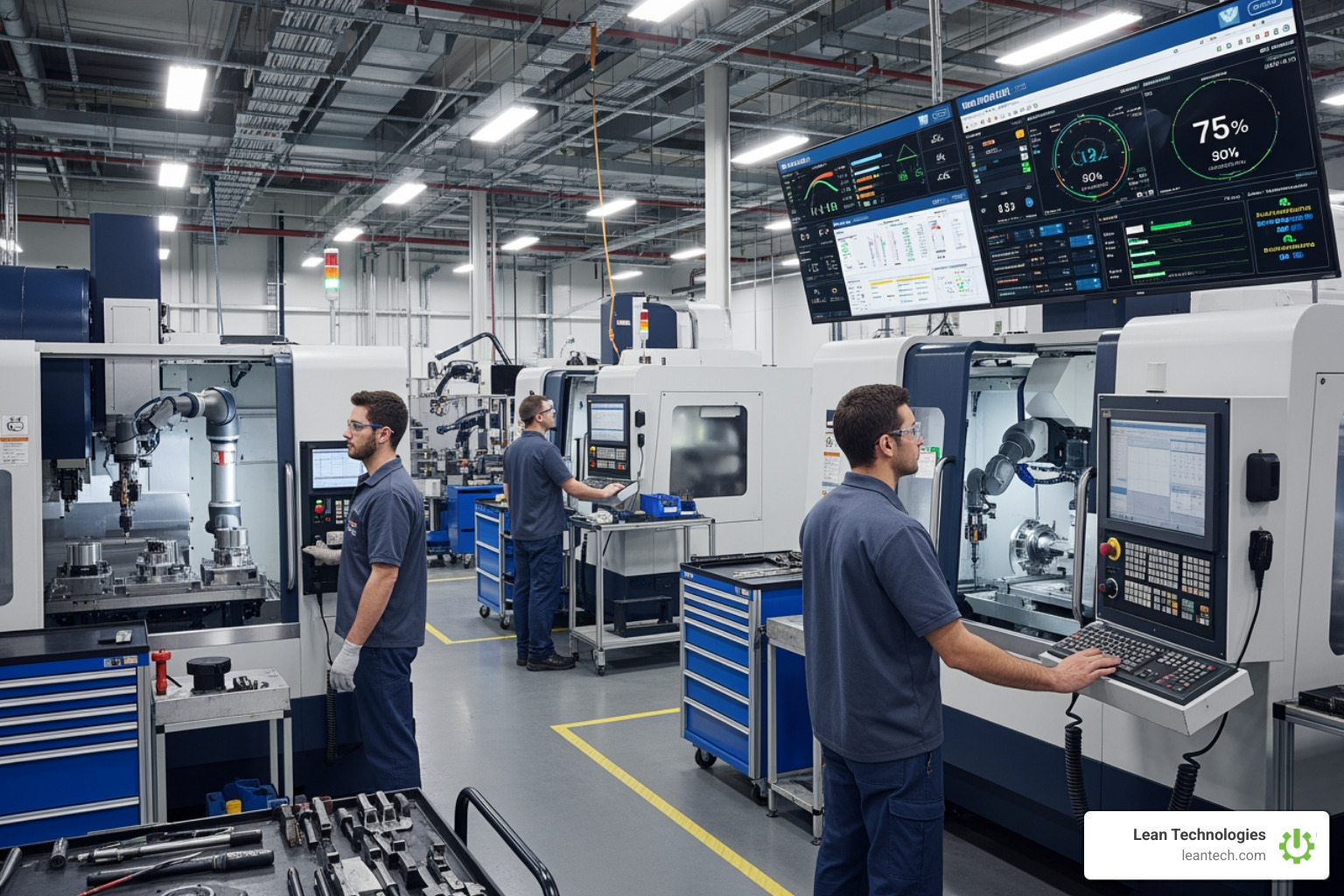
Building a Data Driven Manufacturing Powerhouse
Why Your Shop Floor Needs to Stop Running on Paper and Prayers
A connected shop floor is a manufacturing environment where machines, systems, operators, and managers all share real-time information—no waiting, no hunting, no translating scribbled notes at shift change. It's the difference between knowing what's happening right now versus finding out what already went wrong hours later.
Quick answer for operators and managers:
Real-time visibility – Issues logged as they happen, not at end of shift
Structured workflows – Digital forms and task tracking replace paper and guesswork
Cross-shift communication – No more lost sticky notes or radio tag
Faster problem-solving – Close the loop on downtime, defects, and safety issues immediately
No ERP replacement needed – Works alongside your existing systems
Here's the brutal truth: between 95 and 99 percent of factory floor data was never used—it simply remained inside machines, devices, and heads. Most manufacturers still rely on clipboards, whiteboards, and end-of-shift data entry. By the time that information reaches a manager's desk, the problem has already cost you hours of downtime, scrapped material, or a safety near-miss.
The industrial age threw a lot at manufacturing—pandemics, supply chain chaos, labor shortages, and rising complexity. Modern manufacturing can't afford to manage the shop floor through spreadsheets and wishful thinking. You need a system where operators log issues in real time, supervisors track actions as they happen, and managers see what's actually going on without walking the floor three times a day.
A connected shop floor isn't about ripping out your ERP or installing expensive sensors on every machine. It's about digitizing the work processes your team already does—logging downtime, tracking quality checks, managing work orders, capturing safety observations—and making that data visible and actionable immediately.
When Conagra Brands modernized their shop floor operations, they didn't replace their core systems. They gave frontline workers digital tools to share pictures, videos, and task updates in real time. The result? Significant reductions in print usage—up to 50 percent in some cases—and faster decision-making across teams speaking up to 22 different languages.
That's what this guide is about: building a data-driven manufacturing powerhouse without the chaos, the massive IT project, or the resistance from your team. We'll walk through what a connected shop floor actually looks like, the technologies that make it work, the real challenges you'll face, and how to measure ROI from day one.
What Is a Connected Shop Floor—And Why Does It Matter?
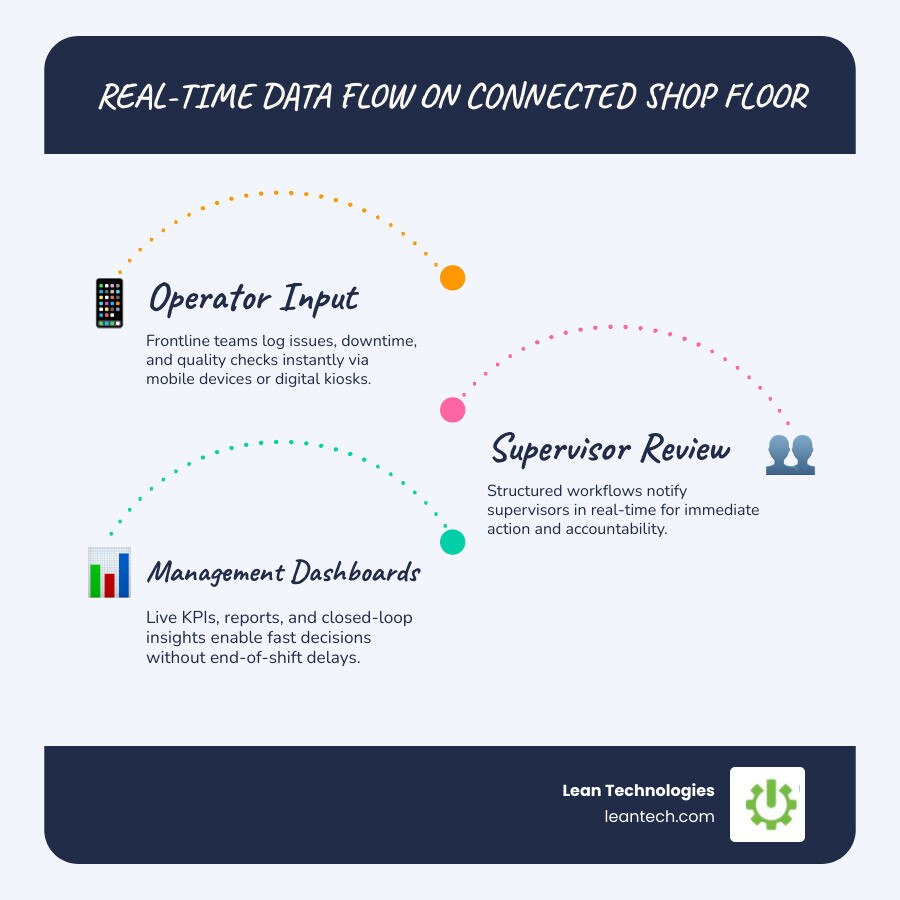
Digital transformation isn't about fancy tech—it’s about killing the clipboard. A connected shop floor means frontline teams log issues, actions, and wins in real time. If you’re waiting for the end of a shift for someone to type notes into an Excel sheet, you aren't running a data-driven shop; you’re running a "data-late" shop.
When we talk about connectivity, we’re talking about structured work processes. This means every operator knows exactly what to check, how to log a defect, and who to notify when a machine goes down. It creates real-time accountability. When an issue is logged digitally, it doesn't vanish into a pile of papers on a supervisor's desk. It stays visible until someone closes the loop.
This connectivity solves the "lost in translation" problem that plagues multi-shift operations. We've all seen it: a machine has a "quirk" at 2:00 AM, the night shift operator leaves a sticky note that falls behind a desk, and the morning shift spends three hours rediscovering the same problem. According to research on shop-floor data analytics, the ability to exploit underlying information is the greatest challenge in industrial digitalization. Connectivity bridges that gap.
Empowering Frontline Teams with Digital Tools
The real magic happens when you put the power in the hands of the people closest to the product. By using mobile devices and digital kiosks, you democratize tasks. Operators no longer have to hunt down a supervisor to report a minor maintenance need; they log it on a tablet, and the maintenance team sees it instantly.
Task democratization: Everyone has a voice and a digital paper trail.
Multilingual support: In facilities where teams speak dozens of languages, visual communication (sharing photos of a broken part via a digital platform) ensures nothing is misinterpreted.
Safety and compliance at the source: Instead of a monthly safety audit, you get real-time safety and compliance tracking where hazards are flagged the moment they're spotted.
Making Legacy Systems Work for You
You don’t need to rip and replace your current setup. Most small to midsize manufacturers have an ERP they’ve spent years (and a small fortune) configuring. A connected shop floor should work alongside what you already have.
Thrive acts as the flexible digital toolbox that sits on top of your ERP or MES. It imports the data you need and standardizes the workflows your team actually uses every day. You get the visibility of a "smart factory" without the three-year IT project or the need for a fleet of new IoT sensors. It’s about making the data you already have accessible to the people who need it.
Core Technologies That Drive Real-Time Visibility
To build a connected shop floor, you need a stack that favors action over just "storage." Many manufacturers make the mistake of buying complex systems that act as "data graveyards." You want tools that drive the "See-Decide-Act" cycle.
Seamless ERP/MES Integration: The goal is a single source of truth. Your shop floor software should talk to your ERP so production orders and material availability are synced, but it shouldn't require you to rebuild your entire database.
Digital Work Instructions and Forms: Replace that dusty binder of SOPs with interactive, digital instructions. When a process changes, you update it once, and every kiosk on the floor is current.
Mobile-First Data Capture: If it’s not easy to use on a tablet or phone, operators won't use it. Mobile-first design ensures that data entry happens at the machine, not in the breakroom.
Real-Time Dashboards: These are the "scoreboards" of your factory. When a line hits a bottleneck, the dashboard should turn red. This level of smart factory insight allows supervisors to reallocate resources before the shift is lost.
The Power of Actionable Data (Not Just More Data)
We don't need more data; we need better data. A connected shop floor allows you to spot issues as they happen. If a CNC machine is running 10% slower than its rated capacity, real-time analytics flag the deviation immediately.
This allows your team to close the loop on downtime. Instead of asking "Why was production low yesterday?", you're asking "How do we fix this blockage now?" This drives continuous improvement by providing a feedback loop that actually moves at the speed of your production line.
Overcoming the Real Challenges of Shop Floor Integration
If it were easy, everyone would do it. Moving to a connected shop floor comes with hurdles, but they are usually cultural, not just technical.
Cybersecurity and Permissions: As you connect more devices, security is paramount. You need a system with robust user permissions—ensuring an operator can log an issue but only a manager can approve a process change.
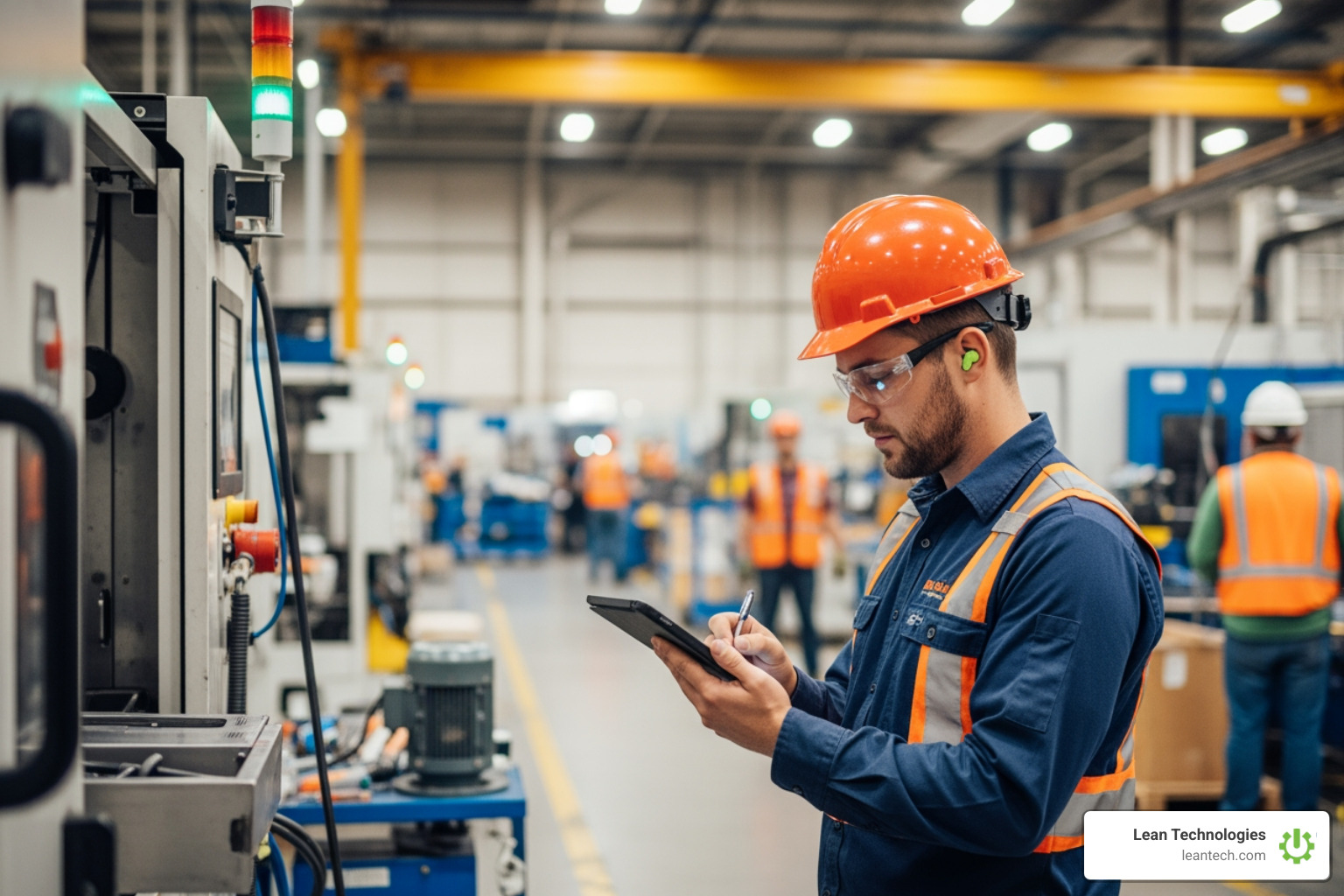
Operator Buy-In: "Is this Big Brother watching me?" is a common fear. You overcome this by showing operators how the system makes their lives easier. No more hunting for parts, no more paper logs, and faster repairs when things break.
Breaking Down Silos: Maintenance, Quality, and Production often live in different worlds. Connectivity forces them to share a digital space. When Quality logs a defect, Maintenance sees the potential machine cause, and Production sees the impact on the schedule.
IT vs. Operations: IT wants security and stability; Ops wants speed and flexibility. The right platform bridges this gap by being easy to deploy without heavy coding, as detailed in our guide to digital lean manufacturing.
Measuring the ROI of Going Digital
Manufacturers live and die by the numbers. Transitioning to a connected shop floor isn't just a "nice to have"—it delivers a measurable return on investment. Statistics show that fully automated systems with IoT can lead to 25 percent production capacity improvement and 50 percent fewer defective products.
Metric Paper-Based Shop Floor Connected Shop Floor Data Accuracy 60-70% (Human error/illegible) 99% (Digital validation) Response Time Hours (End of shift/manual check) Seconds (Instant alerts) Downtime Logs Often incomplete or estimated Precise, categorized, and actionable Compliance Hard to track; audit stress Real-time; audit-ready 24/7 Communication Radio, sticky notes, shouting Centralized digital task tracking
Beyond the obvious capacity gains, you see massive labor cost savings. When buyers are 25x more productive because they have real-time material data, or when technicians spend 20% less time on "emergency" repairs because of predictive maintenance insights, the system pays for itself.
How to Build and Scale a Data-Driven Factory
Don't try to boil the ocean on day one. The "Think Big, Start Small, Scale Fast" approach is the gold standard for digital transformation.
Start with a Process Assessment: Where is your biggest headache? Is it downtime on Line 4? Is it quality rejects in Assembly? Start where the pain is greatest.
Run a Pilot: Pick one line or one specific process (like downtime logging). Get the team on that line to use the digital tools for 30 days.
Scale What Works: Use the wins from your pilot to get buy-in from the rest of the plant. If Line 4 reduced downtime by 15%, the teams on Lines 1, 2, and 3 will want in.
Build a Culture of CI: Use the data to fuel your continuous improvement meetings. When the data is real-time, the meetings become about solving problems, not arguing about whose "gut feeling" is right.
Set Up Data Governance: Ensure someone owns the data. Clean data leads to good decisions; messy data leads to confusion.
Frequently Asked Questions about Connected Manufacturing
What is a connected shop floor?
It is a digital ecosystem where people, machines, and systems communicate in real time. Instead of using paper logs and manual data entry, teams use mobile devices and kiosks to capture and share information instantly across the entire facility.
How does a connected shop floor help with worker shortages?
By automating administrative tasks and data entry, you free up your existing team to focus on high-value production. It also makes training faster—digital work instructions and checklists help new hires get up to speed in days rather than weeks.
What are the first steps to digitizing a shop floor?
Start by identifying your biggest information gap. Is it knowing why machines are down? Is it tracking quality? Once you have a target, implement a simple digital logging tool for that specific problem and expand from there.
What to Do Next
The era of "managing by walking around" and hoping for the best is over. A connected shop floor gives you the visibility to lead with confidence and the structure to let your team excel. Stop managing your shop floor through spreadsheets and wishful thinking.
If you're ready to move from "real-late" data to real-time action, start by looking at your current processes. Identify the paper-based workarounds that are slowing your team down and replace them with structured, digital workflows.
Ready to see what digital lean looks like in action? Check out our guide to digital lean manufacturing to learn how to bridge the gap between your ERP and your frontline operators. Let your team run lean—with real-time visibility and fewer workarounds.