
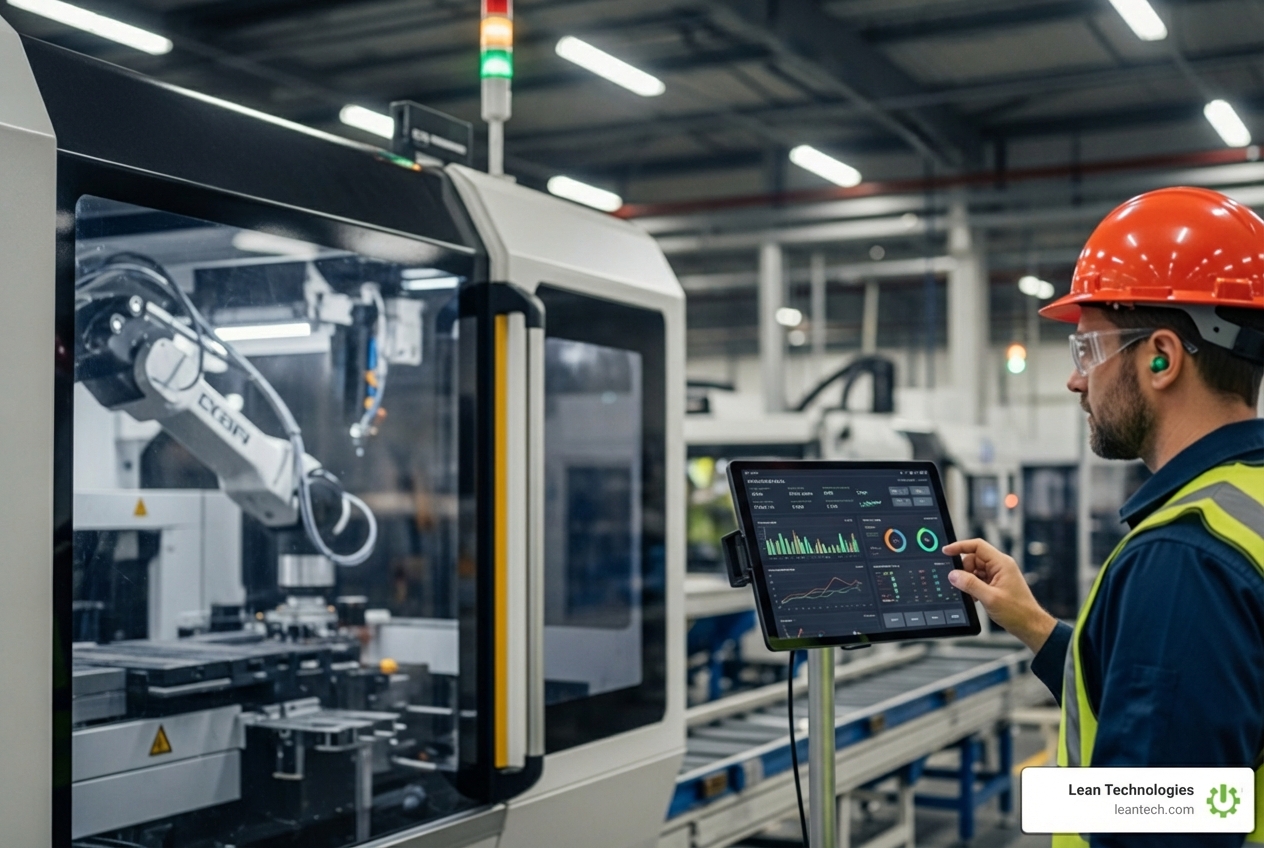
The Six Sigma Toolkit: Driving Continuous Improvement with Data
Are You Solving Problems or Just Fighting Fires?
Let's be honest. Are you actually solving problems, or just fighting the same fires every day? Continuous improvement tools from Six Sigma are designed to get you out of reactive mode. If you're tired of recurring breakdowns, surprise quality issues, and manual reports that eat up your time, these tools offer a structured, data-driven way to find and fix root causes—not just patch up the symptoms.
Quick answer: What are the core Six Sigma tools for continuous improvement?
Process Mapping Tools (Value Stream Mapping, Flowcharts) – Make waste and bottlenecks visible
Root Cause Analysis (5 Whys, Fishbone Diagram) – Dig past symptoms to find the real problem
Statistical Tools (Pareto Analysis, Control Charts, SPC) – Use data to prioritize and monitor stability
Lean Tools (5S, Kanban, Poka-Yoke) – Cut waste, organize work, and prevent errors
DMAIC Framework (Define, Measure, Analyze, Improve, Control) – A step-by-step method to drive results
Here's the reality: most shop floor problems aren't random. They're predictable. Recurring breakdowns. The same quality defects showing up week after week. Operators chasing issues instead of building product. Leaders stuck writing reports instead of driving improvement.
When engineer Bill Smith joined Motorola in 1987, he had 35 years of experience and a mission: stop reacting and start preventing. That's where Six Sigma was born—a methodology built on the idea that if you can measure it, you can improve it.
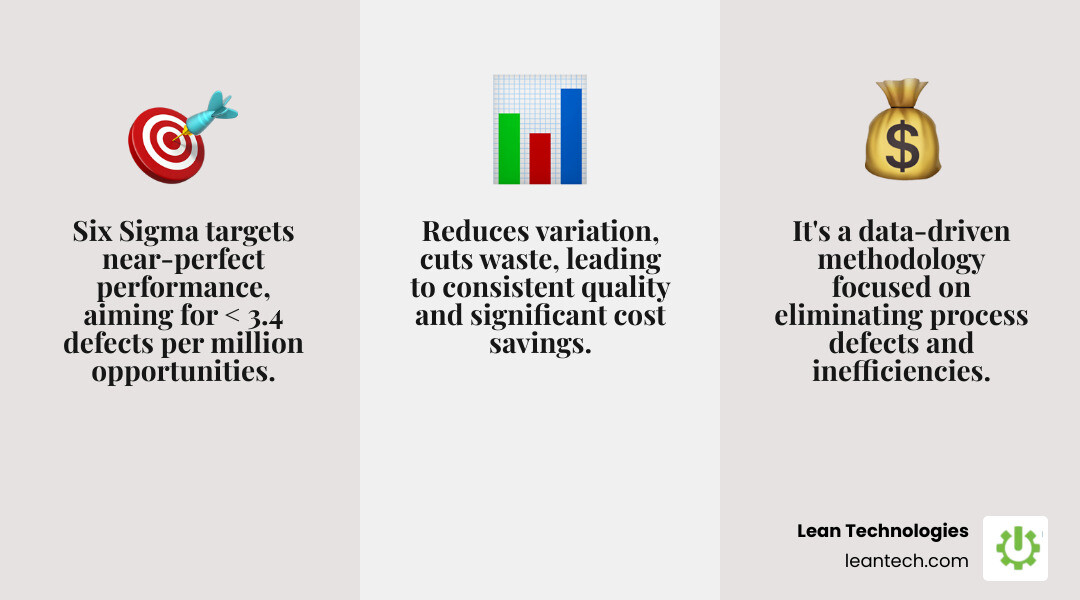
Six Sigma aims for near-perfect performance: fewer than 3.4 defects per million opportunities. But it's not about perfection for perfection's sake. It's about reducing variation, cutting waste, and giving your team the tools to solve problems before they blow up into fires.
The problem? Most plants still track issues on paper, in spreadsheets, or through word-of-mouth. By the time leadership sees the data, it's too late to act. Real-time beats real-late. If you're logging downtime at the end of the shift or entering quality issues after the fact, you're not improving—you're documenting failure.
The good news: you don't need a Black Belt certification to start using these tools. You need visibility, accountability, and a system that makes it easy for your team to capture what's happening when it happens. That's where the real power of continuous improvement kicks in.
What is Six Sigma and Why Does It Matter on the Shop Floor?
Let's cut to the chase: What is Six Sigma? It's a data-driven methodology that aims to eliminate defects and inefficiencies in any process. Think of it as a relentless pursuit of near-zero errors, striving for no more than 3.4 defects per million opportunities. This isn't just about tweaking a machine; it's about using statistical tools, quality management techniques, and business strategies to analyze processes, identify the root causes of defects or variations, and then remove them. It's about getting things right, every single time.
For an Operations Manager, this means predictable outcomes. For a Quality Manager, it means fewer customer complaints. For a Maintenance Manager, it means less downtime. It’s about getting things right, consistently.
The core purpose of continuous improvement tools Six Sigma provides is to improve quality, reduce operational costs, and boost customer satisfaction. By systematically identifying and eliminating sources of variation and defects, organizations can deliver better products and services more consistently. This focus on process improvement and quality control directly impacts your bottom line and your reputation.
At its heart, Six Sigma is about data-driven problem-solving. It moves you away from gut feelings and towards decisions backed by facts. This is critical for Continuous Improvement Managers who need to show tangible results and for Project Managers who need reliable data to guide their initiatives.
The entire Six Sigma approach is typically guided by the DMAIC methodology, a structured, five-phase framework for tackling problems:
Define: Clearly identify the problem, the project goals, and the customer requirements. What exactly are we trying to fix, and why does it matter? This phase sets the scope for your project.
Measure: Collect data on the current process performance. How bad is the problem right now? This involves gathering reliable data to establish a baseline.
Analyze: Examine the collected data to identify the root causes of defects or inefficiencies. Why is the problem happening? This is where you dig deep to understand the underlying issues.
Improve: Develop and implement solutions to address the identified root causes. What can we do to fix it? This phase focuses on designing and testing changes.
Control: Establish mechanisms to sustain the improvements and prevent the problem from reoccurring. How do we keep it fixed? This ensures the new process sticks and doesn't revert to old habits.
This systematic approach is what makes Six Sigma so powerful for driving continuous improvement. It's not a one-and-done fix; it's a cycle of learning and refinement. The core benefits are clear: higher quality, lower costs, and more efficient teams that are empowered to solve problems instead of just working around them.
The Core Continuous Improvement Tools Six Sigma Teams Use
You've got a problem. You know it's costing you time, money, or customer satisfaction. Now what? This is where the continuous improvement tools Six Sigma offers come into play. They're your practical toolkit for navigating the DMAIC process and turning chaos into control.
Step 1: Make the Process Visible with Mapping Tools
Ever try to fix something you can't see? That's what it's like trying to improve a process without mapping it out. On the shop floor, processes are often hidden, buried in tribal knowledge, or simply assumed. This leads to bottlenecks, non-value-added steps, and endless workarounds. Before you can fix a process, you need to see it, understand it, and agree on how it actually works.
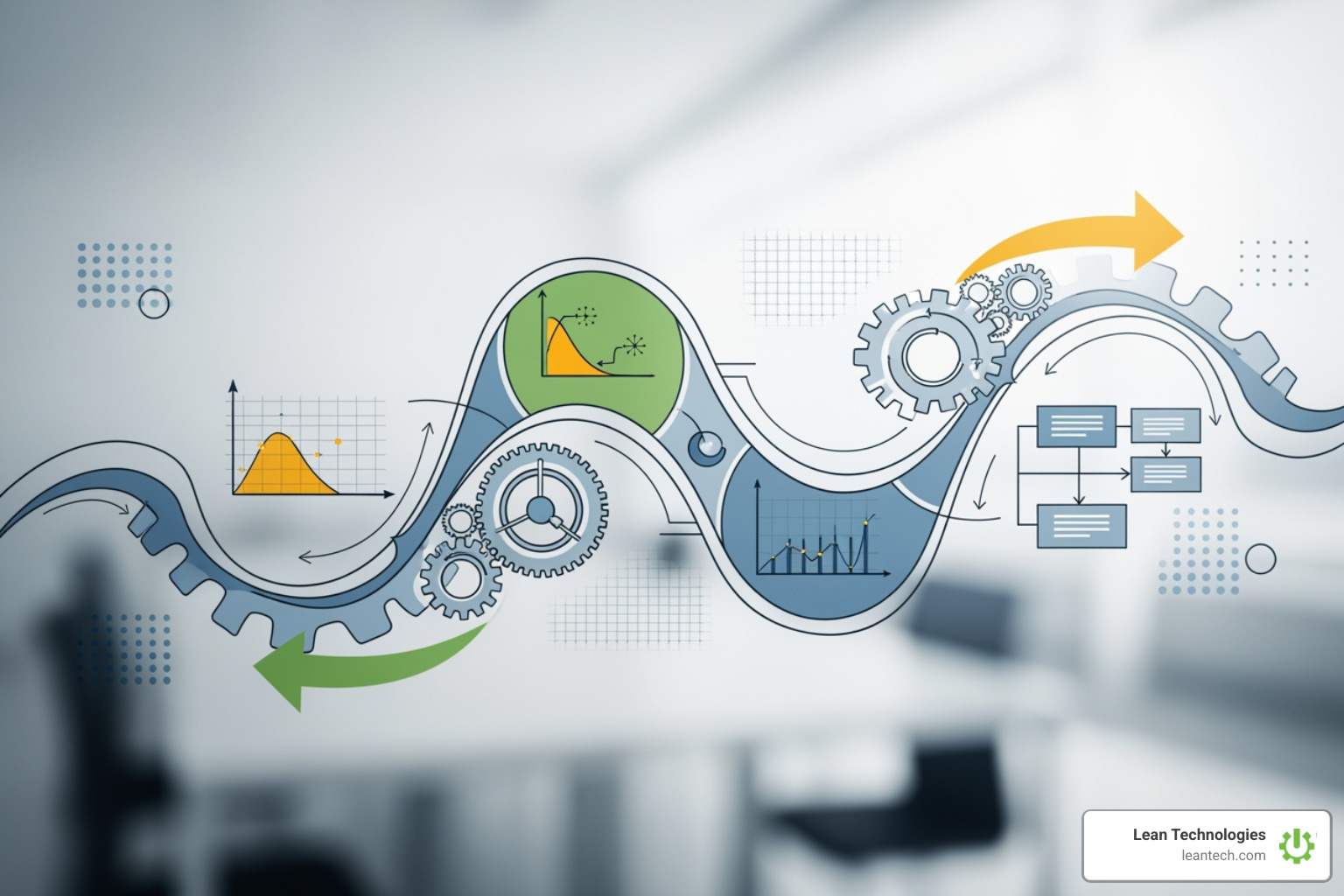
This is where process mapping shines. It visually depicts the steps and flow of a process, giving everyone a clear picture of inputs, actions, decision points, and outputs.
Value Stream Mapping (VSM): This isn't just any flowchart. VSM is a Lean-management method for outlining the entire series of events from product design to final delivery. It helps you identify where value is added and, more importantly, where waste exists. For Production Managers and Continuous Improvement Leaders, a VSM can highlight inefficiencies that no one even knew existed.
Flowcharts: A simpler visual representation of steps and decisions in a process. Great for understanding basic workflows and identifying where things might go wrong.
Swim Lane Diagrams: These flowcharts take it a step further by showing which department or role is responsible for each step. This clarifies handoffs, reduces confusion, and highlights potential communication breakdowns—a boon for Operations and Project Managers.
By using these mapping tools, you move from assumptions to clarity. You identify opportunities for improved capabilities and areas where optimization can lead to significant gains. To learn more about digitizing these processes, check out our Digital Lean Manufacturing Guide.
Step 2: Get to the Real "Why" with Root Cause Analysis
You’ve mapped your process and spotted an issue. Great. But fixing symptoms is like putting a band-aid on a broken pipe—it's a temporary patch, not a real solution. To truly solve problems and prevent their recurrence, you need to get to the real "why".
This is the essence of root cause analysis (RCA). It involves digging past the obvious symptoms to find the underlying issues. How do you do it? By asking "why" until you hit the actual cause, not just its immediate effect.
Two powerful tools for this are:
5 Whys Technique: This deceptively simple tool involves repeatedly asking "why" to dig deeper into the root cause of a problem. It's about uncovering underlying causes rather than just addressing symptoms. Imagine a machine broke down:
Why did the machine stop? Because the circuit overloaded.
Why did the circuit overload? Because the bearings weren't lubricated, causing friction.
Why weren't the bearings lubricated? Because the maintenance schedule wasn't followed.
Why wasn't the maintenance schedule followed? Because there's no clear ownership for that task.
Why is there no clear ownership? Because responsibilities aren't clearly defined and tracked. See? The root cause isn't the circuit overload; it's a lack of process and accountability.
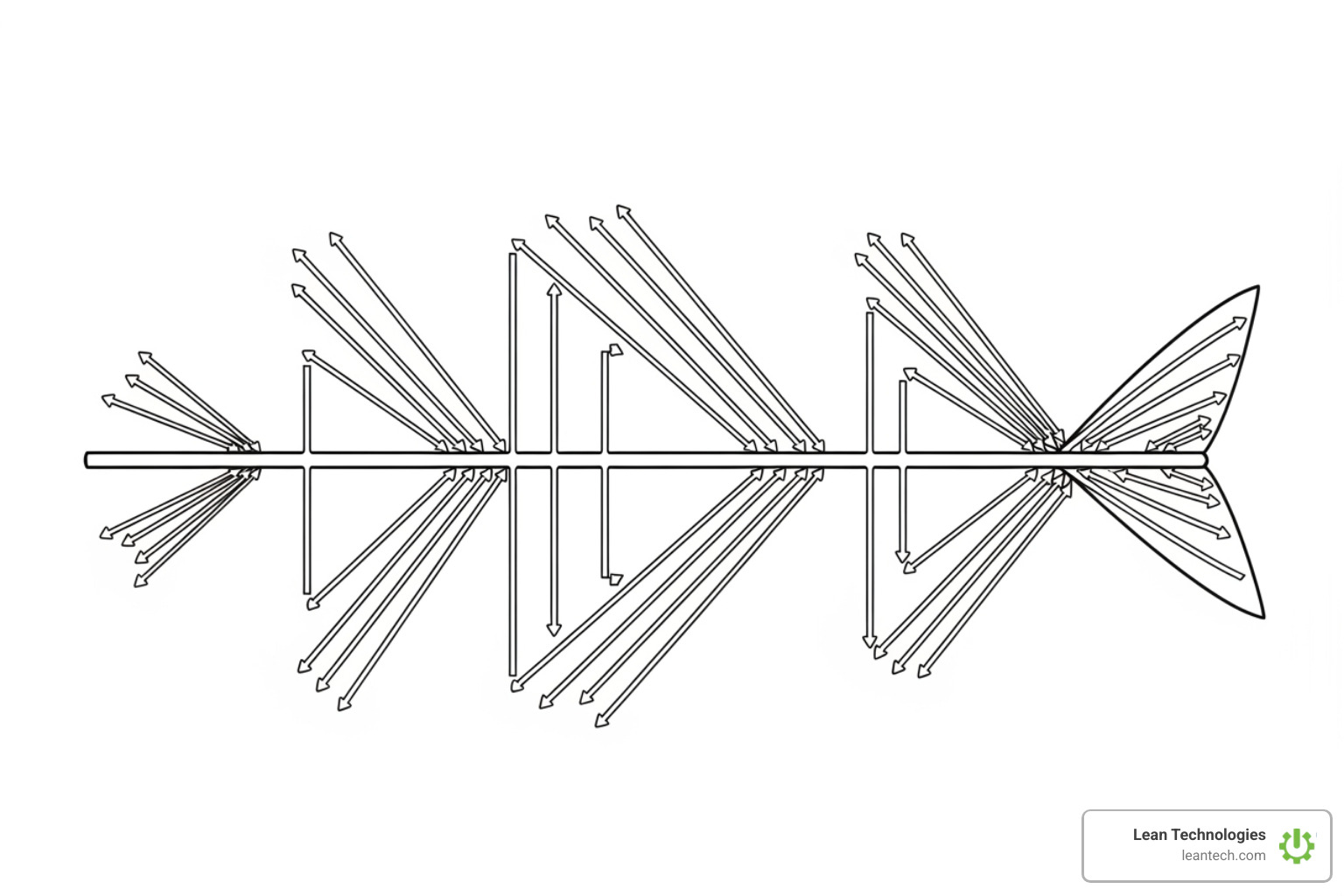
Fishbone (Ishikawa) Diagram: Also known as a Cause and Effect Diagram, this visual problem-solving tool helps you explore all potential root causes of a particular issue. It organizes possible causes into categories, typically:
Manpower: Human factors, training, skills.
Machine: Equipment, tools, technology.
Materials: Raw materials, components, supplies.
Methods: Procedures, processes, work instructions.
Measurement: Data collection, inspection, calibration.
Environment: Workspace conditions, temperature, lighting. For Maintenance Managers and Safety Managers, this can be invaluable for dissecting recurring issues and preventing future incidents. To dive deeper into these manufacturing elements, explore our guide on maintenance.
By systematically investigating contributing factors, you move from brainstorming to structured analysis, ensuring you're addressing the real problem, not just its outward signs.
Step 3: Use Data, Not Gut Feel, with Statistical Tools
On the shop floor, everyone has an opinion about why things go wrong. But opinions don't fix problems; facts do. Continuous improvement tools Six Sigma emphasizes a data-driven approach because it removes subjectivity, prioritizes efforts, and provides objective evidence of improvement.
Pareto Analysis: This tool is a game-changer for prioritizing what matters. Based on the Pareto Principle (the 80/20 rule), it states that roughly 80% of problems result from 20% of causes. A Pareto chart visually represents data in descending order of importance, allowing you to quickly identify the "vital few" causes that contribute to the "trivial many" problems. For example, 80% of your machine downtime might come from just 20% of your machines. Operations Managers can use this to focus resources where they'll have the biggest impact.
Statistical Process Control (SPC): Once you've made improvements, how do you ensure they stick? SPC tools, like Control Charts, allow you to monitor and control process variation over time. They help you distinguish between common cause variation (random, inherent to the process) and special cause variation (assignable, indicating a problem or a significant change). For Quality Assurance Managers, Control Charts provide real-time insights into process stability, helping detect deviations early and take corrective action before issues escalate.
Histograms: These bar graphs show the frequency distribution of a data set. They help you visualize the spread and central tendency of your process data, quickly showing if your process output is consistent or all over the map.
By leveraging these statistical tools, you move from reacting to proactive management. You make evidence-based decisions that lead to lasting process stability and predictable quality, which is exactly what Production and Quality Managers need.
Step 4: Cut Waste with Lean Tools That Work
While Six Sigma focuses on reducing variation and defects, Lean methodology is all about eliminating waste. Combined, Lean Six Sigma provides a powerful one-two punch for operational excellence. These Lean tools complement Six Sigma by streamlining processes, making them more efficient, and preventing defects from occurring in the first place.
5S Methodology (Sort, Set in Order, Shine, Standardize, Sustain): This is a foundational Lean concept for workplace organization and standardization. It's not just about cleaning up; it's about creating an efficient, productive, and safe work environment (5S Model).
Sort: Remove unnecessary items from the workspace.
Set in Order: Organize remaining items for easy access.
Shine: Clean the workspace regularly.
Standardize: Create consistent procedures for maintaining the first three S's.
Sustain: Make 5S a habit and part of the culture. For Maintenance and Safety Managers, 5S can drastically improve safety, reduce search times for tools, and ensure a more compliant environment.
Kanban: Originally from the Toyota Production System, a Kanban system is a visual method for managing work and materials. It relies on visual cues (like cards or boards) to signal the need for tasks or materials at each process stage. This helps teams understand work in progress, prioritize tasks, and maintain a smooth, efficient workflow while minimizing waste and overproduction. Production Managers love Kanban for its ability to optimize flow and prevent bottlenecks. To see how visual systems can transform your operations, check out our insights on Visual Kanban Systems.
Poka-Yoke (Mistake-Proofing): This Japanese term means "error-proofing." It's about designing systems, tools, or processes to prevent errors from occurring or to detect them immediately when they do. Think of a USB cable that only plugs in one way, or a machine that won't start if a safety guard is open. For Quality Engineers, Poka-Yoke is an essential strategy for building quality directly into the process, rather than relying on inspection to catch defects.
These Lean tools, when integrated with Six Sigma's data-driven rigor, create a comprehensive approach to continuous improvement. They tackle waste, improve flow, and make it easier to maintain the gains achieved through Six Sigma projects.
Making Improvements Stick: Culture, Challenges, and the Future
Implementing continuous improvement tools Six Sigma offers is one thing; making those improvements last and fostering a culture where they thrive is another. Many organizations hit common roadblocks: resistance to change, lack of time, and insufficient training. Employees might see new processes as "extra work" or simply revert to old habits when management attention wanes.
Overcoming these challenges requires more than just tools; it demands a fundamental shift in mindset. Organizations need to foster a culture of continuous improvement that aligns with Six Sigma principles. This starts with:
Leadership Buy-in: Leaders must champion the effort, communicate the vision, allocate resources, and lead by example. If management isn't committed, improvements won't stick.
Engaged Teams: Empower your frontline employees. They are often the best source of improvement ideas because they live the process every day. Encourage them to actively participate in problem-solving and process optimization (Lean Six Sigma). Invest in training for tools like kaizen events, root cause analysis, and process mapping.
Ongoing Training and Development: Offer certifications like Green Belt and Black Belt to build internal expertise. These professionals can then lead projects and mentor others, spreading the continuous improvement mindset throughout the organization.
Structured Follow-up: Use methodologies like the PDCA Cycle (Plan-Do-Check-Act) to ensure improvements are regularly reviewed and refined.
What’s next: Digital Lean, AI, and real-time data. The future of continuous improvement is digital. While emerging technologies like AI and IoT promise predictive maintenance and advanced process control, they are useless without clean, structured data. Before you can predict the future, you must be able to accurately see the present. Digital platforms that capture data at the source, in real-time, are the indispensable foundation for any advanced analytics, providing the visibility and accountability needed to make these tools truly effective.
Frequently Asked Questions about Continuous Improvement Tools in Six Sigma
What is the difference between Lean and Six Sigma?
Think of it this way: Lean is about speed and cutting waste, while Six Sigma is about quality and cutting defects. Lean manufacturing (often from the Toyota Production System) focuses on minimizing non-value-added activities, reducing lead times, and optimizing flow. Six Sigma, on the other hand, is a data-driven methodology that concentrates on reducing process variations to achieve near-perfect quality and consistency. Together, they drive faster, better processes by eliminating both waste and errors.
What is the DMAIC methodology?
DMAIC stands for Define, Measure, Analyze, Improve, and Control. It’s a structured, five-phase methodology that serves as the core framework for Six Sigma projects. It provides a step-by-step approach for solving process problems:
Define: Clearly state the problem and project goals.
Measure: Collect data to quantify the problem.
Analyze: Determine the root causes of the problem.
Improve: Implement solutions to eliminate the root causes.
Control: Sustain the improvements and prevent recurrence.
How do you build a culture of continuous improvement?
Building a culture of continuous improvement isn't a one-time event; it's an ongoing journey. It starts with leadership commitment and actively involves everyone in the organization.
Start with leadership: Ensure leaders champion the initiative and provide necessary resources.
Empower teams: Encourage employees at all levels to identify and solve problems, fostering a sense of ownership.
Train everyone: Provide training on continuous improvement tools and methodologies.
Celebrate wins: Recognize and reward successful improvements, no matter how small, to build momentum.
Make improvement part of daily work: Integrate continuous improvement activities into daily routines and performance metrics.
What to Do Next: From Tools to Action
You now have a powerful toolkit of continuous improvement tools Six Sigma teams use to drive change. You know how to make processes visible with Value Stream Mapping, dig for root causes with the 5 Whys, use data with Pareto Charts, and cut waste with 5S and Kanban.
But here’s the kicker: tools alone don’t fix problems—systems do. You can have all the right ideas, but if your shop floor runs on paper, spreadsheets, and delayed reports, you're still just fighting fires.
The real game-changer is real-time visibility and accountability. Imagine every issue, defect, and downtime event logged as it happens, not hours later. Imagine your team tracking actions, collaborating on solutions, and seeing the impact of their improvements instantly. This is where modern digital platforms come in.
Thrive is built for this. It helps you digitize your lean processes, close the loop on improvement initiatives, and finally ditch the frustrating spreadsheets. By providing a cohesive, integrated platform, Thrive empowers your team to log issues, track actions, and drive improvement with real-time data—giving you the control you need to truly thrive. Learn how to transform your operations with How to Drive Continuous Improvement with Thrive.