
Keep the Flow Going: A Deep Dive into Continuous Process Engineering
Beyond Batch-and-Queue: Why Your Shop Floor Feels Like a Traffic Jam
Continuous process engineering is a manufacturing approach where raw materials flow continuously through the production system—24/7, without stopping—until they become finished products. Unlike batch or discrete manufacturing (where you make fixed quantities, then stop and start again), continuous processing runs non-stop for weeks, months, or even years, maximizing throughput and minimizing waste.
Key characteristics of continuous process engineering:
Uninterrupted production flow – Materials are constantly in motion, undergoing chemical or physical change
24/7 operation – Plants often run around the clock with only infrequent maintenance shutdowns (sometimes lasting years)
High automation – Process control systems (PLCs, DCS, sensors) manage variables like temperature, pressure, and flow rates in real time
High volume, low variety – Best suited for commodity products like chemicals, oil, steel, paper, or food ingredients
Capital-intensive – Requires significant upfront investment in equipment and control systems
If you've ever walked your shop floor and seen stacks of WIP bins, operators hunting for information on clipboards, and production supervisors buried in spreadsheets trying to figure out what just happened—you're living in a batch-and-queue world. It's stop-and-start. It's reactive. And it's costing you money.
Continuous process engineering is the opposite. It's about keeping materials moving, eliminating bottlenecks, and using real-time data to maintain stability. It's the difference between a highway at rush hour and a high-speed rail line.
For most manufacturers, true "continuous processing" (like an oil refinery running for years without stopping) isn't realistic. But the principles behind it—flow, real-time visibility, automated control, and fast feedback loops—absolutely are. And when you digitize those principles on your shop floor, you start closing the gap between "we think we're doing okay" and "we know we're optimizing every shift."
This guide breaks down what continuous process engineering really means, how it connects to lean and agile thinking, and—most importantly—how you can apply its core ideas to your operation, even if you're not running a 24/7 chemical plant.
The Core Principles of Continuous Process Engineering
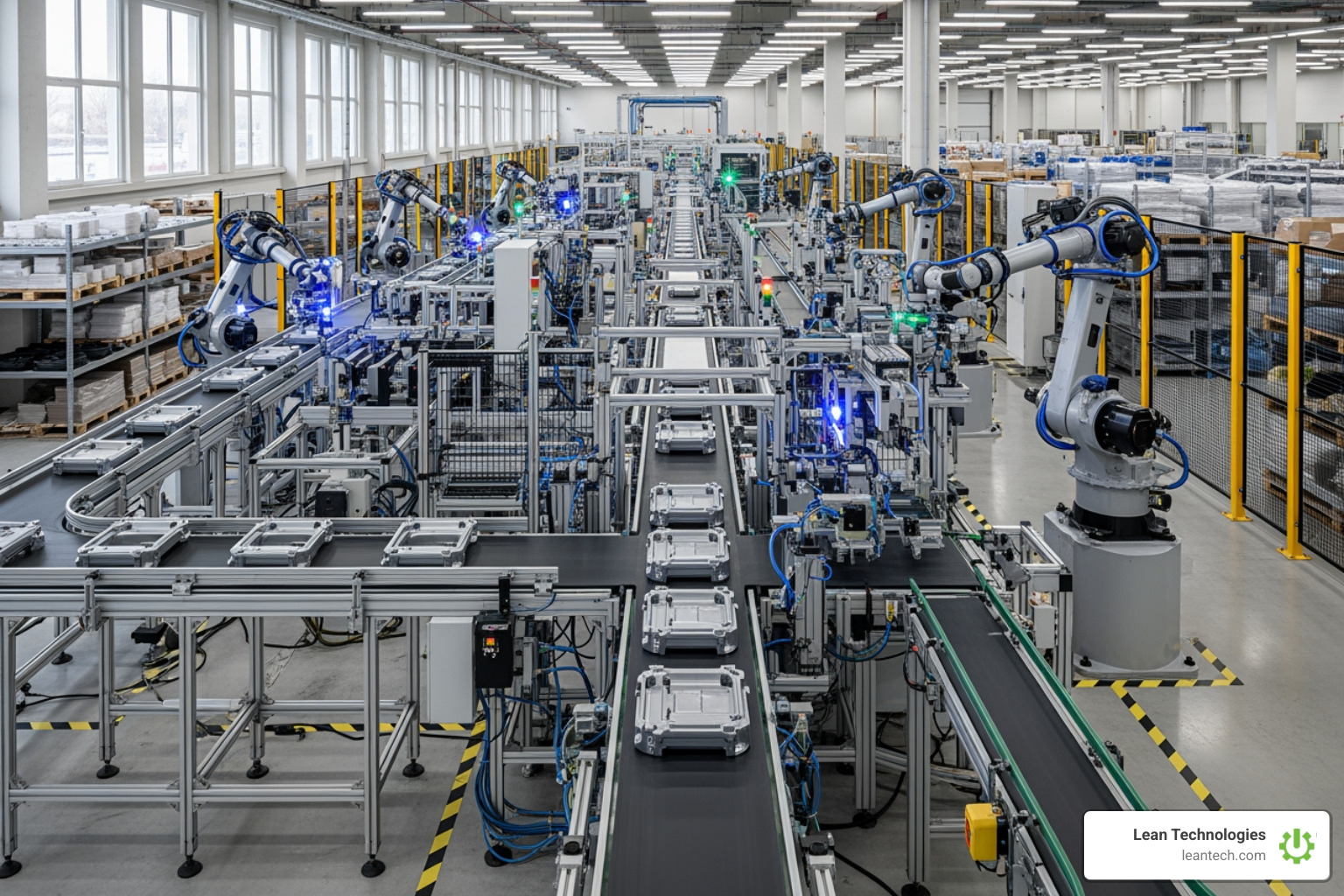
At its heart, continuous process engineering is a mindset shift. It moves away from the traditional, sequential "start-stop" approach to product development and manufacturing. Instead, it accepts the idea of constant, uninterrupted flow. This isn't just about keeping machines running; it's about designing systems where materials and information move smoothly through every stage, without waiting or accumulating.
Think of it as a river, not a series of puddles. The goal is an uninterrupted operation that can run 24/7 production cycles. This maximizes throughput and ensures process stability, meaning fewer surprises and more predictable outcomes. It’s all about eliminating bottlenecks that slow down your production and eat into your profits.
The Link to Continuous Improvement
You can't talk about continuous process engineering without talking about continuous improvement. They're two sides of the same coin. Continuous process engineering gives you the framework for flow, and continuous improvement provides the tools to make that flow better, faster, and more efficient.
Methodologies like Lean manufacturing and Six Sigma are crucial here. Lean focuses on identifying and eliminating waste (often called Muda) in all its forms—overproduction, waiting, unnecessary transport, over-processing, excess inventory, unnecessary motion, and defects. Six Sigma, on the other hand, is a data-driven approach that minimizes waste and improves processes by reducing the chance of errors, aiming for near-perfect quality.
The Kaizen philosophy, which originated with the Toyota Production System, encourages small, incremental changes driven by everyone in the organization. It's about striving for perfection, one small step at a time. This constant striving for improvement is what keeps your continuous process truly optimized. Tools like value-stream mapping (VSM) help visualize the entire process, from raw material to finished product, identifying areas where value is added and where waste can be eliminated. Click here to learn more about Value-Stream Mapping.
When you combine the flow-centric design of continuous process engineering with the waste-eliminating power of continuous improvement, you create a system that is not only efficient but also constantly evolving for the better. This is digital lean in action. Learn more about digital lean manufacturing.
Applying Agile Concepts to Continuous Process Engineering
If continuous improvement is the engine, Agile is the steering wheel, especially when dealing with product development that feeds into continuous production. While Agile started in software, its principles of adaptability and rapid response to change are highly relevant to continuous process engineering.
Agile encourages an iterative process, breaking down large projects into smaller, manageable cycles. This means fast feedback loops and the ability to adapt quickly to new information or changing requirements. For a Production Manager, this translates to less rework and faster adjustments to product specifications.
Real-time data is the lifeblood of an Agile approach in a continuous environment. You can't make quick, informed decisions if your data is days or weeks old. This requires cross-functional collaboration, bringing together development, operations, and quality assurance teams from the start. They share responsibility, ensuring that any changes are understood and implemented smoothly across the entire lifecycle.
Continuous engineering provides the ability for teams to accelerate the launch of increasingly complex and interconnected products, allowing engineers to deepen their complexity throughout the life cycle, without neglecting cost, quality, and risk management. This iterative approach helps in handling complexity and change in product development, making it easier to integrate new designs or materials without disrupting the entire flow. Gartner even predicts that by 2024, 30% of IT operations management will shift its focus from support to continuous engineering, highlighting its growing importance in managing complex systems.
The "How-To": Implementing Continuous Flow
Setting up an effective continuous process engineering system isn't a flip of a switch; it's a strategic journey that requires careful planning and execution. It's a design methodology focused on creating a seamless flow from start to finish.
The first step is always to define what success looks like. This means setting performance targets (KPIs) that are quantifiable and measurable. Are you aiming for a specific response time, a certain level of customer satisfaction, or server availability? These targets serve as your benchmarks. For example, a quality manager might set a target for defect rate reduction, while a production manager might focus on overall equipment effectiveness (OEE).
Process modeling and simulation become critical tools here. You can't just guess how changes will impact a continuous flow. By modeling your processes, you can predict outcomes, identify potential bottlenecks before they happen, and optimize your system virtually. This reduces risk and saves significant resources in the long run.
Step 1: Automating Process Control
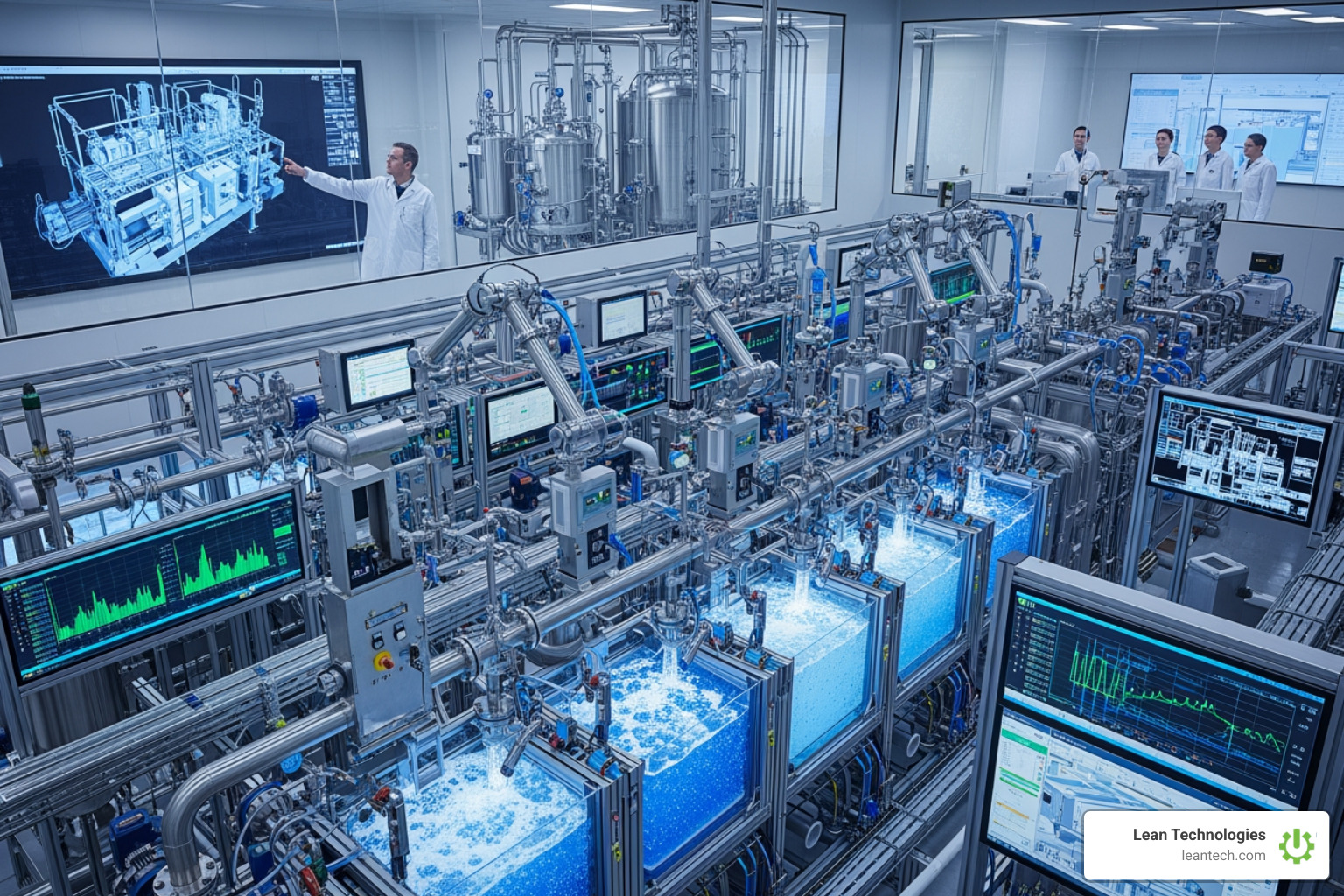
At the core of any successful continuous process engineering setup is robust automation. We're talking about systems that can maintain key process parameters at their desired set points, automatically making adjustments. This is where process control comes into play.
The backbone of this automation often includes:
PID controllers (Proportional-Integral-Derivative): These are the workhorses of industrial control, constantly calculating an "error" value as the difference between a desired setpoint and a measured process variable. They then apply proportional, integral, and derivative corrections to bring the process back to the setpoint. Most industrial controllers incorporate proportional control, and PI or PID controllers are common.
Programmable Logic Controllers (PLCs): These are industrial digital computers adapted for the control of manufacturing processes. PLCs are great for discrete tasks and sequencing operations, especially where logical decisions are needed based on digital inputs. For example, controlling a series of valves opening and closing in a specific order.
Distributed Control Systems (DCS): For large, complex, and safety-critical continuous processes, DCS are essential. These are hierarchical networks of computerized process control elements spread throughout a plant. A DCS can measure process parameters dozens of times per second, managing hundreds or thousands of control strategies. They offer improved safety, efficiency, and reliability over centralized single mainframe control.
Sensors and actuators: These are the eyes and hands of your automation system. Sensors (like flow meters, pressure, and temperature sensors) measure process variables, converting them into electrical signals. Actuators (like control valves or motors) receive signals from controllers and perform physical actions to adjust the process.
You'll encounter different forms of control logic:
Feedback control: This is the most common. It measures the exit variable you wish to control (e.g., temperature) and then manipulates an input variable (e.g., heating power) accordingly. It reacts to deviations after they occur.
Feedforward control: This is more proactive. It measures a disturbance variable (e.g., incoming material temperature) before it can affect the controlled variable and adjusts inputs to prevent the deviation from happening in the first place. While powerful for time-sensitive operations, it's often combined with feedback control because it's impractical to measure every possible disturbance.
For a deeper dive into these systems, check out the Control of Processes – Visual Encyclopedia of Chemical Engineering Equipment. These automated systems are critical for maintaining stability, especially in continuous operations that run for extended periods.
Step 2: Integrating Real-Time Monitoring and Quality Checks
In a truly continuous flow, quality isn't an afterthought; it's built into every step. This means integrating real-time monitoring and quality checks directly into the process. You're not waiting for the end of the line to find a problem; you're catching it as it happens.
Performance testing becomes an ongoing activity, not a periodic event. This involves continuously checking key performance indicators (KPIs) and product attributes. For example, in-line sensors can measure the composition of a chemical stream or the thickness of a material as it's being produced. This in-line quality control ensures that no performance regressions occur with each new code version or process adjustment.
Real-time data collection is non-negotiable. Every sensor reading, every quality check, every machine status update needs to be captured and made available instantly. This data feeds directly into your control systems and monitoring dashboards.
The goal is to continuously monitor key metrics—not just for production volume, but for quality, efficiency, and equipment health. By regularly collecting, visualizing, and analyzing these performance metrics, you can quickly identify potential bottlenecks or deviations. This leads to a faster Mean Time To Resolution (MTTR) when issues arise. Because changes are typically small in a continuous system, any errors introduced are limited in scope, leading to increased fault isolation and making fixes much quicker.
Step 3: Key Steps for Setting Up a Continuous Process Engineering System
Implementing a continuous process engineering system is a significant undertaking, but it follows a clear path. Think of it as adapting the traditional V-model of development, but making it iterative and parallel rather than purely sequential.
Set Quantifiable Performance Targets: We've touched on this, but it bears repeating. You can't improve what you don't measure. Define clear, measurable objectives for response time, customer satisfaction, server availability, or defect rates. These are your North Star.
Foster an Agile and DevOps Culture: This is a cultural shift. Involve your development, operations, and quality assurance teams from day one. Break down silos. Encourage a proactive, collaborative, and automated culture where everyone shares responsibility for the process throughout its lifecycle. This collaboration helps in handling complexity and change more effectively.
Automate Everything Feasible: From deployment and testing to monitoring, automation is your best friend. This reduces manual errors, speeds up processes, and frees your team to focus on higher-value tasks.
Integrate Performance Testing into the CI/CD Pipeline: Don't let performance be an afterthought. Performance tests should run automatically with every new code version or process change. This prevents regressions and ensures consistent quality.
Adapt the V-Model for Continuous Verification: Instead of a rigid, sequential V-model, continuous process engineering uses an iterative and parallel approach. Design and verification happen continuously across all phases of the product lifecycle. This means continuous verification of project needs, which is crucial for avoiding rework and achieving high levels of quality quickly.
Standardize Procedures and Train Operators: Clear, standardized operating procedures (SOPs) are essential for consistency and quality. But SOPs alone aren't enough; your operators need thorough training not just on what to do, but why it's important. This empowers them to contribute to continuous improvement. Human Resources Managers play a key role here, ensuring effective training programs are in place.
By following these steps, you'll put in place a robust continuous process engineering process that not only guarantees optimum performance but also the ability to continually adapt to the changing needs of your business and your users.
The Payoff: Why Continuous Processing Wins
So, why go through all this effort? Because the benefits of continuous process engineering are substantial, impacting everything from your bottom line to your customer relationships. It's about getting more done, better, and faster.
One of the most compelling advantages is faster time-to-market. With continuous updates and releases, you're not waiting on fixed schedules. You can release updates as fast as necessary, responding quickly to market demands. This also means shorter production cycles, allowing you to be more agile and competitive.
Quality sees a dramatic improvement. By updating code continuously, each change is small and easily digestible. This means if errors are introduced, the damage is limited in scope, leading to increased fault isolation and a faster Mean Time To Resolution (MTTR). The result is improved product quality and more robust, reliable releases.
And let's not forget the customer. More rapidly updated features, more reliable updates, and fewer, smaller faults mean increased customer satisfaction. Customers tend to prefer smaller, less intense updates to more disruptive larger ones.
From a financial perspective, continuous process engineering leads to significant cost reduction and a higher ROI. Minimizing errors, reducing rework, and speeding time to market all contribute to lower product development costs. The continuously improving quality of code and processes results in a noticeable increase in return on investment.
Real-World Wins: Continuous Processing in Action
While the term "continuous process engineering" might conjure images of massive chemical plants, its principles apply across diverse industries.
Historically, industries like Oil refining and Chemical production have been pioneers. These plants often operate 24 hours per day, seven days per week, with infrequent maintenance shutdowns. Some chemical plants can operate for more than one to two years without a shutdown. Similarly, blast furnaces, critical for Steel manufacturing, can run for four to ten years without stopping. This continuous operation maximizes throughput and efficiency in these capital-intensive sectors. A Nation of Steel: The Making of Modern America 1965–1925 highlights the historical importance of continuous production in steel.
In the Food and beverage industry, the drive for efficiency and mass production has led to a significant shift towards continuous processes. For instance, continuous food production means ingredients move from one step to the next without interruption, rather than waiting for an entire batch to complete. This ensures consistency and higher volumes.
Even in Pharmaceuticals, where batch processing was traditionally dominant, there's a growing move toward continuous manufacturing to improve quality, reduce costs, and accelerate production.
These real-world examples underscore that continuous process engineering isn't just theory; it's a proven method for achieving operational excellence.
Overcoming the Problems
While the benefits are clear, adopting continuous process engineering isn't without its problems. You're not alone if you're facing these challenges:
High Capital Investment: Setting up truly continuous processes, especially in heavy industries, often requires significant upfront investment in specialized equipment and advanced control systems. For smaller manufacturers, this can be a major barrier.
Implementation Complexity: Redesigning processes, integrating new technologies, and training staff can be complex. There's a steep learning curve, and resistance to change can derail efforts.
Cultural Resistance to Change: People are comfortable with what they know. Shifting from a batch-and-queue mentality to a continuous flow requires a fundamental cultural change. Employees, from operators to management, need to accept new ways of working, collaboration, and problem-solving.
Planning Maintenance Shutdowns: Even continuous processes need maintenance. Planning these infrequent shutdowns is a monumental task, requiring meticulous coordination to minimize downtime and ensure safety. A typical startup or shutdown can take several hours, and any issues can lead to off-quality product or equipment wear.
Process Safety Management: Running a process 24/7 at high volumes means that any safety incident can have significant consequences. Robust safety protocols, including advanced alarms and automated safety trips, are absolutely critical. This is where Safety Managers and Quality Assurance Managers become indispensable.
Overcoming these challenges requires strategic planning, strong leadership commitment, and a willingness to invest not just in technology, but in your people and your processes. It's about taking incremental steps, building on small wins, and fostering a culture of continuous improvement.
Frequently Asked Questions about Continuous Process Engineering
What's the difference between continuous process engineering and continuous improvement?
Continuous process engineering is a production method focused on uninterrupted flow, where materials move constantly through a system without stopping. Think of it as the design of the river itself. Continuous improvement, on the other hand, is a philosophy and a set of methodologies (like Lean and Six Sigma) for making ongoing, incremental improvements to any process, whether it's continuous, batch, or discrete. Think of it as constantly clearing debris from the river, smoothing out the banks, or making the water flow faster. They work together: continuous improvement helps you refine and optimize your continuous process.
Is continuous processing only for large-scale chemical plants?
Historically, true large-scale continuous production was primarily seen in capital-intensive industries like chemical plants, oil refineries, and steel mills, where operations run for years without stopping. However, the principles of flow, real-time data, and fast feedback loops—the essence of continuous process engineering—are highly relevant to all manufacturing. Modern digital tools and automation make these principles accessible to smaller manufacturers in various industries, allowing them to optimize their processes for flow and efficiency without the massive capital expense of a full-scale continuous plant. It's about applying the mindset, not necessarily replicating the scale.
How does continuous process engineering impact safety?
Continuous process engineering can significantly improve safety by reducing manual interventions, automating hazardous tasks, and ensuring process stability through advanced control systems. Process control systems are crucial for mitigating incidents like overpressure, fires, explosions, and runaway reactions. However, it also demands robust safety measures to manage risks inherent in 24/7 operation. This includes critical automated safety trips and alarms that respond instantly to deviations, as well as carefully planned and executed shutdown procedures to protect personnel and equipment during maintenance. The goal is to prevent deviations from setpoints before they occur, creating a safer, more predictable environment.
What to Do Next: From Theory to Shop Floor Action
You've now got a deep dive into continuous process engineering—what it is, its core principles, how to implement it, and the massive payoff it delivers. The benefits are clear: faster time-to-market, superior quality, happier customers, and a healthier bottom line.
The key to open uping these benefits, especially for small to midsize manufacturers, is digital change. It's about moving beyond paper-based workarounds and fragmented data. You need real-time shop floor visibility to truly understand your processes and empower operators with data so they can make informed decisions in the moment.
This is where the Thrive platform comes in. Thrive helps you digitize lean work processes in real time—without replacing your existing ERPs or MES systems. It’s a flexible digital toolbox built by manufacturing experts to streamline operations, boost productivity, and drive continuous improvement.
Continuous process engineering isn't just for the giants anymore. It starts with controlling your current processes, understanding your flow, and making data-driven decisions.
Stop managing your shop floor through spreadsheets and wishful thinking. Let your team run lean—with real-time visibility and fewer workarounds.