
Everything You Need to Know About Continuous Quality Improvement
What Is Continuous Quality Improvement (and Why Does It Matter)?
Continuous quality improvement (CQI) is a structured, ongoing effort to improve processes, products, and services through incremental or breakthrough changes. Instead of waiting for problems to pile up, CQI creates a system where your team constantly identifies issues, tests solutions, and makes things better—day after day, shift after shift.
Quick Answer: What You Need to Know About CQI
What it is: A cyclical process of planning, testing, studying results, and acting on what you learn
Why it matters: Reduces waste, cuts costs, improves quality, and keeps you competitive
Where it started: Manufacturing (Toyota Production System) and healthcare quality initiatives
Core principle: Use data, not gut feelings, to drive decisions
Key frameworks: PDSA cycle, Lean Six Sigma, Kaizen, Baldrige Excellence Framework
Bottom line: It's not a one-time project—it's a cultural shift toward never being satisfied with "good enough"
If you manage a shop floor, you've seen it: errors that could've been caught earlier, downtime that drags on because nobody logged the real cause, operators who don't trust the data because it's always late or incomplete. The Institute of Medicine estimated that between 44,000 and 98,000 people died each year due to preventable medical errors in healthcare alone. Manufacturing isn't exempt from similar risks—defects, rework, safety incidents, and missed shipments all cost real money and erode trust.
W. Edwards Deming, one of the founding voices of Total Quality Management (TQM), believed that most problems stem from the system, not the people. He argued that fixing processes—not blaming workers—is what drives lasting improvement. That's the heart of CQI: building a system where everyone has the tools, data, and authority to make things better.
But here's the catch: CQI only works if you have visibility into what's actually happening. If your team is still logging issues on paper, updating spreadsheets at the end of the week, or relying on memory to close the loop, you're not doing continuous improvement—you're doing reactive firefighting.
Real-time data beats real-late data. Every time.
Defining Continuous Quality Improvement
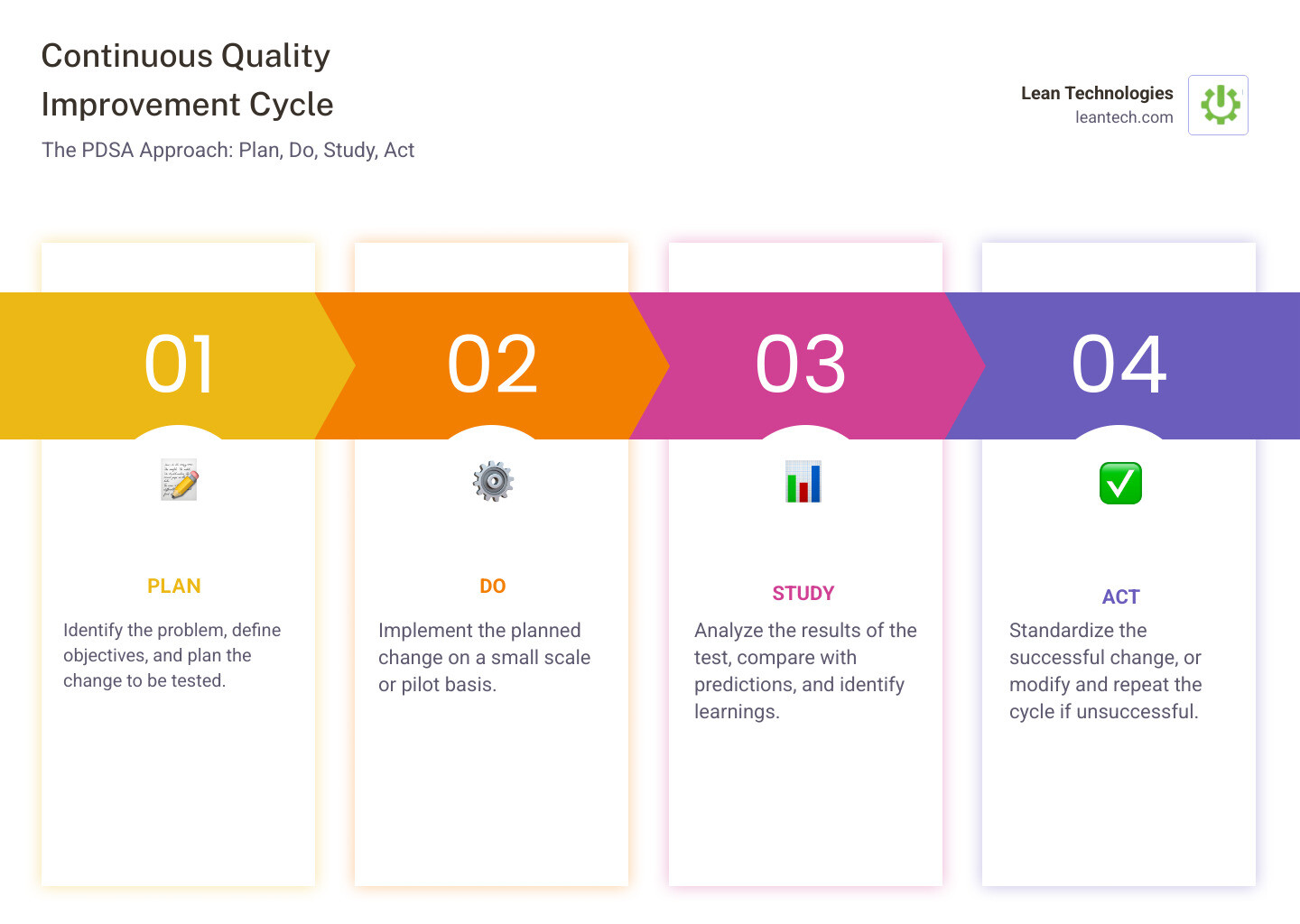
Continuous quality improvement (CQI) is a proactive, cyclical process that leverages data to improve services and outcomes. It's a structured approach, not a one-off project, designed to identify and address opportunities for improvement within an organization’s processes, products, or services. At its core, CQI embodies the belief that there's always room for growth, and even well-established practices can benefit from ongoing refinement.
For operations managers, this means moving beyond simply maintaining the status quo to actively seeking ways to boost productivity and streamline operations. For quality assurance managers, it's about consistently improving product standards and reducing defects. It's about making changes that are either incremental (small, ongoing adjustments) or breakthrough (significant, game-changing innovations). This systematic pursuit of excellence is crucial for any organization aiming for sustained success, as highlighted by scientific research on CQI in healthcare and other demanding fields.
Continual vs. Continuous: What's the Difference?
While often used interchangeably, some quality practitioners and standards bodies make a subtle but important distinction between "continual" and "continuous" improvement. Understanding this nuance can help clarify expectations and implementation strategies.
Continuous improvement typically implies a smooth, uninterrupted, minute-by-minute progression. Think of a conveyor belt that's always moving forward, never stopping. It suggests a constant, linear flow of betterment.
Continual improvement, on the other hand, suggests improvement that occurs in stages, with breaks in between. It's a broader term encompassing "discontinuous" improvements across different areas. The International Organization for Standardization (ISO) notably adopted "continual improvement" for its standards (like ISO 9001), because "continuous" was considered unenforceable. You can't literally improve every single second, but you can continually strive for improvement through deliberate, step-wise efforts.
Why does this distinction matter? For a Continuous Improvement Manager, it sets realistic expectations. It acknowledges that improvements often come in bursts—after an analysis, a pilot, or a team meeting—rather than an unbroken stream. W. Edwards Deming himself preferred "continual improvement" as a broader term, recognizing that improvement efforts often involve cycles and phases rather than a seamless, unbroken flow. In practice, both terms point to the same fundamental goal: never settling for "good enough" and always seeking to make things better.
Core Principles & Big Wins of CQI
CQI isn't just a set of tools; it's a philosophy. It reshapes how teams approach problems and opportunities, driving them toward excellence.

At its heart, CQI relies on data-driven decisions. This means replacing guesswork and gut feelings with objective facts. When you, as an Operations Manager, look at a digital dashboard that shows real-time production numbers, downtime causes, or quality defects, you're empowered to make informed choices, not just react to the loudest complaint.
A strong emphasis on the customer focus ensures that all improvements ultimately benefit the end-user, whether internal or external. It shifts the mindset from "what we think is best" to "what the customer needs."
Perhaps one of the most critical shifts is focusing on the process over people. When something goes wrong, the CQI approach asks, "What in the system allowed this to happen?" rather than "Who messed up?" This fosters a culture of learning, not blame, which is essential for employee empowerment. When operators feel safe to identify problems and suggest solutions, they become active participants in improvement, not just cogs in a machine. This also contributes to a culture of safety, where everyone feels responsible for identifying vulnerabilities and implementing preventive measures.
These principles lead to significant benefits: reduced risk, increased efficiency, and higher profits. When you systematically improve processes, you inherently make them more reliable and less prone to costly errors.
Key Principles That Drive Success
To truly embed CQI into your organization, you need to live by certain principles:
Focus on the System, Not Just the Symptoms: Most problems are rooted in systemic issues, not individual failings. Identifying and fixing these underlying process flaws is key.
Reduce Variation: Consistency is king. CQI aims to minimize variations in processes and outputs, leading to predictable, high-quality results. Statistical process control (SPC) is a powerful tool here.
Use Data, Not Gut Feelings: Every decision should be backed by evidence. This is where real-time data collection and analysis become non-negotiable. For Quality Assurance Managers, this means using metrics to track product standards and identify trends.
Foster Teamwork and Collaboration: CQI is a team sport. Breaking down silos and encouraging cross-functional collaboration ensures a holistic approach to problem-solving.
Leadership Commitment: Without leadership buy-in and active participation, CQI efforts often falter. Leaders must champion the initiative, allocate resources, and model the desired behaviors.
The Payoff: Tangible Benefits
The investment in continuous quality improvement pays dividends across the board. Organizations that accept CQI see a host of positive outcomes, directly impacting their bottom line and competitive edge.
Here are some of the tangible benefits:
Reduced Waste (Muda): By systematically identifying and eliminating non-value-added activities—whether it's excess inventory, unnecessary motion, or overproduction—organizations become leaner and more efficient. Lean methodologies, which focus on waste reduction, have shown remarkable results.
Lower Operational Costs: Less waste, fewer defects, and optimized processes directly translate to cost savings. The American Society for Quality (ASQ) estimates that an average company spends 10% to 15% of its operational expenses on maintaining quality. Effective CQI can significantly reduce this.
Improved Product Quality: CQI's focus on process refinement leads to more consistent and higher-quality products, meeting or exceeding customer expectations.
Higher Customer Satisfaction: When products and services consistently meet high standards, customers are happier and more loyal.
Increased Employee Morale and Engagement: When employees are empowered to contribute to improvements and see their efforts lead to positive change, their morale and job satisfaction soar. This also addresses a key pain point for HR Managers in fostering a positive work environment.
Improved Patient and Staff Safety: In healthcare, CQI has been instrumental in reducing preventable medical errors and improving patient outcomes. A systematic review examining the application of Sig Sigma and Lean methodologies in surgery noted improvement or benefit in over 88% of studies. Across 23 studies, all noted improvements in either 1 or more areas, including cost-saving, reduced appointment wait time, decreased in-department wait time, higher patient volume, decreased cycle time, reduced defects, or increased patient or staff safety and satisfaction.
The CQI Playbook: Key Methodologies and Frameworks
There's no single "magic bullet" methodology for continuous quality improvement. The right tools for your shop floor depend on the problem you're trying to solve and your organization's resources. Many of these approaches have deep roots in manufacturing, particularly the Toyota Production System, which revolutionized efficiency and quality.
The PDSA Cycle (Plan-Do-Study-Act)
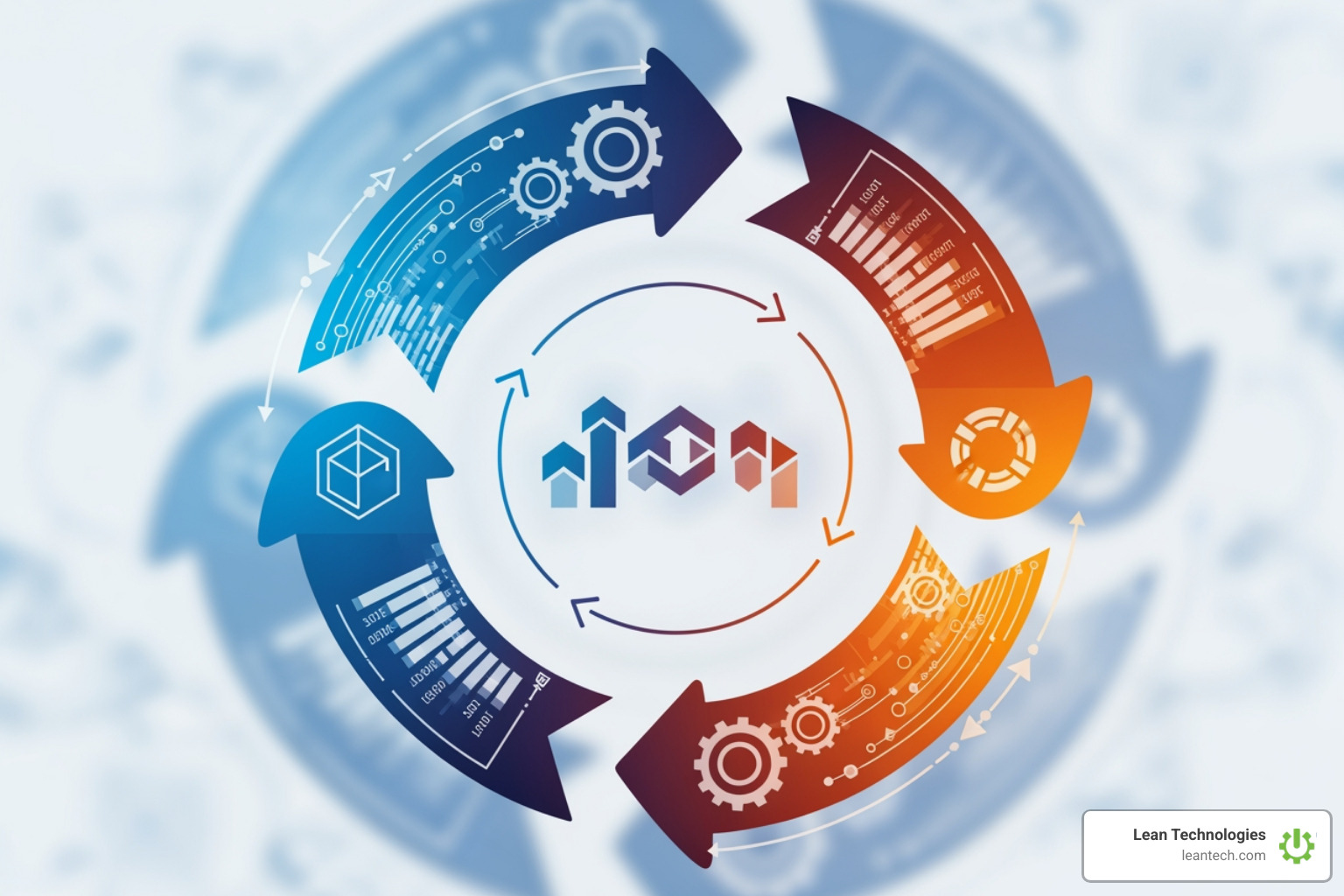
The PDSA cycle, also known as the Deming Cycle or Shewhart Cycle, is the godfather of iterative improvement. It's essentially the scientific method applied to processes. Developed by Walter A. Shewhart and popularized by W. Edwards Deming, this simple yet powerful four-step model guides you through structured experimentation.
Here's how it works:
Plan: Identify an opportunity for improvement or a problem to solve. Define your objective, make predictions about what will happen, and plan the specific changes you'll make. This is where you, as a Project Manager, would outline the scope and expected outcomes.
Do: Implement the change on a small scale, often as a pilot project. Collect data and observe the effects.
Study: Analyze the results and compare them to your predictions. What did you learn? Did the change have the desired effect? Did it create any new problems?
Act: Based on your findings, take action. If the change was successful, standardize it and implement it more broadly. If it wasn't, go back to the "Plan" stage with new insights.
This cycle is perfect for maintenance managers testing a new preventive maintenance schedule, or production managers trying to optimize a specific machine setup. It emphasizes learning and adapting, making it a foundational tool for any CI leader.
Lean Six Sigma
Imagine combining the speed and efficiency of Lean with the precision and defect reduction of Six Sigma. That's Lean Six Sigma—a powerful, data-driven approach for maximizing quality and minimizing waste.
Lean focuses on identifying and eliminating "muda" (waste) – anything that doesn't add value from the customer's perspective. This includes overproduction, waiting, unnecessary transport, over-processing, excess inventory, unnecessary motion, and defects. For Operations Managers, Lean helps streamline workflows and remove bottlenecks.
Six Sigma aims to reduce variation and defects to near-perfection, striving for an error rate of less than 3.4 defects per million opportunities. It uses a structured problem-solving approach called DMAIC:
Define: Clearly state the problem, project goals, and customer deliverables.
Measure: Collect data to quantify the problem and establish a baseline.
Analyze: Determine the root causes of the problem using analytical tools.
Improve: Implement solutions to eliminate the root causes.
Control: Put systems in place to sustain the improvements and prevent recurrence.
Lean Six Sigma is particularly effective for Quality Assurance Managers tackling complex defect rates or Production Managers seeking to optimize entire production lines.
Other Notable Frameworks
Beyond PDSA and Lean Six Sigma, several other frameworks contribute significantly to continuous quality improvement:
Baldrige Excellence Framework: This comprehensive framework helps organizations assess their overall performance and identify areas for improvement across seven categories: Leadership, Strategy, Customers, Measurement/Analysis/Knowledge Management, Workforce, Operations, and Results. It's more of an enterprise-level assessment tool, guiding organizations toward holistic excellence.
Kaizen: A Japanese term meaning "change for good," Kaizen emphasizes small, continuous, incremental improvements involving everyone in the organization. It's about fostering a culture where every employee, from the shop floor operator to the CEO, is constantly looking for ways to make things a little better. Kaizen events are focused, short-term improvement projects.
5S Methodology: A systematic approach to workplace organization and standardization: Sort, Set in Order, Shine, Standardize, Sustain. It creates a cleaner, safer, and more efficient work environment, directly supporting Lean principles.
Root Cause Analysis (RCA): A problem-solving technique used to identify the underlying reasons why a problem occurs. Tools like the 5 Whys (asking "why?" five times to drill down to the root cause) and the 5Ms (Manpower, Machine, Materials, Methods, Measurement) are critical here. For Maintenance Managers investigating equipment failure, or Safety Managers analyzing an incident, RCA is invaluable.
Feature PDSA Cycle Lean Six Sigma Baldrige Excellence Framework Primary Focus Iterative learning and small-scale testing Waste reduction & defect minimization Holistic organizational performance and excellence Approach Scientific method, cyclical Data-driven, structured (DMAIC) Self-assessment, criteria-based Key Benefit Rapid experimentation, quick learning Process efficiency, high quality, cost savings Strategic alignment, overall organizational health Best For Rapid, local improvements; testing new ideas Complex process problems, high variation/defects Enterprise-wide strategic planning and continuous improvement
Putting CQI to Work: A 5-Step Implementation Guide
Implementing continuous quality improvement isn't about flipping a switch; it's a journey. But with a structured approach, you can build momentum, create a culture where improvement is the norm, and see real results on your shop floor.
Step 1: Identify the Problem & Get Leadership Buy-In
Before you can fix anything, you need to know what's broken—or what could be better. This involves defining the opportunity for improvement. Is it high defect rates, excessive downtime, safety incidents, or slow cycle times?
Define the opportunity: What specific process or outcome needs improvement?
Align with business goals: Ensure your CQI initiative supports broader company objectives (e.g., reducing operational costs, increasing customer satisfaction). For Production Managers, this means linking improvement directly to output targets.
Secure resources: You'll need time, budget, and personnel. This is where leadership buy-in is critical. Leaders must champion the initiative and commit to its success.
Form a cross-functional team: Bring together people from all affected departments (e.g., operations, maintenance, quality, engineering). This ensures diverse perspectives and fosters collaboration.
Step 2: Map the Current State & Collect Data
You can't improve what you don't understand. This step is all about getting a clear picture of how things work now.
Process mapping: Visually represent the current process flow, from start to finish. This often reveals hidden inefficiencies.
Gemba walks: Go to where the work happens—the shop floor. Observe the process firsthand, talk to operators, and see the challenges they face.
Establish a baseline: Before making any changes, measure the current performance. This data will be your benchmark to prove improvement.
Identify bottlenecks: Where do processes slow down or get stuck? These are often prime targets for improvement.
The role of real-time data: This is where digital tools shine. Instead of relying on paper logs or end-of-shift data entry, a platform that allows operators to log issues and track actions in real-time provides immediate visibility. For an IT Manager, integrating such a system means providing immediate, actionable data to the teams who need it most.
Step 3: Analyze Data & Brainstorm Solutions
Now that you have a clear picture and data, it's time to dig into the "why" and generate solutions.
Root cause analysis: Use tools like the 5 Whys or Fishbone diagrams to get to the fundamental reasons for problems, not just their symptoms.
Set SMART goals for improvement: Your goals should be Specific, Measurable, Achievable, Relevant, and Time-bound. This provides clear targets for your team.
Prioritize potential solutions: Not all solutions are equal. Evaluate them based on impact, feasibility, and cost.
Step 4: Test, Implement, and Standardize
It's time to put your ideas into action, carefully.
Run a pilot test (PDSA): Implement your chosen solution on a small scale. This minimizes risk and allows for learning before a full rollout.
Measure the impact: Collect data during your pilot to see if the changes are having the desired effect.
Document new Standard Operating Procedures (SOPs): If the pilot is successful, formalize the new process. Ensure these SOPs are accessible and clear.
Train the team: Ensure everyone affected by the change understands the new process and why it's being implemented. This is crucial for HR Managers who oversee workforce training.
Step 5: Monitor, Control, and Scale
Continuous quality improvement is, well, continuous. The work doesn't stop once a solution is implemented.
Track Key Performance Indicators (KPIs): Continuously monitor relevant metrics to ensure the improvements are sustained. Control charts can help you detect when a process deviates from its improved state.
Celebrate wins: Acknowledge your team's hard work and successes. This builds morale and reinforces the value of CQI.
Share learnings: Document what worked, what didn't, and why. This institutional knowledge is invaluable for future improvements.
Scale successful changes: Once an improvement is proven and stable, look for opportunities to apply it to other similar processes or areas of the business.
Common Roadblocks in CQI (And How to Smash Them)
Even with the best intentions, implementing continuous quality improvement isn't always smooth sailing. You'll encounter resistance and challenges, but knowing what to expect can help you smash through them.
The familiar refrain, "We've always done it this way," is a common hurdle. Other roadblocks include a lack of dedicated resources, poor communication between departments, and analysis paralysis—getting stuck in data without taking action.
Overcoming Cultural and People-Related Problems
People are at the heart of any improvement effort. When they resist, your CQI efforts stall.
Driving out fear: Deming stressed this. Employees need to feel safe to identify problems without fear of blame. Create a culture where mistakes are seen as learning opportunities.
Explaining the "why": Don't just tell people what to do differently; explain why it matters. How will this improvement benefit them, their team, the customer, or the company? Studies show that most individuals strongly resist change—even when it’s for their benefit.
Leadership's role in modeling behavior: Leaders must walk the talk. When managers actively participate in CQI, it signals its importance to the entire organization.
Empowering operators: The people closest to the work often have the best ideas for improvement. Give them the tools and authority to make small changes and see their impact.
Tackling Process and Data Challenges
Beyond people, process and data issues can derail CQI.
Unrealistic goals: Setting unachievable targets demotivates teams. Break down big goals into smaller, manageable SMART objectives.
Disorganized measurement: If you can't reliably measure progress, you can't prove improvement. Standardize your data collection and reporting.
Data silos: Information trapped in different systems or departments makes a holistic view impossible. For a CI Manager, this is a nightmare.
Moving from paper to digital: Paper-based workarounds are notorious for slowing teams down and creating "real-late" data. Digitizing your processes with a platform built for the shop floor ensures data is captured at the source, in real-time. This means Maintenance Managers can log issues instantly, and Quality Assurance Managers have immediate visibility into defects.
Future Trends and Emerging Technologies Impacting CQI
The landscape of continuous quality improvement is constantly evolving, with technology playing an increasingly pivotal role. For IT Managers, understanding these trends is key to integrating the right solutions.
Artificial Intelligence (AI) and Machine Learning (ML): AI and ML can analyze vast amounts of data to identify patterns, predict potential failures, and even suggest optimal improvements. Predictive analytics, for instance, can help foresee issues and bottlenecks, allowing teams to act proactively rather than reactively.
Smart Sensors and IoT (Internet of Things): Connected devices on the shop floor can provide real-time data on machine performance, environmental conditions, and product quality. This influx of granular data offers unprecedented visibility, allowing for more precise process control and immediate detection of anomalies.
Augmented Reality (AR) and Virtual Reality (VR): These technologies can revolutionize training for new processes, allowing employees to practice in a risk-free environment. They can also provide real-time guidance to operators on complex tasks, reducing errors.
Digital Platforms (like Thrive): Integrated digital solutions that capture data at the source, streamline workflows, and provide real-time dashboards are becoming indispensable. They empower operators, give managers instant visibility, and ensure that CQI efforts are data-driven and sustainable.
How CQI is Applied in Specific Sectors (Healthcare)
While continuous quality improvement has its roots in manufacturing, its transformative power has been widely recognized across various sectors, notably in healthcare. The application of CQI in healthcare highlights its universal applicability to improve processes, safety, and patient care.
In healthcare, CQI initiatives aim to:
Improve Patient Safety: The shocking statistics from 1999, estimating between 44,000 and 98,000 deaths annually due to preventable medical errors, spurred a massive push for CQI in healthcare. Initiatives like surgical checklists have significantly reduced complications, infections, and mortality rates by standardizing critical procedures.
Improve Clinical Outcomes: CQI helps healthcare providers optimize treatment protocols, reduce readmission rates, and improve the effectiveness of patient care. For example, a large healthcare consortium in Alabama serving HIV patients was able to decrease the missed-visits rate of its HIV patients by a statistically significant margin through a CQI strategy.
Optimize Operational Efficiency: From reducing appointment wait times to streamlining patient flow, CQI methodologies like Lean help healthcare organizations deliver care more efficiently. The STEEEP model (Safety, Timeliness, Effectiveness, Efficiency, Equitability, and Patient-Centeredness) is a well-known framework for improvement in healthcare.
Healthcare's adoption of CQI demonstrates that its principles are vital wherever processes, people, and outcomes intersect.
Frequently Asked Questions about Continuous Quality Improvement
What is the main goal of continuous quality improvement?
The primary goal is to create a systematic, ongoing effort to improve processes, products, and services. It's about moving beyond simply fixing problems as they arise to proactively preventing them and constantly seeking better ways of working to improve efficiency, quality, and customer value.
How is CQI applied in manufacturing?
In manufacturing, CQI is used to reduce defects, minimize equipment downtime, streamline production lines, eliminate waste (like excess inventory or motion), and improve worker safety. Methodologies like Lean, Six Sigma, and the PDSA cycle are used to analyze production data, test process changes, and standardize best practices on the shop floor.
What is the role of data in a CQI system?
Data is the foundation of CQI. It replaces guesswork with objective facts. Teams use data to understand current performance (baselines), identify the root causes of problems, measure the impact of changes, and monitor processes over time to ensure improvements are sustained. Without reliable data, improvement efforts are just shots in the dark.
Stop Guessing, Start Improving
Continuous quality improvement isn't a fancy corporate initiative; it's a survival strategy. Relying on paper, spreadsheets, and end-of-shift reporting means you're always a step behind. To truly build a culture of improvement, your team needs the ability to see problems, track actions, and measure results in real-time. A digital platform like Thrive provides the structure and visibility needed to turn CQI from a concept into a daily reality on your shop floor. Ready to make the shift? Explore this guide to digital lean manufacturing.