
Crafting Efficiency: How Custom Software Transforms Your Manufacturing Plant
From Spreadsheets to Smart Ops: Why Custom Manufacturing Software Matters
Custom manufacturing software is a digital platform built to manage the unique workflows of manufacturers who produce made-to-order, highly configurable, or low-volume products. Unlike mass production systems designed for standardized, high-volume output, custom manufacturing software adapts to your specific processes—handling everything from production planning and shop floor control to quality management and real-time data analytics.
Quick Answer: What is Custom Manufacturing Software?
Purpose: Manage production, inventory, quality, and maintenance for made-to-order or high-mix manufacturing
Core Features: Production planning, work order tracking, quality control, real-time dashboards, mobile data entry
Key Difference: Built around your workflows—not forcing you to change how you work
Main Benefit: Real-time visibility and control over your entire operation, from the shop floor to the front office
ROI Drivers: Less manual work (up to 90% reduction), faster reporting (7 days to 15 seconds), improved efficiency (15-30% productivity gains)
Here's the problem most plant managers face: you're drowning in spreadsheets, paper logs, and disconnected systems. Your team spends hours hunting down information that should be at their fingertips. By the time you see yesterday's problems, you're already behind on today's.
Custom manufacturing is different from mass production. You're not stamping out 10,000 identical widgets. You're managing product variations, rapid changeovers, fluctuating customer specs, and supply chains that shift overnight. That means you need software that's as flexible as your operation—not rigid, off-the-shelf tools designed for assembly lines.
The shift is already happening. 70% of manufacturing companies accelerated their digital projects after the pandemic. Industry leaders call it "software-defined manufacturing"—where real-time data integration orchestrates people, machines, and systems for faster response and better agility.
But here's the catch: real-time only works when your process is structured and data is entered at the source—on the shop floor, in the moment. If your team is still writing on clipboards and entering data at the end of the shift, you're managing in the rear-view mirror.
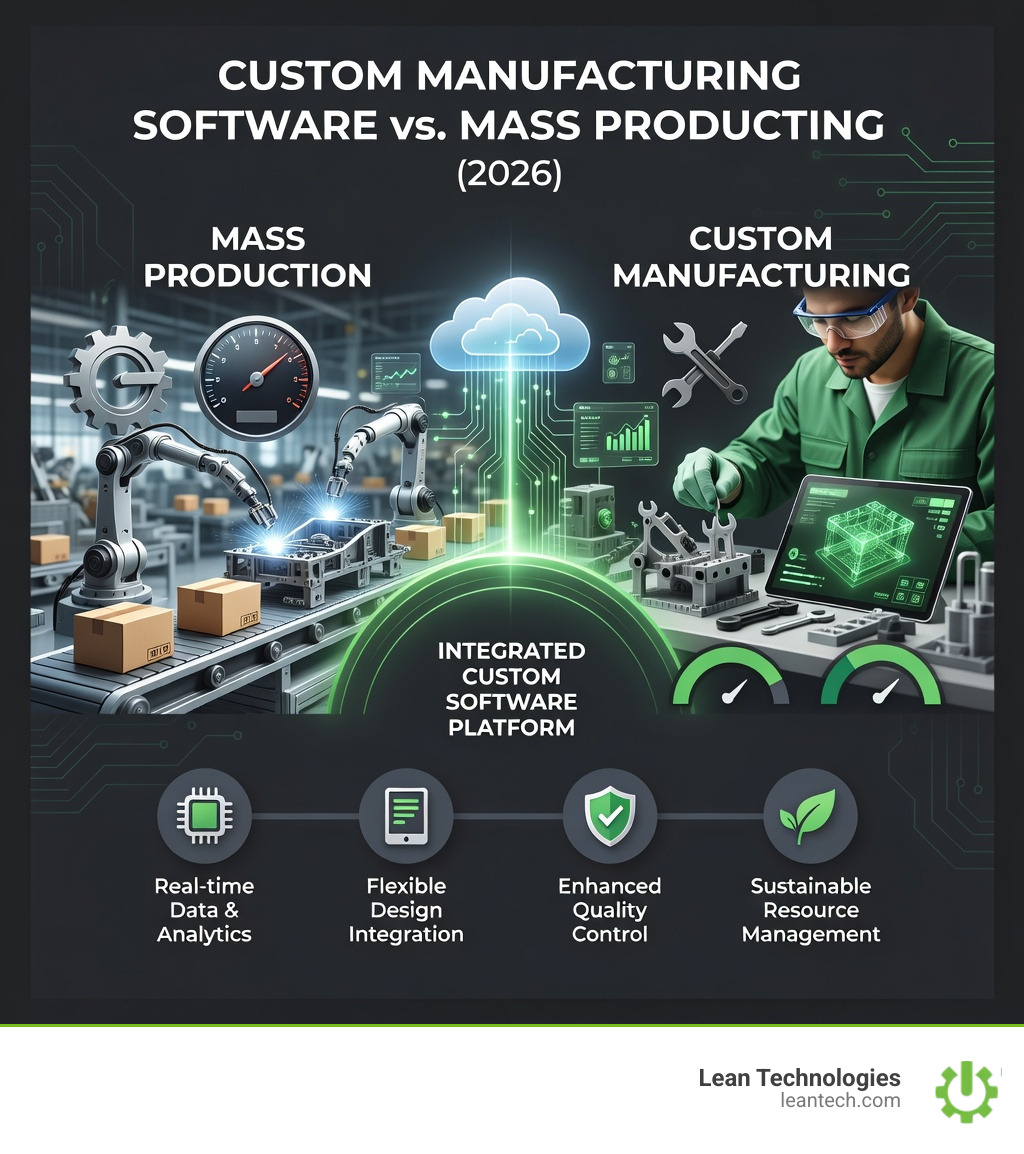
Infographic showing two columns: Left side labeled "Custom Manufacturing" with icons for flexible scheduling, made-to-order products, low-to-medium volume, high product variation, and real-time adjustments. Right side labeled "Mass Production" with icons for fixed assembly lines, standardized products, high volume, minimal variation, and economies of scale. Arrow at bottom highlighting that custom manufacturing requires adaptable software, while mass production uses rigid, automated systems.
The Problem with "One-Size-Fits-All"
You know the drill: you buy an off-the-shelf solution hoping it will solve your problems, only to find it creates new ones. Off-the-shelf software is rigid by nature. It's built for the lowest common denominator, not your unique processes. This often forces awkward workflows on your team, leading to frustration, workarounds, and ultimately, wasted time.
Imagine trying to fit a square peg into a round hole. That's what happens when generic tools fail unique operations. Your job costing becomes inaccurate, because the software can't track the nuances of your custom orders. Your valuable data gets stuck in silos, preventing you from getting a complete picture of your operations. This isn't just inefficient; it's a roadblock to growth. When you’re dealing with high-mix, low-volume production, these headaches multiply. You need a system that adapts to you, not the other way around. In fact, 50% of manufacturing businesses prefer at least somewhat customized software. This statistic alone shows a clear demand for solutions that truly fit.
Core Challenges in Custom Manufacturing
Custom manufacturers face a unique set of challenges that mass producers don't. You're constantly balancing customer demands with operational realities. This includes:
Unpredictable supply chains: Volatility is the new normal. You need software that helps you react quickly.
Customers want more, faster: The pressure for quick turnarounds on highly customized products is intense.
Product variations everywhere: Managing hundreds or even thousands of unique product configurations requires immense flexibility.
Flexibility is a must: Your production lines need to adapt on the fly, but manual systems make this nearly impossible.
Changeovers eat up time: Every minute spent on a changeover is a minute lost in production.
No real-time visibility: Without accurate, up-to-the-minute data, you're making decisions in the dark.
These challenges aren't just theoretical. They hit your bottom line. They lead to missed deadlines, inaccurate quotes, and frustrated customers. Operations managers, quality assurance managers, and production managers are all feeling the pressure. They need solutions that provide control and clarity, allowing them to manage by exception rather than chasing every fire.
What to Look For: Key Features of Custom Manufacturing Software
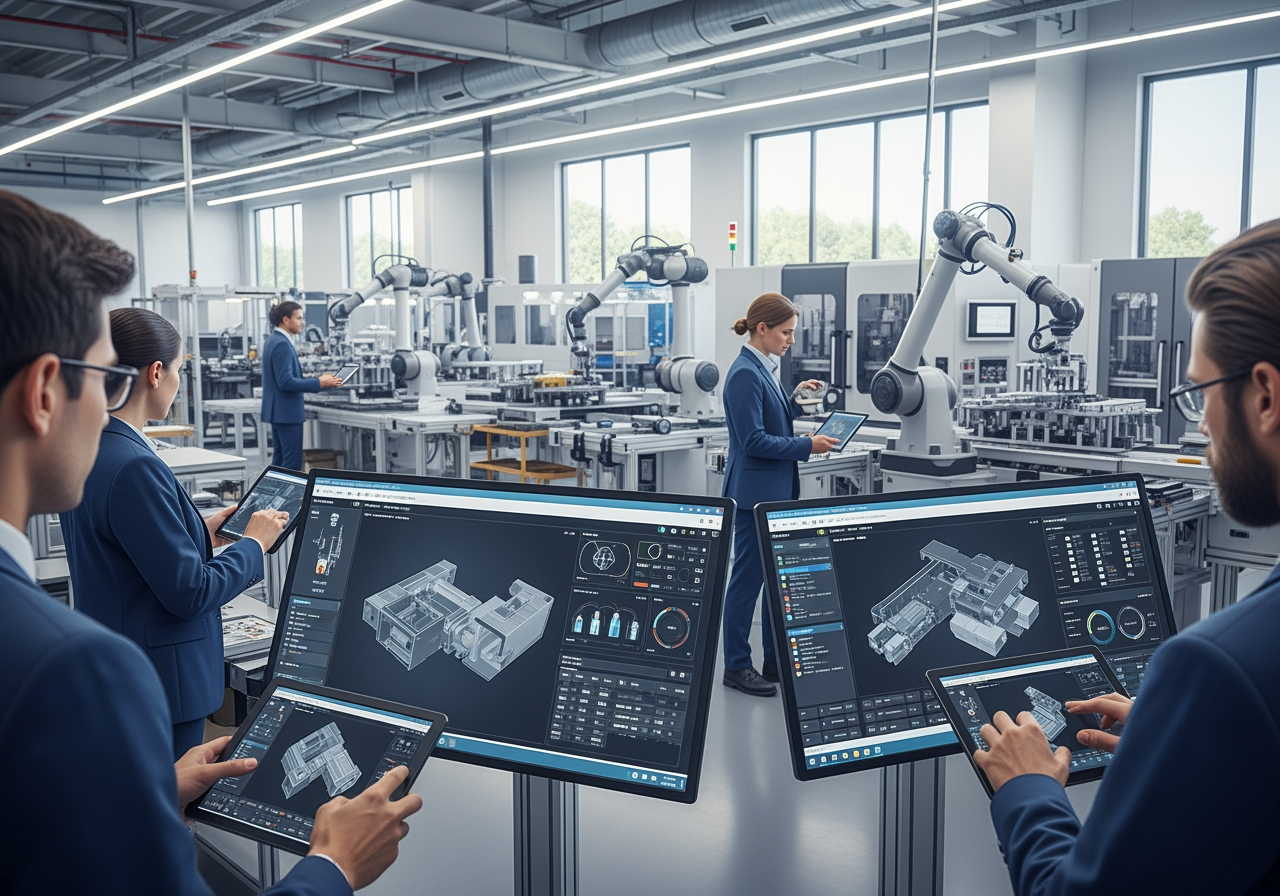
When you're looking to implement custom manufacturing software, you're not just buying a tool; you're investing in a strategic advantage. The right software provides the digital foundation needed to steer complexity and volatility. It should be flexible, scalable, robust, and reliable. Here are the key features and functionalities that truly make a difference for custom manufacturers:
Production Planning and Shop Floor Control
This is where the rubber meets the road. For production managers and continuous improvement leaders, these features are non-negotiable:
Live scheduling: Adjust schedules on the fly, reroute jobs based on machine availability, and instantly reallocate resources. This allows you to manage complex, made-to-order products with fluctuating deadlines.
Work order tracking: From creation to completion, track every work order in real time. This ensures accountability and progress visibility, crucial for project managers.
Capacity planning: Understand your current and future capacity, enabling you to take on more jobs with confidence and avoid bottlenecks.
Mobile data entry: Empower your shop floor operators to input data directly from tablets or mobile devices. This eliminates paper, reduces manual entry errors, and provides real-time updates.
Downtime tracking: Accurately log and categorize downtime, giving maintenance managers and operations leaders insights into where to focus improvement efforts.
Inventory management: Real-time visibility into raw materials, work-in-progress, and finished goods. This helps prevent stockouts, minimizes waste, and optimizes material flow, especially for items with short shelf lives or fluctuating costs.
Maintenance tracking and management: Integrate maintenance schedules and work orders directly into your production planning. Predictive maintenance alone can cut machine downtime by 30-50% and extend equipment life by 20-40%. Want to dive deeper into proactive maintenance? Check out our guide on maintenance management.
Quality, Compliance, and Traceability
For quality assurance managers and safety officers, maintaining standards and ensuring compliance is paramount. Custom manufacturing software can transform this critical area:
Digital checklists: Standardize processes, ensure every step is followed, and capture data digitally.
Automated quality reports: Generate comprehensive quality reports in seconds, not days. Research shows this can reduce reporting time from 7 days to just 15 seconds.
Non-conformance tracking: Quickly identify, document, and resolve issues, allowing for real-time issue correction.
Audit trails: Maintain a complete, immutable record of every action, change, and inspection for seamless audits.
Compliance management: Ensure adherence to industry regulations and internal standards, which is vital for specialized products like medical-grade components.
Real-time issue correction: Empower your team to spot and fix problems as they happen, preventing costly rework down the line. Learn more about how to streamline your quality processes with Thrive Quality.
Data Analytics and Real-Time Visibility
What good is data if you can't use it? Custom manufacturing software makes data actionable, turning raw numbers into strategic insights:
Custom dashboards: Build role-specific dashboards that display the KPIs most relevant to each team member, from operators to plant managers. This empowers everyone to make informed decisions.
KPI tracking: Monitor key performance indicators like OEE, cycle time, defect rates, and on-time delivery in real time.
Business Intelligence (BI): Consolidate data from various sources to identify trends, pinpoint bottlenecks, and forecast future needs.
Labor performance metrics: Track individual and team productivity, helping continuous improvement managers identify training needs or process optimizations.
Real-time alerts: Receive instant notifications for critical events, allowing you to manage by exception and address problems before they escalate.
Data-driven decisions: Move beyond gut feelings and make strategic choices based on accurate, up-to-the-minute information. This boosts responsiveness and agility, a key component of "software-defined manufacturing."
The Real Payoff: ROI, Efficiency, and Scalability
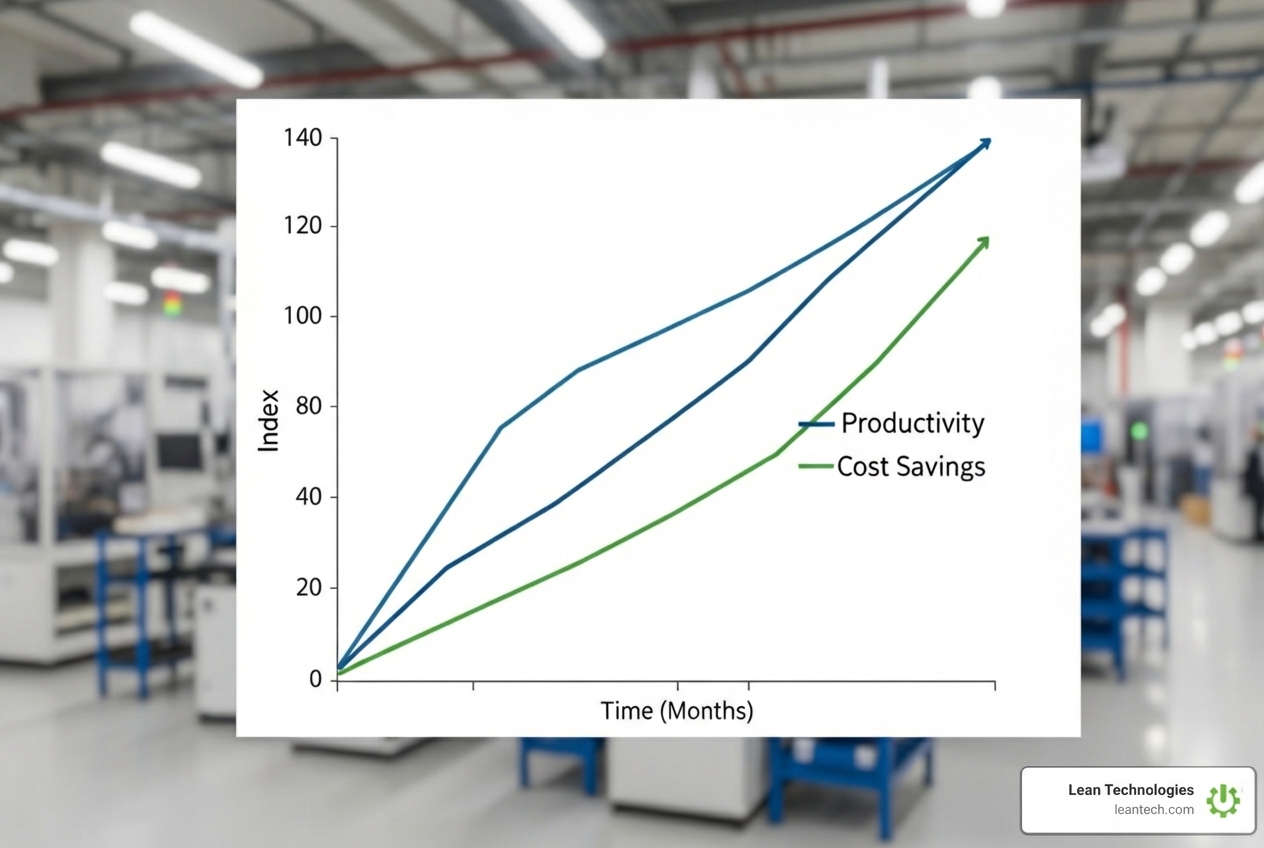
You’re not just buying software; you’re investing in your plant’s future. The return on investment (ROI) from custom manufacturing software can be substantial, impacting everything from daily operations to long-term growth. Most clients see a 4x to 10x return in 2 years or less from custom software investments.
Boosting Efficiency and Productivity
Manual processes are productivity killers. They introduce errors, create delays, and keep your team from doing higher-value work. Custom software tackles this head-on:
Streamlined workflows: Automate repetitive tasks, reduce manual handoffs, and eliminate redundant data entry. This leads to significantly smoother operations.
Up to 90% less manual work: Imagine the time your team could reclaim if they spent 90% less time on paperwork. This statistic is a game-changer for any operations manager.
Labor productivity up 15-30%: When software handles scheduling, planning, and reporting, your team becomes dramatically more productive.
Automated reporting: Generate crucial reports (like quality reports) in seconds, freeing up valuable time for analysis and action.
Fewer meetings: With real-time data and automated workflows, much of the information-sharing that clogs up calendars becomes instant and accessible. One bus manufacturer saved ~40 hours of monthly meetings with workflow automation.
Achieving Scalability, Flexibility, and Long-Term ROI
The manufacturing landscape is constantly evolving. Your software needs to evolve with it.
Ready for market changes: Custom software is built to be flexible, allowing you to adapt to new product lines, customer demands, or market shifts without overhauling your entire system.
Supports business growth: As your plant expands, your software scales with you. It accommodates increased production volumes, new equipment, and a growing workforce without breaking a sweat.
Six-figure annual savings possible: Real-world examples show manufacturers achieving substantial savings. A bus manufacturer delivered six-figure annual savings through improved purchasing margin analysis and boosted quoting accuracy.
Designed for sustainability: Modern software can integrate sustainability considerations from the very start. Did you know that up to 80% of a product’s lifetime emissions are determined at the design stage? Software can help optimize material usage and minimize waste, contributing to a greener, more cost-effective operation.
Future-Proof Your Factory: Integration and Tech Trends
In today's interconnected world, your custom manufacturing software can't operate in a vacuum. It needs to communicate seamlessly with your other critical business systems and leverage emerging technologies to keep you ahead of the curve.
Integrating with Your Existing Tech Stack (ERP, MES)
The idea isn't to rip and replace everything. It's about creating a harmonious ecosystem where all your systems work together.
Works with ERP and MES: Your custom software should integrate smoothly with your existing Enterprise Resource Planning (ERP) and Manufacturing Execution Systems (MES). This allows you to improve capabilities without disrupting core operations.
Breaks down data silos: Integration ensures that data flows freely between departments, eliminating isolated information and providing a unified view of your operations.
Automates data sharing: No more manual data transfers or double entry. Data is automatically updated across systems, improving accuracy and saving time.
Creates a single source of truth: When all systems are integrated, you have one reliable source for all your operational and financial data. This is invaluable for operations managers and IT managers.
API integration: Modern software uses Application Programming Interfaces (APIs) to connect securely and efficiently with other applications.
Harmonizes operations: From order intake in your ERP to production tracking on the shop floor via MES, and quality checks through your custom software, everything works in concert. This orchestration between people, machines, and systems boosts responsiveness and agility.
Trends Shaping the Future of Custom Manufacturing Software
The future of manufacturing is digital, and several key trends are driving innovation in custom manufacturing software:
Digital Twins: This technology creates a virtual replica of your physical assets, processes, or even your entire factory. It allows you to simulate scenarios, predict outcomes, and optimize performance without impacting real-world operations. Digital twin technology is already in use by 44% of industrial executives, with another 42% planning adoption soon. This offers improved traceability and quality control.
AI and Machine Learning: Artificial intelligence is being integrated into custom software for predictive maintenance (detecting equipment failures before they happen), demand forecasting (optimizing inventory), and quality control (AI-enabled anomaly detection). AI-driven smart automation can speed up production processes and augment product assembly with robotics.
Cloud adoption: More and more manufacturers are moving their operations to the cloud. Cloud platforms offer scalability, flexibility, and accessibility, enabling real-time data access from anywhere. More than 70% of enterprises are expected to use industry cloud platforms by 2027. This trend maximizes the benefits of other data-related technologies.
These advancements mean that custom manufacturing software isn't just about solving today's problems; it's about preparing your plant for tomorrow's opportunities.
Your Questions, Answered: FAQs on Custom Manufacturing Software
What's the difference between custom and off-the-shelf manufacturing software?
Custom manufacturing software is built specifically for your plant's unique processes, workflows, and challenges. It’s like a custom suit—it fits perfectly because it was designed for you. This offers real flexibility, allowing you to innovate and adapt without constraints. Off-the-shelf software, on the other hand, is a generic solution. It’s like a ready-made suit—it might fit "okay," but it rarely fits perfectly. It often forces you to change your processes to match the software's capabilities, leading to inefficient workarounds, frustration, and wasted time. For high-mix, low-volume custom manufacturers, this rigidity can be a significant bottleneck.
How much does custom manufacturing software cost?
The cost of custom manufacturing software depends on several factors: the complexity of the features you need, the number of integrations with existing systems, and the size of your team. The upfront investment for custom software is typically higher than for off-the-shelf solutions. However, the long-term ROI usually far outweighs this initial cost. Benefits like increased efficiency, reduced waste, improved quality, and improved scalability can lead to significant cost savings and revenue growth over time. For example, manufacturers using custom solutions report labor productivity gains of 15-30% and 90% reduction in manual work. These operational gains quickly offset the development cost.
How does custom software improve job costing and quoting accuracy?
Custom manufacturing software dramatically improves job costing and quoting accuracy by providing real-time, granular data from across your operations. It connects data from production, inventory, labor, and even equipment maintenance. This means you get up-to-the-minute true costs for every component and process. For example, if material costs fluctuate, the software can instantly update the impact on a specific job. This leads to more precise quotes, better profit margins, and increased trust with your customers because you can stand by your pricing. It also enables project managers to track costs against budgets in real-time, preventing overruns.
Stop Managing in the Rear-View Mirror
The manufacturing world is complex, , and demanding. Relying on outdated manual processes, disconnected spreadsheets, and generic software is no longer sustainable. You're not just losing efficiency; you're losing money, missing opportunities, and operating with a constant sense of playing catch-up.
The cost of inaction is too high. Imagine the impact of 90% less manual work, 15-30% higher labor productivity, and quality reports generated in seconds instead of days. This isn't a pipe dream; it's the reality that custom manufacturing software delivers.
It's about the power of real-time visibility, empowering your entire team—from the shop floor operator to the plant manager—with the data they need, exactly when they need it. It's about structuring your processes so that every action, every update, and every piece of information is captured at the source, giving you an accurate, live picture of your operations.
Stop managing your shop floor through spreadsheets and wishful thinking. Let your team run lean—with real-time visibility and fewer workarounds. Want faster problem-solving? It starts with better visibility.
Get started with a digital lean system and transform your plant's efficiency today.