
Building Resilience: Risk Mitigation in Manufacturing
Your Shop Floor is a Minefield of Hidden Risks
Manufacturing risk mitigation is how you protect your operation from the threats that can shut you down—supply chain delays, equipment failures, cybersecurity breaches, and compliance gaps. It's about spotting problems before they cost you time, money, or worse.
Quick answer: Manufacturing risk mitigation works in four steps:
Identify threats — Map out what could go wrong (breakdowns, delays, safety incidents)
Assess and prioritize — Score risks by likelihood and impact
Build defenses — Create preventive maintenance schedules, contingency plans, and compliance systems
Monitor and adjust — Track real-time data and close the loop on action items
Why this matters now: 41% of manufacturers say business interruption is their top concern. Over 75% experienced supply chain disruptions recently, pushing lead times up by 30%. Unplanned downtime can cost you $25,000 per hour—or over $500,000 for larger operations.
The old way—paper logs, scattered spreadsheets, chasing problems after they hit—doesn't cut it anymore. You need real-time visibility, structured processes, and a team that can act fast.
Global shocks like the pandemic, trade wars, and extreme weather have exposed how fragile lean, just-in-time supply chains really are. Add rising costs, aging equipment, and a shrinking skilled workforce, and you've got a perfect storm.
But here's the good news: you don't need to rip out your ERP or spend six figures on a massive IT overhaul. You need a system that digitizes the work your team already does—logging issues, tracking maintenance, managing safety—so you can see what's happening in real time and fix it before it snowballs.
That's what this guide is about. We'll walk you through a practical framework for manufacturing risk mitigation, show you what's working on real shop floors, and give you a roadmap to move from constant firefighting to proactive, resilient operations.
The New Normal: Why Manufacturing Risk is at an All-Time High
Remember when "just-in-time" was the gold standard? It was all about efficiency, lean inventories, and cost savings. Then came the global shocks. The pandemic hit, factories shut down, and suddenly, those lean supply chains snapped. Trade wars, extreme weather events, and geopolitical instability have only added fuel to the fire, making manufacturers realize that efficiency without resilience is a recipe for disaster.
These global events aren't just headlines; they're hitting your bottom line. Manufacturing operations face unprecedented risks, with 41% of manufacturers ranking business interruption as their top concern due to supply chain disruption, cyberattacks, and equipment failure. These disruptions can add 5% to 10% to product costs and cause costly downtime, threatening operational continuity and profitability. Over 75% of manufacturers experienced supply chain interruptions in recent years, increasing lead times by up to 30%. That's not just a delay; that's lost revenue, unhappy customers, and immense financial pressure.
The landscape has changed. Customers are now eager to understand a manufacturer's risk management plans, viewing them as integral to their overall strategy. It's no longer enough to just react; you need to anticipate, prepare, and adapt.
Common Risks Haunting Today’s Manufacturers
Let's get specific. What exactly are these threats that keep operations managers and plant managers up at night? They're varied, complex, and often interconnected:
Supply Chain Delays: This is probably the biggest headache right now. Raw material shortages, transportation bottlenecks, trade restrictions, and even geopolitical unrest can bring production to a halt. One critical component stuck at a port can idle an entire assembly line.
Equipment Breakdowns: Aging or poorly maintained machinery is a ticking time bomb. Unexpected breakdowns lead to unplanned downtime, quality defects, and missed deadlines. The average manufacturing facility loses around $25,000 for every hour of unplanned downtime. For larger operations, this can exceed $500,000, and in automotive manufacturing, costs can reach up to $2.3 million per hour. Predictive maintenance can minimize unplanned downtime by up to 30%, highlighting the importance of addressing this risk proactively.
Cybersecurity Gaps: As manufacturing becomes more digitized, the attack surface for cyber threats grows. Hacking, malware, and data breaches can disrupt production, steal intellectual property, and damage reputation. Even third-party vendors in your supply chain can introduce vulnerabilities.
Compliance Misses: Manufacturing is a heavily regulated industry. Failing to meet standards set by bodies like OSHA or ISO 9001 can result in hefty fines, legal battles, and severe reputational damage. Quality Assurance Managers know this all too well.
Safety Incidents: The shop floor can be a dangerous place. According to the US Bureau of Labor Statistics, the reported rate of injury and illness was 3.2 for every 100 full-time workers in the manufacturing sector in 2022. Accidents lead to human suffering, lost productivity, increased insurance costs, and potential lawsuits. More on safety can be found here.
Skills Shortages: The manufacturing industry faces a significant talent gap. The National Association of Manufacturers estimates that the U.S. manufacturing sector could need up to 3.8 million workers in the next decade. An aging workforce and a lack of skilled professionals mean fewer hands on deck and increased pressure on existing teams. This impacts everything from production efficiency to maintenance capabilities.
Market Swings: Economic downturns, shifts in consumer demand, and intense competition can quickly render products obsolete or unprofitable. Manufacturers need agility to adapt to these fluctuations.
The Problem with “How We’ve Always Done It”
For many manufacturers, risk management has been a reactive exercise. A problem hits, and then everyone scrambles to fix it. This "firefighting" approach is often rooted in traditional methods that simply can't keep pace with today's complex, fast-moving environment:
Siloed Information: Data is scattered across spreadsheets, paper logs, and disparate systems. The maintenance team has their records, quality has theirs, and production has theirs. No one has a holistic view, making it impossible to connect the dots and spot emerging risks.
Paper Logs & Manual Processes: Relying on paper or manual data entry is slow, error-prone, and provides no real-time visibility. By the time the data is collected, entered, and analyzed, it's already "real-late" (as we like to say), and the problem has likely escalated.
Chasing Problems After They Hit: This is the core of reactive management. Without a proactive system, you're always playing catch-up, dealing with the consequences of failures rather than preventing them. This leads to constant unplanned downtime and stress.
No Real-Time View: Operations Managers need to know what's happening on the shop floor now, not at the end of the shift or week. Lack of real-time data means decisions are based on outdated information, leading to missed opportunities and compounding problems.
Slow Communication: When information isn't centralized or easily accessible, communication breaks down. Critical alerts are delayed, teams aren't aligned, and response times suffer.
Hard to Scale: Traditional methods don't scale. As your operation grows or new production lines come online, managing risks with outdated tools becomes exponentially harder.
Always Fixing, Never Preventing: This cycle is exhausting and expensive. It drains resources, demoralizes teams, and prevents continuous improvement efforts from gaining traction.
Modern manufacturing demands a modern approach to manufacturing risk mitigation. It requires moving beyond simply fixing what's broken to building a system that anticipates, prevents, and manages risks proactively.
A Practical Framework for Manufacturing Risk Mitigation
Building true resilience isn't about luck; it's about a structured, disciplined approach. Think of it as installing a robust alarm system and emergency response plan for your entire operation. This framework accepts risk-based thinking and focuses on proactive moves to build operational resilience.
Here's how to break it down:
Step 1: Spot the Threats
You can't mitigate what you don't know about. The first step in effective manufacturing risk mitigation is comprehensive risk identification. This isn't a one-time event; it's an ongoing process.
Team Huddles & Brainstorming: Gather a cross-functional team—operators, maintenance, quality, safety, and production leads. These are the people closest to the work; they know where the hidden dangers lie. Ask: "What could go wrong here? What keeps you up at night?"
Dig into Past Data: Your historical records are a goldmine. Analyze past incidents, near misses, equipment failures, quality defects, and customer complaints. Look for patterns. If you've been tracking downtime on paper, it's time to digitize that data for analysis.
Map Out Processes: Walk through every step of your manufacturing process, from raw material acquisition to final product distribution. Identify potential failure points, bottlenecks, and dependencies. Process mapping can reveal hidden risks.
Failure Mode and Effects Analysis (FMEA): This is a powerful, systematic approach to identify potential failures in a design, a manufacturing process, or a product. DFMEA (Design FMEA) helps identify and fix design failures early, minimizing costly recalls. PFMEA (Process FMEA) helps analyze process failure modes, identifying potential issues caused by a process. Both involve identifying how something could fail, what the effects would be, and why it might happen.
Hazard Analysis: For safety and environmental risks, conduct a thorough hazard analysis to identify potential sources of harm to employees, equipment, or the environment. For more on safety, check out our guide here.
Step 2: Assess and Prioritize
Once you've got a list of potential risks, you can't tackle them all at once. You need to know which ones demand immediate attention and which can wait. This is where assessment and prioritization come in.
Risk Matrix: This simple yet effective tool helps visualize and prioritize risks. For each identified risk, you'll score its:
Likelihood: How likely is this risk to occur? (e.g., 1 = very low, 5 = very high)
Impact: How severe would the consequences be if this risk occurred? (e.g., 1 = minor, 5 = catastrophic)
Plot these scores on a matrix. Risks with high likelihood and high impact are your red zone—your top priorities.
Risk Scoring: Multiply likelihood by impact to get a Risk Priority Number (RPN). This gives you a quantifiable way to compare and rank risks. A higher RPN means a higher priority.
Key Risk Indicators (KRIs): Identify specific metrics that can give you an early warning sign that a risk is increasing. For example, a sudden increase in equipment vibration readings could be a KRI for an impending breakdown.
Tackle the Big Stuff First: Focus your resources on the risks that pose the greatest threat to your operations, profitability, and safety. This strategic allocation maximizes the effectiveness of your manufacturing risk mitigation efforts.
Step 3: Build Your Defense
With identified and prioritized risks, it's time to implement your defense strategies. There are four main approaches to risk treatment:
Risk Avoidance: Eliminate the risk altogether. For example, discontinuing a product line that consistently causes safety incidents or quality issues.
Risk Reduction: Implement controls to lessen the likelihood or impact of a risk. This is where most manufacturing risk mitigation efforts fall. Examples include:
Implementing predictive maintenance technologies to prevent equipment failures.
Diversifying your supply chain to reduce reliance on a single supplier.
Enhancing cybersecurity protocols.
Developing robust safety training programs.
Risk Transfer (Insurance): Shift the financial burden of a risk to a third party, typically through insurance. This is crucial for major financial impacts like product liability claims or business interruption due to a disaster.
Risk Acceptance: Acknowledge the risk and decide to live with it, usually because the cost of mitigation outweighs the potential impact, or the likelihood is extremely low. This should be a conscious, documented decision, not just inaction.
Contingency Plans: For high-priority risks, develop detailed "what if" plans. What will you do if a key machine breaks down? What's the backup plan if a critical supplier goes out of business? These plans outline immediate actions, responsible parties, and necessary resources.
Business Continuity Plans (BCP): A BCP is a broader plan that ensures your entire operation can continue during and after a major disruption (e.g., natural disaster, cyberattack). It covers communication strategies, data recovery, alternative production sites, and more. For manufacturing projects, effective risk management is crucial, learn more about it here.
Step 4: Monitor, Report, and Adjust
Risk management isn't a set-it-and-forget-it task. The manufacturing environment is dynamic, and new risks emerge constantly. You need a system for continuous monitoring, reporting, and adaptation.
Real-Time Tracking: Implement systems that provide real-time data on your shop floor. This includes production metrics, equipment status, quality checks, and safety observations. This is where digital tools shine, replacing slow, outdated manual processes.
Digital Risk Registers: Maintain a centralized, digital record of all identified risks, their assessment scores, mitigation strategies, and current status. This ensures everyone is working from the same playbook.
Performance Metrics (KPIs): Define Key Performance Indicators (KPIs) that track the effectiveness of your manufacturing risk mitigation efforts. Examples include:
Downtime logs: Track unplanned downtime, its causes, and duration.
Mean Time Between Failures (MTBF): How long equipment operates before a failure.
Mean Time to Repair (MTTR): How quickly equipment is brought back online after a failure.
Safety incident rates: Number of accidents or near misses.
First-pass yield: The percentage of products that meet quality standards on the first attempt.
Continuous Feedback: Establish regular review meetings (daily, weekly, monthly) where teams discuss emerging risks, the effectiveness of mitigation strategies, and any adjustments needed. This feedback loop is essential for a "living" risk management process.
Best Practices That Actually Build Resilience
Moving beyond the framework, certain best practices are non-negotiable for building genuine resilience. They are the operational habits that embed manufacturing risk mitigation into your company's DNA.
Move from Firefighting to Preventative Action
This is about shifting from a reactive mindset to a proactive one. Instead of waiting for things to break, you anticipate and prevent.
Scheduled Maintenance & Digital Downtime Logs: Implement robust preventive maintenance (PM) schedules. Use digital tools to log all maintenance activities, equipment performance, and, crucially, all downtime events. This data is vital for identifying trends and optimizing your PM program. Predictive maintenance, leveraging IoT sensors and machine learning, takes this a step further by predicting equipment failures before they occur. This can minimize unplanned downtime by up to 30%.
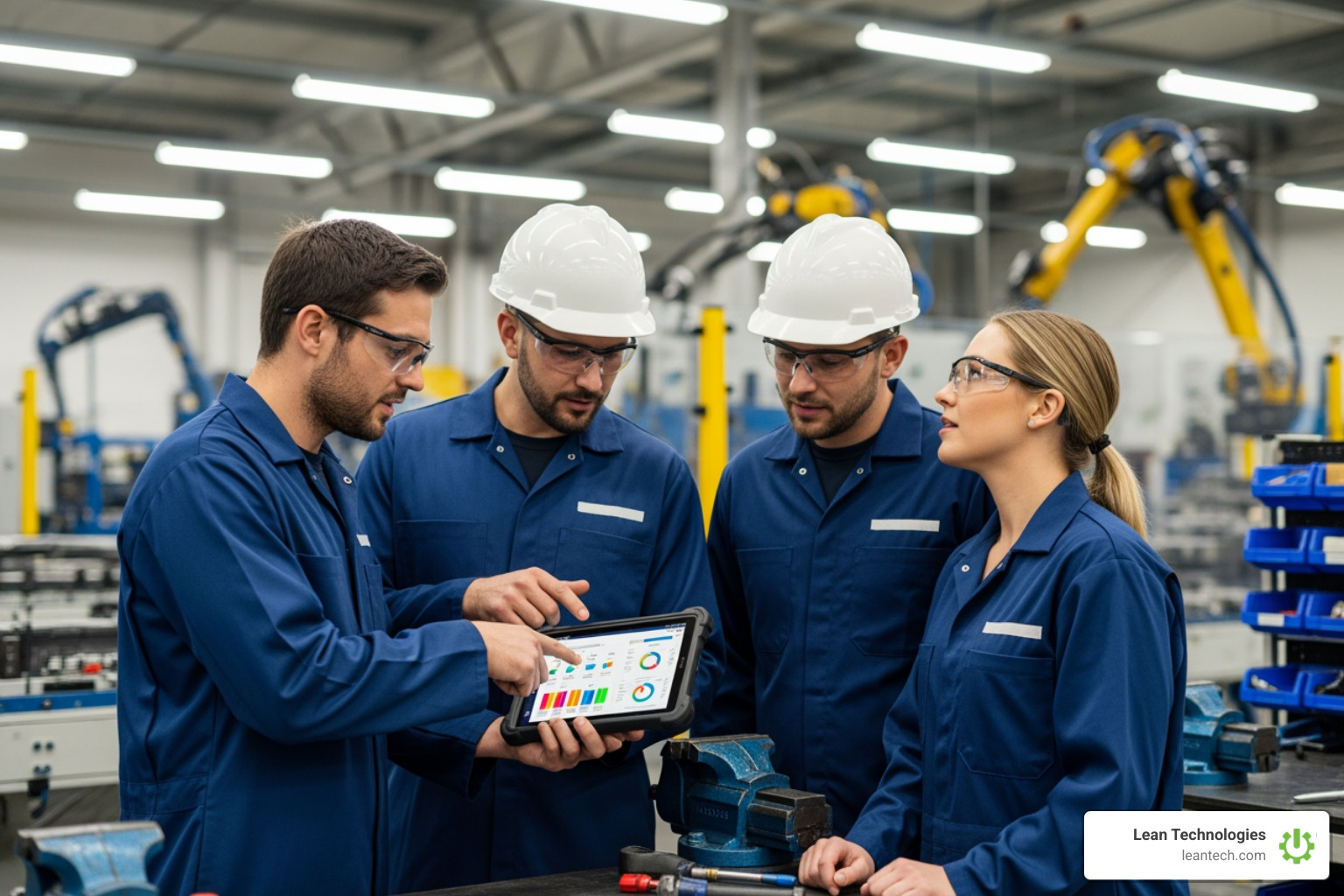
Real-Time Issue Tracking: Empower your operators and maintenance technicians to log issues and observations in real-time, directly from the shop floor using mobile devices. This immediate feedback helps catch problems early, reducing their impact.
Extending Asset Life: Effective asset management isn't just about fixing things; it's about maximizing the value and performance of your equipment throughout its entire lifecycle. This involves regular maintenance, strategic upgrades, and condition monitoring, all of which contribute to extending asset life and delaying costly replacements. Dive deeper into effective maintenance strategies here.
Make Compliance Part of the Daily Routine
Compliance shouldn't be a box-ticking exercise done once a year. It needs to be integrated into daily workflows.
Automated Compliance Tracking: Use digital systems to track regulatory requirements (e.g., OSHA, ISO 9001) and ensure tasks are completed on time. This includes safety checks, quality inspections, and environmental monitoring.
Quality Management Systems (QMS): A robust QMS streamlines risk management by providing clear visibility, enabling systematic approaches, and integrating with other systems. It helps audit the complete genealogy of parts and processes, implements preventative actions, and defines inspection criteria for compliance. This is critical for avoiding fines and maintaining customer trust. Learn more about quality management here.
Audit Readiness: With compliance embedded in daily operations and digitally tracked, you're always ready for an audit. This reduces stress, saves time, and ensures you meet all regulatory obligations.
Build a Culture of Risk Awareness and Accountability
Technology is powerful, but your people are your greatest asset (and your first line of defense). A strong culture of risk awareness ensures that everyone, from the plant manager to the newest operator, understands their role in manufacturing risk mitigation.
Employee Training & Education: Conduct regular training on safety protocols, new equipment, compliance requirements, and how to identify and report risks. This isn't just about rules; it's about fostering a preventative mindset.
Clear Communication: Ensure that information about risks, incidents, and mitigation strategies flows freely and clearly throughout the organization. Digital platforms can facilitate this by providing centralized communication channels and dashboards.
Leadership Buy-in: Risk awareness starts at the top. When leadership actively champions risk management, provides resources, and holds teams accountable, it sends a powerful message.
Empowering Operators: The people on the shop floor are often the first to spot a potential problem. Empower them with tools to log issues instantly, suggest improvements, and participate in problem-solving. Make manufacturing risk mitigation everyone's job. Explore how to better manage your human resources for a stronger operation here.
What to Do Next: From Risk to Resilience
The world isn't getting any less complicated. Relying on outdated methods means you're leaving your operation exposed. Stop running your shop floor on spreadsheets and scattered paper. A structured, digital approach is the fastest way to real-time visibility and accountability.
Manufacturing risk mitigation doesn't have to be overwhelming. You don't need to replace your entire infrastructure. You need a system that digitizes the work your team already does, making it easier to identify, assess, mitigate, and monitor risks. Thrive helps digitize and streamline risk management—without replacing your ERP.
Ready to transform your shop floor from a minefield of hidden risks into a fortress of resilience?
Download our Guide to Digital Lean Manufacturing to see how.
Frequently Asked Questions about Manufacturing Risk Mitigation
What are the first steps to creating a manufacturing risk mitigation plan?
Start by pulling together a cross-functional team—operations, maintenance, quality, and safety leads are essential. Brainstorm every potential risk, from equipment breakdowns and supply chain delays to cybersecurity threats and safety hazards. Once you have a comprehensive list, prioritize each risk by its likelihood of occurring and the potential impact it would have on your operation. This helps you focus your efforts on the most critical areas first.
How can technology improve manufacturing risk mitigation without a huge IT budget?
You don’t need a full ERP overhaul or massive capital investment. Flexible software, like Thrive, is designed to digitize your current processes without replacing your existing systems. Empower your team to use mobile devices or tablets to log issues, track maintenance tasks, manage safety checklists, and conduct quality inspections directly on the shop floor. This gives you real-time data and faster risk detection compared to paper-based systems or scattered spreadsheets, all within a manageable budget.
How do you measure the success of a risk mitigation program?
Measuring success is crucial to ensure your efforts are paying off. Track Key Performance Indicators (KPIs) that directly reflect your manufacturing risk mitigation goals. Look for reductions in unplanned downtime, a decrease in Mean Time to Repair (MTTR), fewer safety incidents, and improved first-pass yield in quality checks. These measurable outcomes demonstrate that your proactive efforts are making your operation more stable and resilient.