
Moving Beyond Lagging Indicators: How Safety Leaders Can Use Real-Time Data to Prevent Incidents
Manufacturing safety metrics have long been built on lagging indicators. Total recordable incidents. Lost time cases. Near-miss counts. These metrics are easy to track and report. But here’s the problem—they only tell you what went wrong after the fact.
By the time the data shows up in a monthly report, the injury has already occurred. The root cause is buried. The moment of learning is gone. And worse, there’s no guarantee the next event won’t happen tomorrow.
If you want to actually prevent incidents—not just count them—you have to flip the model. That means putting more focus on safety leading indicators in manufacturing. And that shift starts with real-time data.
This article explores how safety leaders can design systems that move beyond lagging stats, harness live inputs from the floor, and build a proactive safety culture that actually prevents harm before it happens.
Why Lagging Indicators Fall Short in Manufacturing Safety
Lagging indicators are useful for tracking trends and meeting compliance requirements. But they’re fundamentally reactive. They’re historical summaries. They measure outcomes—not the conditions that led to those outcomes.
Waiting for incidents to measure your safety program is like waiting for machines to break before you perform maintenance. It’s slow. It’s costly. And it guarantees you're always playing defense. This reactive mindset creates two major risks: first, it encourages underreporting because fewer incidents make the numbers look better. Second, it gives safety teams a false sense of security—until the next serious injury breaks the illusion.
What Safety Leading Indicators Really Mean
A leading indicator is any input that gives you early visibility into risk. These are conditions, actions, or behaviors that correlate with safer—or more dangerous—environments. When tracked and acted on, they help stop injuries before they happen.
In manufacturing, this can include things like open safety actions, completed inspections, equipment hazards reported, near-misses observed, unsafe behaviors corrected, or training gaps identified. But for these indicators to work, they can’t live in binders or spreadsheets. They need to be surfaced in real time, visible to decision-makers and operators alike, and tied directly to the daily rhythm of work.
How Real-Time Safety Data Changes the Game
The real shift happens when safety becomes visible in the moment. Not after an audit. Not after an incident report. Right now.
With mobile-first tools like Thrive, safety observations can be logged instantly by anyone on the floor. A hazard spotted during a walk can be photographed, tagged, and sent directly to the dashboard. Corrective actions can be assigned on the spot. Status updates happen live.
This eliminates the lag between seeing something unsafe and doing something about it. It also creates a constant feedback loop that builds safety awareness across the team. The more people see safety activity happening in real time, the more they participate.
Safety becomes active—not administrative.
Turning Observations Into Actionable Metrics
Logging observations is step one. But without structure, they just become noise. To create value, those observations need to feed into a system that categorizes them, tracks them, and escalates when necessary.
For example, if multiple hazard reports are logged from the same line in a short window, the system should surface that as a hotspot. If safety actions go unresolved beyond a deadline, they should trigger alerts to leadership. If inspection completion rates drop below a threshold, the dashboard should turn red.
This is how you turn raw observations into proactive control. You’re no longer reacting to injury reports. You’re responding to early signs of failure—before someone gets hurt.
Building Operator Engagement with Transparent Feedback
One of the biggest challenges in using safety leading indicators in manufacturing is getting consistent operator input. People won’t log hazards if nothing happens afterward. Or if the process takes too long. Or if they feel their input disappears into a black hole.
The fix is twofold. First, make the input process fast and mobile. Second, make the response visible. When operators see their reports being acted on—and see the results—they start to trust the system. That trust is what creates a culture of reporting.
This is why visibility matters. When a safety action gets completed, it should be reflected live on the board. When a team finishes an audit or completes a training, that success should be celebrated. Real-time transparency builds real engagement.
Designing Dashboards That Influence Behavior
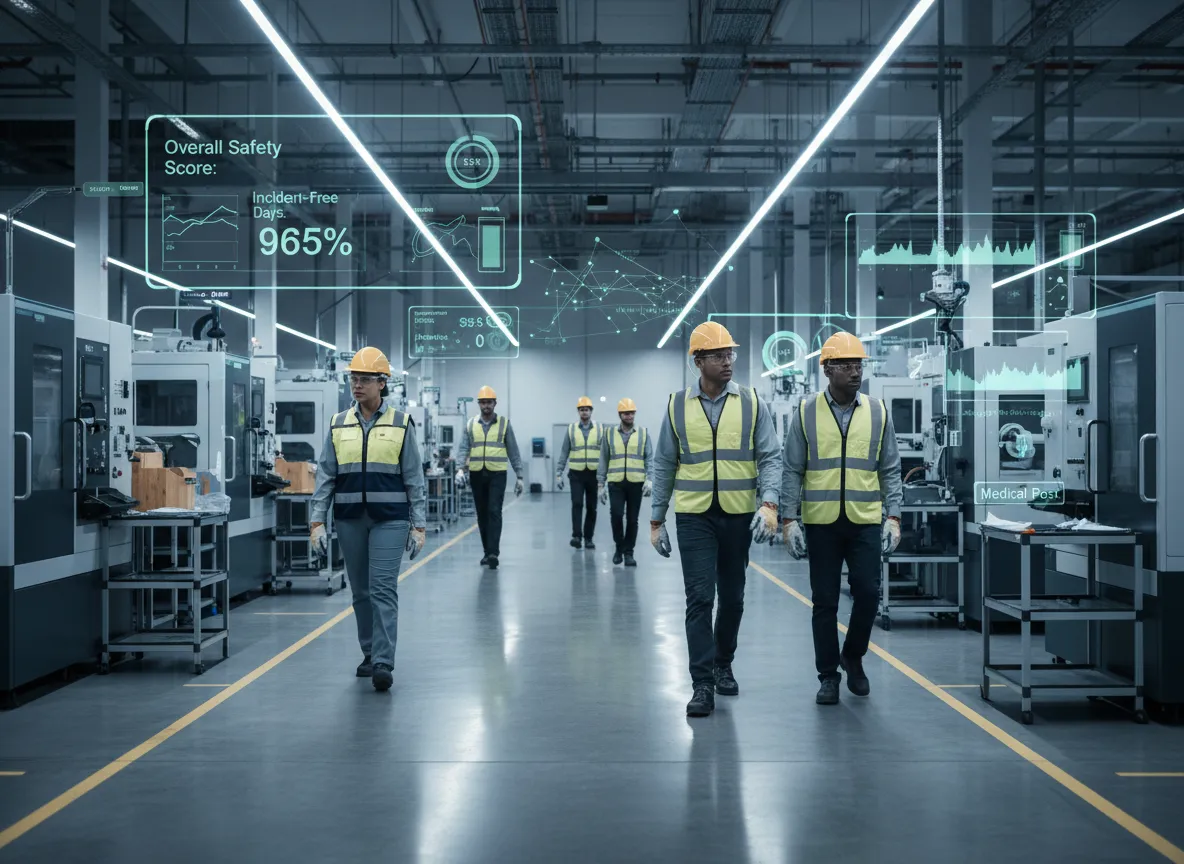
A real-time safety dashboard shouldn’t just summarize data—it should drive action.
That means surfacing key leading indicators like open safety issues, unresolved actions, recent observations, or team participation rates. It means using simple visuals that make it clear where attention is needed. And it means displaying that information in places where work happens—not buried in reports.
When a supervisor can walk by a screen and see that their line has the highest hazard reports today, they act. When an operator sees that their observation reduced a safety risk, they log another. When leadership can spot trends across plants, they intervene early.
This is how data turns into decisions. And decisions turn into safer outcomes.
Avoiding Common Pitfalls with Safety Leading Indicators
Many safety programs make the shift to leading indicators but fall into a few common traps.
One is treating every observation equally. Not all inputs carry the same weight. A missing guard on a high-speed machine is more urgent than a missing glove. The system needs to sort and prioritize based on severity, location, and frequency.
Another is tracking indicators without response. If issues get logged but never resolved, the data becomes meaningless. In fact, it discourages future reporting. The only thing worse than no visibility is fake visibility.
Finally, some teams track so many metrics that they lose focus. Choose indicators that are tied to outcomes you can actually influence, and make sure each one is tied to a clear owner and response workflow.
Frequently Asked Questions
What’s the difference between lagging and leading indicators in safety?
Lagging indicators measure what has already happened—like injuries or lost-time incidents. Leading indicators track behaviors or conditions that suggest whether your safety system is working before incidents occur.
How can we get operators to submit safety observations consistently?
Make the process simple, fast, and mobile. Just as important, close the loop. Show people that their input leads to visible action. This builds trust and increases engagement.
What are some strong leading indicators for manufacturing environments?
Examples include open safety actions, hazard observations submitted, completion of safety walks or audits, near-miss reporting, training participation, and response times to identified risks.
Do leading indicators replace lagging ones?
No, but they shift the focus. You still track outcomes for compliance and learning, but your priority becomes preventing those outcomes by monitoring and acting on risk factors in real time.
How do I get leadership buy-in for this shift?
Frame it in business terms. Real-time leading indicators reduce injuries, which lowers downtime, insurance costs, and liability. They also support a culture of accountability and visibility, which benefits everyone.
Final Thoughts
If your safety program is built on lagging indicators alone, you’re always a step behind. You’re waiting for something to go wrong before you act. That’s not protection—it’s damage control.
By focusing on safety leading indicators in manufacturing, and by collecting and acting on that data in real time, safety leaders can finally get ahead of risk. They can identify patterns before they escalate. They can respond faster, with more precision. And they can build a culture that values prevention over paperwork.
The data you track determines the behavior you drive. If you want a safer plant, start showing the team what safe looks like—while they still have time to do something about it. That’s what real leadership in safety looks like.