
Beyond the Numbers: Maximizing Efficiency with OEE Manufacturing Software
Your OEE Score Sucks. Now What?
OEE manufacturing software helps manufacturing teams measure and improve Overall Equipment Effectiveness by capturing real-time production data, identifying losses across availability, performance, and quality, and turning those insights into actionable improvements. Here's what you need to know:
What OEE Software Does:
Tracks the three pillars: Availability (uptime), Performance (speed), and Quality (good parts)
Captures data in real-time from operators on the shop floor - not hours or days later
Identifies losses through downtime tracking, reason codes, and trend analysis
Drives action by assigning tasks, tracking progress, and closing the loop on improvements
Typical Results:
5-8% performance increase within six months
25+ percentage point OEE gains (like Tosca's jump from 55% to 80%+)
32% fewer unexpected shutdowns with preventive maintenance
Average savings of $25,000/hour in reduced unplanned downtime
You've got the numbers - maybe on a spreadsheet, maybe on a whiteboard - but they're a day late and a dollar short.
The data is messy. Nobody trusts it. And you're no closer to fixing the real problems on the shop floor.
OEE is the gold standard for measuring manufacturing productivity, but a score without a story is just a number. It tells you what happened, not why it happened or who's fixing it.
Here's the truth: if your OEE tracking lives in Excel and gets updated at the end of the shift, you're not measuring performance - you're writing obituaries.
Real-time beats real-late. Every single time.
The manufacturers winning today aren't just calculating OEE. They're using software to capture data at the source, surface problems instantly, and empower their teams to solve them before the shift ends.
It's time to move beyond tracking and start acting.
What is OEE and Why It's More Than Just a Metric
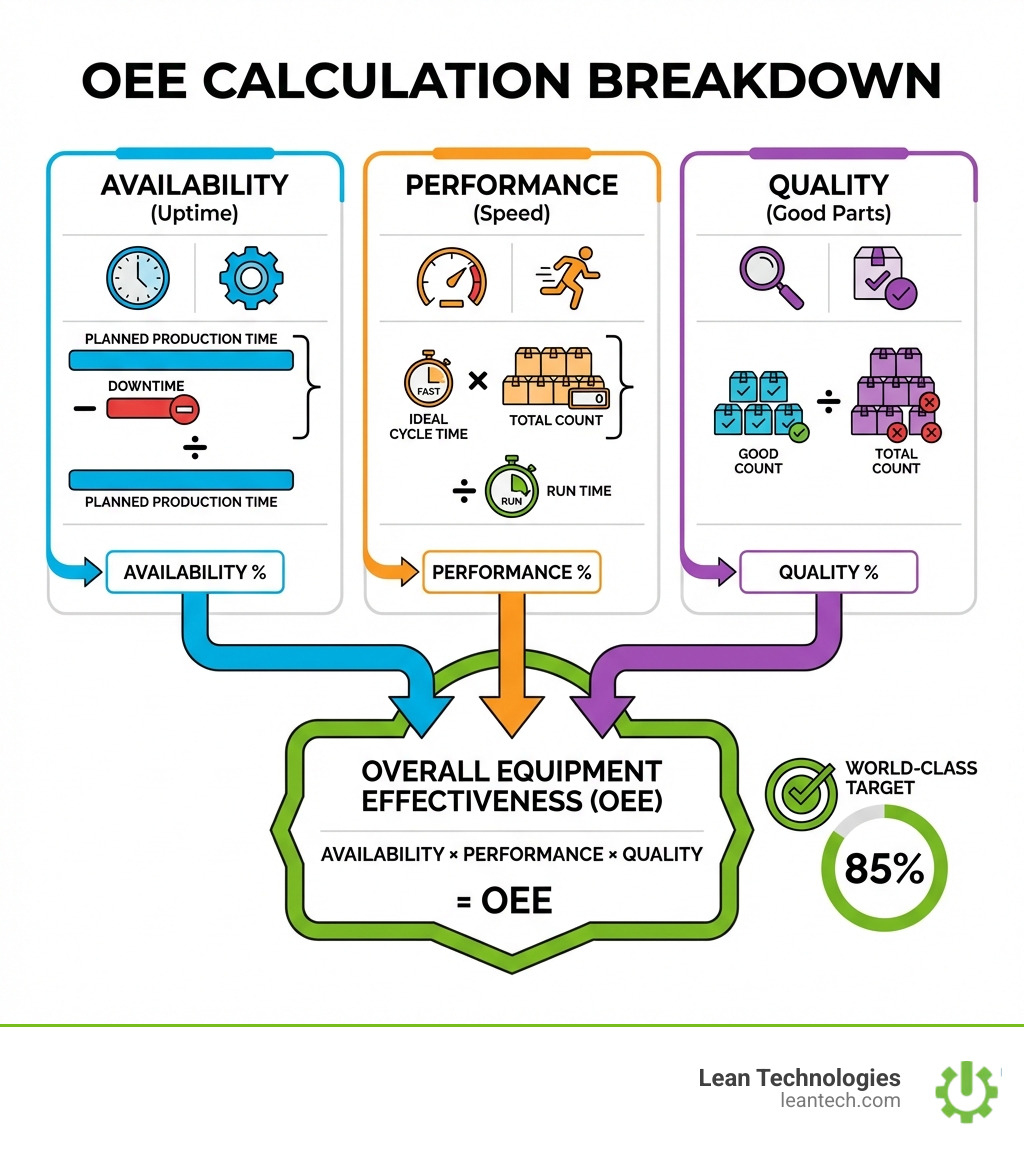
OEE, or Overall Equipment Effectiveness, is the industrial gold standard for measuring manufacturing productivity and efficiency. It's a single metric that tells you how effectively your equipment is being used. But it's more than just a number; it's a powerful diagnostic tool that combines three critical factors - Availability, Performance, and Quality - into one percentage.
This metric helps you identify where productivity is being lost, provides a clear benchmark for improvement, and creates a common language for everyone on the shop floor, from operators to continuous improvement managers. It's the compass that points you towards your pain points, inefficiencies, and growth opportunities. For a broader, vendor-neutral overview of the concept, see the general definition of Overall Equipment Effectiveness.
Availability: Are We Running When We're Supposed To?
Availability measures the percentage of time your equipment is actually running compared to the time it was scheduled to run. Think of it this way: if a machine is supposed to be making parts for eight hours but sits idle for two, its availability just took a hit.
Planned Production Time is the total time your equipment is scheduled for operation. This is your baseline. Unplanned Downtime is any stop that occurs during planned production time. This could be anything from a machine breakdown to a material shortage. Stop Time is simply the duration of these unplanned events.
The goal here is to minimize stop time. OEE software helps you achieve this by tracking and categorizing the Six Big Losses, a framework for identifying common causes of productivity loss. For Availability, these include:
Breakdowns: Unexpected equipment failures that halt production. Without OEE manufacturing software, these can cost businesses an average of $25,000 per hour.
Setups and Adjustments: Time spent changing over equipment for new products, or making adjustments that cause production to stop.
Effective OEE manufacturing software provides Downtime Reason Codes, allowing operators to quickly and accurately log why a machine stopped. This immediate, at-the-source data capture is crucial for maintenance managers and operations teams to identify patterns, prioritize fixes, and shift from reactive firefighting to proactive maintenance. Facilities that move from reactive to preventive maintenance experience 32% fewer unexpected shutdowns, a significant win for any production schedule.
Performance: Are We Running as Fast as We Can?
Performance measures how fast your equipment is running compared to its maximum possible speed. You want to make sure that when your machines are running, they're running at their best.
Ideal Cycle Time is the fastest possible time to manufacture one unit. This is your machine's theoretical maximum speed. Actual Cycle Time is the average time it actually takes to produce one unit.
Performance losses occur when your equipment runs slower than its ideal cycle time. The culprits here often include:
Minor Stoppages (Small Stops): Brief pauses in production, often less than a few minutes, that operators might quickly fix but add up over time. Think jammed parts or sensor errors.
Reduced Speed (Slow Cycles): When equipment runs at less than its optimal speed, perhaps due to wear and tear, operator adjustments, or material inconsistencies.
OEE manufacturing software tracks these subtle deviations, highlighting Performance Loss that might otherwise go unnoticed. This data empowers operators to address small issues before they become big problems and provides continuous improvement managers with insights to optimize machine settings and processes.
Quality: Are We Making Good Parts, Every Time?
Quality measures the percentage of defect-free products produced compared to the total number of products started. It's not just about making parts; it's about making good parts.
Good Parts are units that meet all quality specifications. Scrap Parts are units that are defective and cannot be reworked. Rework refers to defective units that can be fixed.
Quality losses stem from products that don't meet standards, including:
Startup Rejects: Defective parts produced during machine startup or changeovers.
Production Rejects: Defective parts produced during stable production.
Effective OEE manufacturing software enables Defect Tracking directly on the shop floor. Operators can log rejects and their causes in real-time, providing quality assurance managers and lean coordinators with immediate feedback loops. This leads to faster root cause analysis, reduced waste, and improved overall product quality. SPC reporting, automatically updated by some OEE systems, provides real-time tracking of product and process quality for continuous improvement.
How OEE Manufacturing Software Turns Data into Action

This is where the magic happens - changing raw, real-time input into a clear path for improvement. OEE manufacturing software doesn't just collect numbers; it transforms them into insights that drive meaningful change on your shop floor. It's about getting the right information to the right people, at the right time, so they can do something about it.
Step 1: Ditching the Clipboard for Real-Time Data
Let's be honest: paper forms and Excel spreadsheets are the enemies of real-time visibility. They introduce delays, manual errors, and a healthy dose of human bias. When data is entered hours after an event, it's already too late to react effectively.
OEE manufacturing software changes this by automating data collection and shifting Manual Data Entry to the source. Operators, the people closest to the machines, can use digital checklists and simple interfaces on tablets or mobile devices to log events as they happen. This Operator Input is crucial. It eliminates the guesswork and ensures data accuracy, providing a true picture of what's happening on the floor.
This shift from End-of-shift data entry to Real-time logging means you're no longer looking at historical records; you're watching your operation unfold live. This heightened production visibility is essential for accurate OEE improvement efforts. It also empowers operators by giving them ownership of the data and the ability to contribute directly to problem-solving.
Want to see how digitizing your processes can help? Check out our guide on digital lean manufacturing.
Step 2: Getting Eyes on the Floor with Live Dashboards
Once you have real-time data flowing, the next step is making it visible and actionable. That's where live dashboards come in. Imagine walking onto your shop floor and seeing the pulse of your operations at a glance.
Shop Floor Dashboards display critical OEE metrics, machine statuses, and production targets in an easy-to-understand visual format. These can be large screens mounted on the wall or accessible on individual tablets. They provide Production Visibility that was once impossible, allowing production managers and operators to instantly see what's running, what's down, and what's falling behind.
Features like Real-time Alerts notify teams immediately when an issue arises, such as a machine going down or quality defects being logged. This can be integrated with Andon Systems, using visual cues like color-coded lights to signal problems. Color-coded Statuses on dashboards quickly highlight problem areas, enabling rapid Bottleneck Identification. Instead of waiting for a supervisor to notice a problem, the system flags it instantly, allowing teams to address it before it impacts output. This keeps operators informed and focused on meeting shift targets, fostering a proactive approach to problem-solving.
Step 3: From Root Cause to Real Solutions
Collecting data and displaying it in real-time is powerful, but the true value of OEE manufacturing software lies in its ability to facilitate problem-solving and drive continuous improvement. It helps you move from knowing what happened to understanding why and then how to fix it.
The software analyzes the collected data, categorizing it into key OEE metrics and the Six Big Losses. It then provides tools like Pareto Charts to visually identify the most frequent or impactful problems, allowing you to prioritize your efforts. Trend Analysis helps you spot recurring issues over time, revealing deeper systemic problems.
These Actionable Insights are the fuel for your continuous improvement initiatives. OEE software helps answer critical questions like: "Is the bottleneck in performance, quality, or availability?" and "Can specific machines, jobs, shifts, or processes be identified as the culprits for inefficiencies?"
With a clear understanding of the root causes, teams can engage in effective Problem-Solving. The software facilitates this by allowing you to Assign Actions to specific team members, Track Progress, and ensure that improvements are implemented and sustained. This closes the loop that many CI teams struggle with, ensuring that identified problems lead to actual solutions. It means you can record notes, set owners, and track completion to make sure gains stay permanent.
Effective project management is key to successful problem-solving. Learn more about it here: project management.
The Real-World Benefits of OEE Manufacturing Software
Forget theory. Here's the tangible impact that effective OEE manufacturing software has on your productivity, people, and profits. This isn't about incremental tweaks; it's about opening up significant gains that directly affect your bottom line.
Boost Productivity and Uncover Hidden Capacity
The most immediate and impactful benefit of OEE manufacturing software is its ability to dramatically increase your productivity. By identifying and eliminating waste, you can get more out of your existing assets.
Increased Throughput: When you understand why machines stop, run slow, or produce defects, you can fix those issues. This means more good parts, faster. Companies have seen initial performance increases of 5-8% within the first six months of implementing OEE solutions.
Reduced Downtime: Proactive maintenance, driven by OEE insights, means fewer unexpected breakdowns. This directly translates to more uptime. Unplanned downtime costs businesses an average of $25,000 per hour. Lowering this cost has a huge Financial Impact.
Cost Savings: Beyond just downtime, OEE software helps reduce costs associated with poor equipment function, inferior quality, and excess waste. This is money that goes straight back into your pocket.
Uncovering Hidden Capacity: Often, manufacturers believe they need new equipment to increase output. OEE software frequently reveals that significant capacity is simply "hidden" within existing processes due to inefficiencies. By optimizing availability, performance, and quality, you effectively uncover capacity without capital investment.
Operations Managers and Production Managers find this invaluable for meeting demand and optimizing throughput.
Drive a Culture of Continuous Improvement
OEE manufacturing software isn't just a tool; it's a catalyst for cultural change on your shop floor. It transforms how your team approaches problems and drives a proactive, data-driven mindset.
Operator Engagement: When operators are empowered to log issues, see real-time performance, and contribute to solutions, they become more engaged. They move from simply operating machines to actively improving processes.
Accountability: With clear data on performance and downtime, accountability becomes inherent. Teams can take ownership of their shifts and machines.
Data-driven Decisions: No more gut feelings or finger-pointing. OEE software provides the objective data needed for informed decision-making, from prioritizing maintenance to optimizing production schedules.
Team Empowerment: By providing real-time visibility and tools to identify and address problems, OEE manufacturing software empowers your entire team to be problem-solvers. This fosters a sense of ownership and shared purpose.
Proactive Problem-Solving: Instead of reacting to crises, teams can use OEE data to anticipate issues and implement solutions before they escalate. This reduces stress and improves overall efficiency.
Continuous Improvement Managers and Lean Coordinators thrive in this environment, using the insights to refine processes and lock in permanent gains. Dive deeper into continuous improvement with our resources on continuous improvement.
Streamline Maintenance and Quality
The insights gained from OEE manufacturing software have a profound effect on two critical areas: equipment maintenance and product quality.
Proactive Maintenance: By tracking downtime reasons and machine performance, maintenance managers can identify failing equipment before it breaks down. This enables a shift from reactive to Proactive Maintenance strategies, scheduling interventions during planned downtime rather than scrambling during an emergency. This proactive approach leads to significantly Reduced Repair Costs.
Reduced Repair Costs: Addressing issues before they become catastrophic not only prevents costly emergency repairs but also extends the lifespan of your assets. Organizations that implement a CMMS (Computerized Maintenance Management System), which often integrates with OEE, typically see first-year returns on investment ranging from 25% to 300%.
Quality Control: Real-time defect tracking and analysis allow quality assurance managers to pinpoint the sources of quality issues immediately. This leads to faster corrective actions and Fewer Defects reaching customers. SPC reporting, automatically updated with OEE data, provides real-time tracking of product and process quality for continuous improvement.
Fewer Defects: By understanding the conditions under which defects occur, you can implement targeted process improvements, reducing scrap and rework.
The shift to preventive maintenance alone leads to 32% fewer unexpected shutdowns. This is a game-changer for Maintenance Managers and Quality Assurance Managers. For more on optimizing your maintenance strategy, visit our page on maintenance, and explore how to lift your standards with our quality solutions.
Choosing and Implementing Your OEE Solution
Not all software is created equal. Here’s what to look for and how to get your team on board without the usual headaches. The goal is to improve your operations, not complicate them.
Essential Features to Look for in OEE Manufacturing Software
When evaluating OEE manufacturing software, focus on solutions that are built for the shop floor, not just the boardroom. You need tools that empower your frontline teams and provide actionable insights, not just data dumps.
User-friendly Interface: If operators can't easily use it, they won't. The software should be intuitive, requiring minimal training.
Mobile Accessibility: Your shop floor isn't tied to a desk. The solution needs to be accessible on tablets and mobile devices so operators can log data and view dashboards right at the machine.
Customizable Reporting: Every plant is unique. The software should allow you to tailor reports and dashboards to your specific KPIs and needs, offering detailed insights into production trends. Some systems offer access to over 140 metrics.
Real-time Dashboards: As discussed, real-time visibility is non-negotiable. Look for dynamic dashboards that update instantly and provide a clear overview of OEE, machine status, and production targets.
Action & Task Management: The best OEE software doesn't just identify problems; it helps you solve them. Look for features that allow you to assign tasks, track progress, and close the loop on improvements. This is where Continuous Process Control (CPC) comes in, ensuring gains remain permanent.
Integration Capabilities: Your OEE solution should integrate seamlessly with existing systems like your ERP or CMMS. It should be a flexible digital toolbox that complements your current infrastructure, not replaces it. This ensures a cohesive, integrated platform for your entire operation.
IT Managers and System Administrators will appreciate solutions that offer robust integration and minimal disruption to existing systems, while Operations Managers need a tool that truly works for their team.
How to Implement OEE Manufacturing Software Effectively
Implementing new software can feel daunting, but with the right approach, you can ensure a smooth transition and maximize adoption.
Set Clear Goals: Before you even choose a system, define what you want to achieve. Do you want to reduce downtime by 10%? Improve quality by 5%? Having specific, measurable goals will guide your selection and implementation.
Involve the Team: Don't spring it on them. Get operators, maintenance technicians, and supervisors involved early in the process. Their input is invaluable, and their buy-in is critical for successful adoption.
Start with a Pilot: Don't try to roll out the software across your entire plant at once. Choose one line or work center, implement the software there, and learn from the experience. This allows you to refine your processes before a wider rollout.
Train Operators: Provide comprehensive, hands-on training. Make sure they understand not just how to use the software, but why it benefits them and the company. Empower them to use it effectively.
Standardize Processes: Use the implementation as an opportunity to standardize your data collection and problem-solving processes. This ensures consistency and accuracy across shifts and teams.
Focus on Action, Not Just Data: Remind everyone that the OEE score is a starting point. The real value comes from the actions taken based on the insights. Encourage continuous improvement and celebrate successes.
This step-by-step approach ensures that your OEE software becomes a valuable asset for Production Managers, Project Managers, and Continuous Improvement Managers, leading to real improvements on the shop floor.
Frequently Asked Questions about OEE Software
What is a good OEE score?
An OEE score of 100% represents perfect production - manufacturing only good parts, as fast as possible, with no stop time. This is the ideal, but rarely achievable.
An OEE score of 85% is considered world-class for manufacturers.
An OEE score of 60% is relatively typical for manufacturers but indicates significant room for improvement.
An OEE score of 40% is standard for manufacturing companies just starting to monitor and improve their manufacturing performance.
The real goal isn't a specific number, but a consistent upward trend. Improvement is the name of the game. It's about understanding your current OEE, identifying the biggest losses, and systematically working to improve them.
How does OEE software integrate with other systems like an ERP?
Good OEE manufacturing software doesn't need to replace your ERP or MES. It works alongside them, often pulling production schedules from the ERP and feeding accurate production data back. It fills the critical data and action-tracking gaps on the shop floor that ERPs and MES systems often don't cover in real-time.
Think of it as a specialized layer that collects granular, real-time data from the plant floor, processes it into actionable OEE insights, and then shares relevant summaries with your broader business systems. This provides a holistic view without duplicating efforts or creating data silos.
When is the right time to adopt OEE software?
It's time to adopt OEE manufacturing software when:
Your paper or Excel-based tracking is failing to provide timely, accurate insights.
You can't pinpoint why you're missing production targets, experiencing bottlenecks, or struggling with quality issues.
Your team is frustrated with a lack of clear information, constantly reacting to problems rather than preventing them.
You're ready to build a proactive, problem-solving culture instead of constantly fighting fires.
Your customers are demanding OEE tracking as a measure of your reliability.
Financial losses due to inefficiencies, unplanned downtime, or quality issues are evident and impacting your profitability.
If you're still overestimating uptime or experiencing frequent unexpected shutdowns, it's definitely time to make the switch.
What to Do Next: Stop Tracking, Start Winning
An OEE score is a starting point, not a finish line. The true power of OEE manufacturing software lies in its ability to turn that score into a clear, actionable game plan for your entire team. It provides the real-time visibility needed to identify problems instantly and empowers operators to be part of the solution. By digitizing your processes at the source, you create a system of accountability that drives continuous improvement. Lean Technologies' Thrive platform was built by manufacturing experts to do just this—streamline operations, boost productivity, and improve profit through a cohesive, integrated platform. Stop managing your shop floor through spreadsheets and wishful thinking. Let your team run lean with real-time visibility.