Stop Wasting Time with These Process Improvement Best Practices
Why Process Improvement Best Practices Determine Whether Your Plant Wins or Bleeds
Process improvement best practices are the structured methods, frameworks, and habits that help manufacturing teams find waste, fix broken workflows, and sustain better performance over time. If you're an operations manager trying to cut costs, hit delivery targets, and stop fighting the same fires every week — this is the playbook you need.
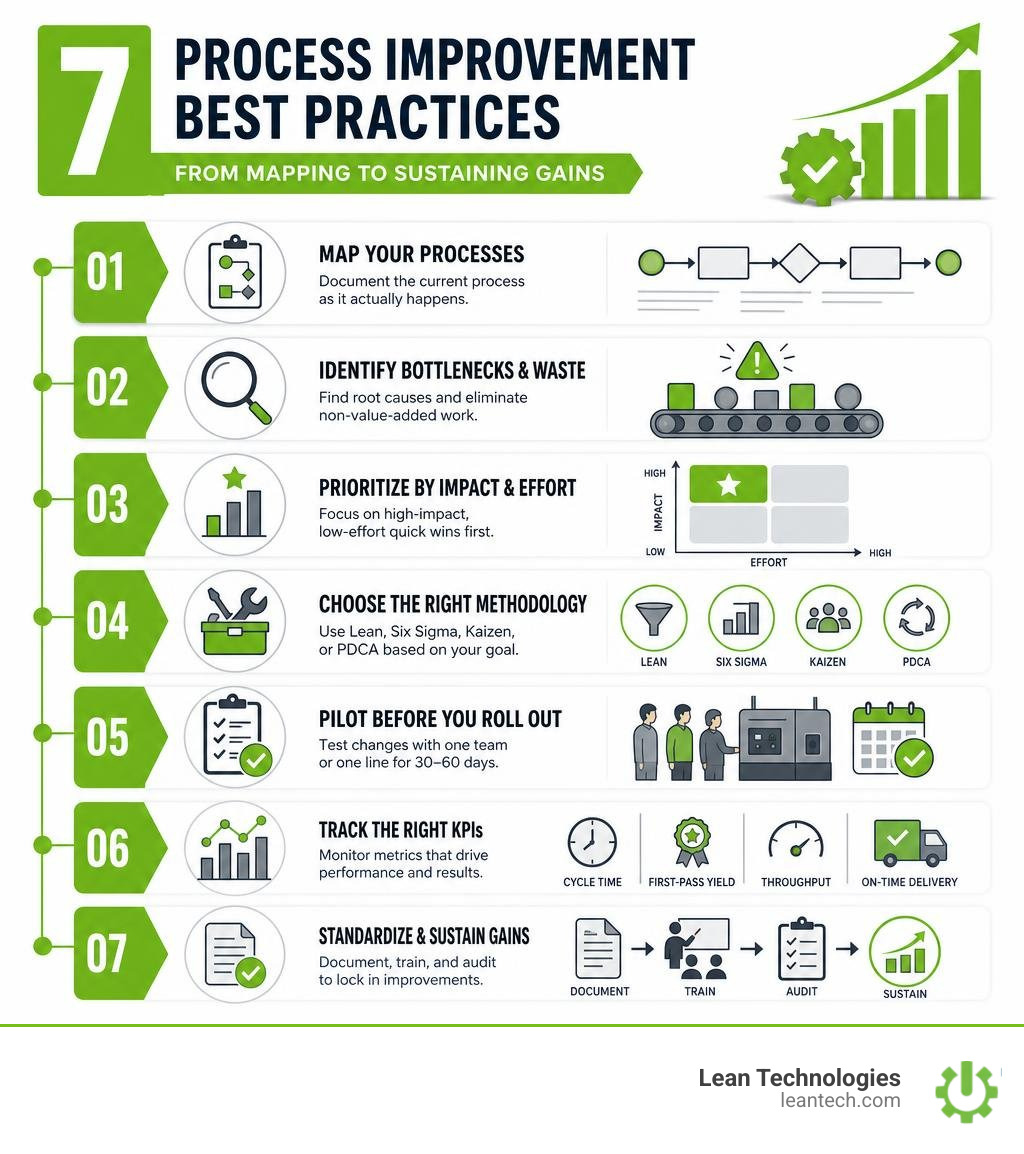
Here are the core process improvement best practices at a glance:
Map your current processes before changing anything — document what actually happens, not what the SOP says
Identify bottlenecks and waste using tools like root cause analysis, 5 Whys, and value stream mapping
Prioritize by impact and effort — focus on high-impact, low-effort quick wins first
Choose the right methodology — Lean for waste elimination, Six Sigma for defect reduction, Kaizen for daily habits, PDCA for low-risk experimentation
Pilot before you roll out — test changes with one team or one line for 30–60 days
Track the right KPIs — cycle time, first-pass yield, throughput, and on-time delivery
Standardize what works — document the new process, train the team, and audit regularly
Build improvement into daily culture — not as a project, but as a continuous habit
Most manufacturers already know something is wrong. The invoice sitting in approval for a week. The new hire who takes three months to get up to speed because nobody wrote anything down. The shift handoff where critical information gets lost between paper logs and hallway conversations.
These aren't isolated problems. They're symptoms of the same root cause: processes that were never designed — they just accumulated.
According to IBM, process improvement is "a systematic approach to enhancing the efficiency and effectiveness of business processes, enabling organizations to do more with less, faster." But on the shop floor, it's simpler than that. It's the difference between a team that runs smoothly and one that spends half its day working around broken systems.
The stakes are real. Organizations with structured process improvement programs report an average 25% reduction in inventory carrying costs and a 40% improvement in on-time delivery performance. Financial services firms that tackled broken workflows saw a 60% reduction in processing times and a 75% drop in manual errors. These aren't outlier results — they're what happens when teams stop tolerating friction and start fixing it.
The challenge for most plant operations managers isn't motivation. It's knowing where to start, which method to use, and how to make improvements stick when the team is already stretched thin.
That's exactly what this guide covers.
What is Process Improvement and Why Your Shop Floor is Bleeding Cash
Every shop floor has processes, but not all of them are efficient. Over time, plants accumulate process waste—unnecessary movement, overprocessing, excess inventory, and waiting times. When these inefficiencies go unaddressed, they turn into "shadow processes."
A shadow process is an informal workaround that employees create to bypass clunky, bureaucratic, or broken systems. For example, if your inventory tracking system is too slow or inaccurate, operators might start keeping their own secret spreadsheets or physical stash of spare parts. These workarounds might help an individual worker get through their shift, but they create massive information silos, drive up inventory costs, and ultimately ruin on-time delivery rates.
True process improvement is about shining a light on these shadow processes and redesigning workflows so they actually work for the people on the frontline. As outlined in the guide on What Is Process Improvement? | IBM, optimizing these workflows is a strategic necessity for any business aiming to scale and maintain a competitive edge.
The Real Cost of Paper-Based Workarounds
If your team is still tracking production, downtime, or maintenance on paper, you are losing money every single hour. Paper logs are the ultimate breeding ground for manual errors. They lead to delayed response times because by the time a supervisor reads a paper downtime sheet at the end of a shift, the issue has already caused hours of lost throughput.
Furthermore, paper creates isolated information silos. The maintenance team doesn't know what the operators are experiencing, and quality engineers are left guessing why a batch failed. To see how leading plants are eliminating these paper bottlenecks and transitioning to real-time digital systems, read our Guide to Digital Lean Manufacturing.
The Core Methodologies of Process Improvement Best Practices
You don't need to reinvent the wheel to improve your shop floor. Decades of operational excellence have yielded proven frameworks. The trick is choosing the right tool for the job.
Lean Manufacturing: Focuses heavily on waste elimination (Muda, Mura, Muri) to maximize customer value.
Six Sigma: A data-driven approach designed to minimize defects to fewer than 3.4 per million opportunities.
Kaizen: A Japanese philosophy centered on continuous, incremental daily improvements involving everyone.
PDCA Cycle (Plan-Do-Check-Act): A four-step iterative model for testing and implementing changes on a small scale.
Total Quality Management (TQM): An organization-wide approach focused on long-term success through customer satisfaction.
Business Process Management (BPM): A broader discipline that models, analyzes, and optimizes end-to-end business processes.
Comparing Process Improvement Methodologies
Methodology Core Focus Best Used For Typical Timeline Lean Eliminating waste and maximizing flow Reducing lead times, inventory, and physical clutter Weeks to months Six Sigma Reducing variation and defects Solving complex, recurring quality problems 3 to 6 months Kaizen Small, continuous daily habits Improving workstation ergonomics, setups, and safety Days to weeks PDCA Rapid experimentation and testing Trying out quick fixes before full-scale rollouts Days to weeks TQM Long-term customer satisfaction Driving culture-wide quality standards Ongoing BPM End-to-end process management Redesigning cross-functional workflows Months
For a deeper dive into these frameworks and how they compare outside of manufacturing, you can check out the resource on 7 process improvement methodologies to improve efficiency - Asana.
Choosing the Right Framework for Your Team
Choosing a framework depends entirely on the problem you are trying to solve. If your main issue is high defect rates, you need the structured DMAIC (Define, Measure, Analyze, Improve, Control) process of Six Sigma. If your plant is struggling with slow cycle times and cluttered work areas, Lean and Kaizen are your best bets.
For organizations looking to build a structured, long-term approach to improvement, the ISO/IEC TR 33014 standard provides excellent international guidance on using process assessments to strengthen organizational capability and sustain continuous improvement.
How to Diagnose and Prioritize Your Shop Floor Bottlenecks
You can't fix a process you don't understand. Before changing a single step, you must diagnose where the actual bottlenecks live.
Process Mapping: Walk the shop floor and map out every single step of a workflow as it actually happens—not how it is written in the official SOP.
Root Cause Analysis: When a problem occurs, don't just patch it. Use tools like the 5 Whys or Fishbone diagrams to dig deeper until you find the foundational issue.
Gap Analysis: Compare your current operational state against your target performance goals to identify where the biggest discrepancies lie.
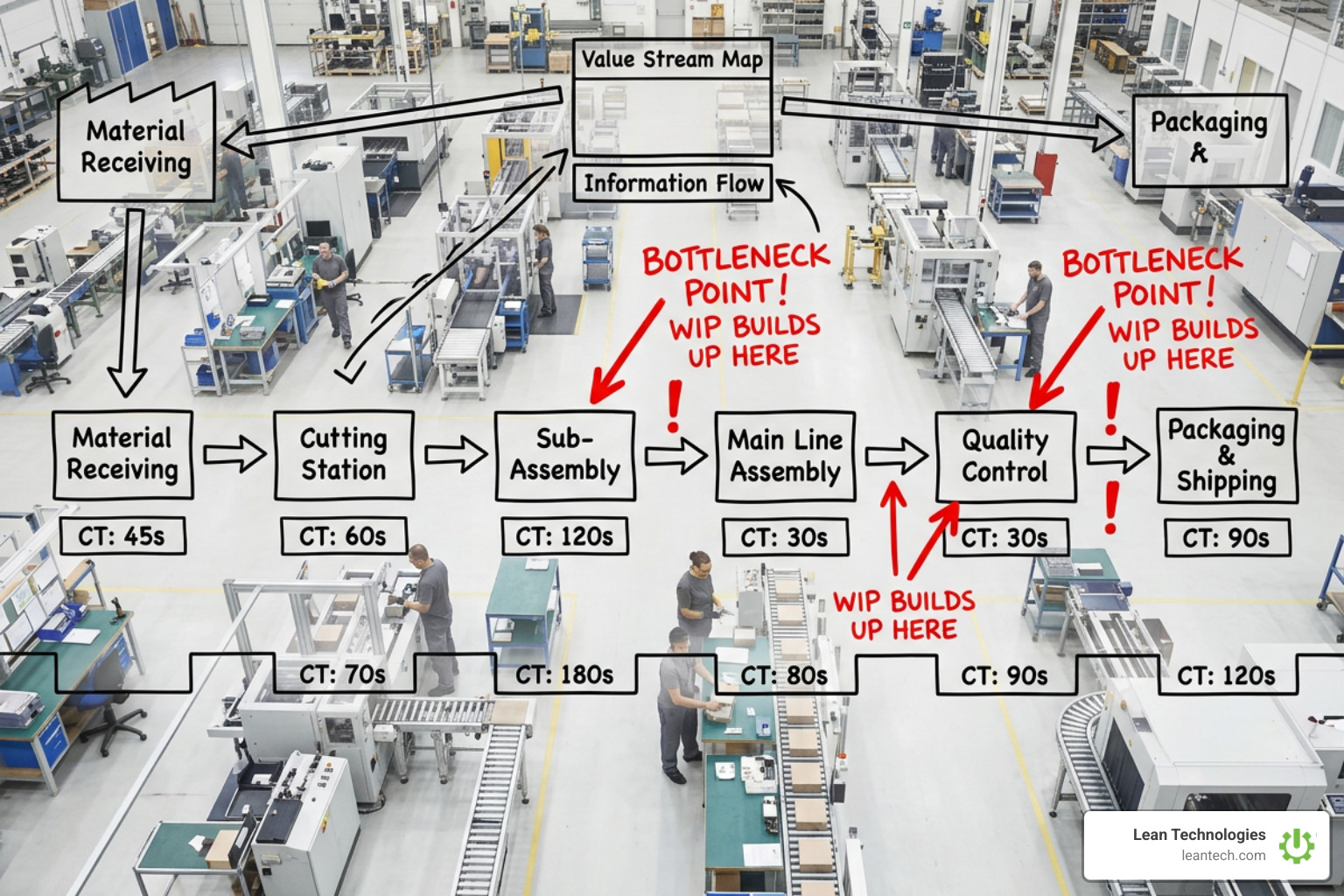
According to the Best Practices In Process Improvement 2024 - APQC benchmarking study, the most successful organizations prioritize projects based on data rather than executive guesswork.
How to Prioritize Projects Using Process Improvement Best Practices
You can't fix everything at once. If you try, you will burn out your team and achieve nothing. Instead, map your potential projects onto an Impact vs. Effort Matrix:
Quick Wins (High Impact, Low Effort): These are your top priorities. Examples include standardizing a shift handoff checklist or setting up a visual tool board.
Big Bets (High Impact, High Effort): These require careful planning and budget. Schedule these one at a time.
Fill-Ins (Low Impact, Low Effort): Do these only when your team has spare time.
Money Pits (Low Impact, High Effort): Avoid these entirely.
To manage this prioritization and keep your projects on track, check out our insights on Project Management.
A Step-by-Step Playbook for Executing Process Changes
Once you have identified and prioritized a bottleneck, it is time to execute. Follow this structured playbook to ensure your changes succeed:
Step 1: Map and Analyze: Document the current state.
Step 2: Redesign the Process: Remove non-value-adding steps and simplify the workflow.
Step 3: Run a Pilot Program: Test the new process on a single line or with a single team for 30 to 60 days.
Step 4: Run Parallel Testing: If you are changing a digital system, run the old and new systems side-by-side briefly to mitigate operational risks.
Step 5: Monitor and Iterate: Collect feedback daily and adjust the process as needed.
For a comprehensive look at managing this cycle, read the Business Process Improvement: Complete Guide (2026).
Overcoming Frontline Resistance to Change
The biggest reason process improvement initiatives fail isn't technology—it's people. If operators feel like changes are being handed down from a corner office without their input, they will resist.
To build genuine employee buy-in, make your frontline operators the co-designers of the new process. Ask for their feedback during the mapping phase, let them design the work instructions, and empower them to point out flaws in the pilot. For structured strategies on managing this human element, read our guide on Change Management.
Measuring What Matters: KPIs for Process Efficiency
If you aren't measuring, you are just guessing. To know if your process improvements are working, you must track the right metrics:
Cycle Time: How long does it take to complete a process from start to finish?
Throughput: How many units are produced over a specific period?
First-Pass Yield: What percentage of products are manufactured correctly the first time without needing rework?
Cost per Unit: What is the total operational cost to produce a single unit?
Customer Satisfaction: Are your lead times and quality meeting customer expectations?
To learn how to calculate and optimize these metrics, check out the guide on How to Improve Process Efficiency? Strategies, Tools, and Best ....
Tracking Performance in Real Time
Relying on lagging indicators (like monthly financial reports) to run a shop floor is like driving a car by only looking in the rearview mirror. You need leading indicators—real-time data captured at the source.
When operators log downtime, quality checks, and output in real time, supervisors can address issues before they ruin a shift's numbers. Displaying these metrics on Performance Goal Boards keeps the entire team aligned and accountable.
Building a Culture of Continuous Improvement on the Frontline
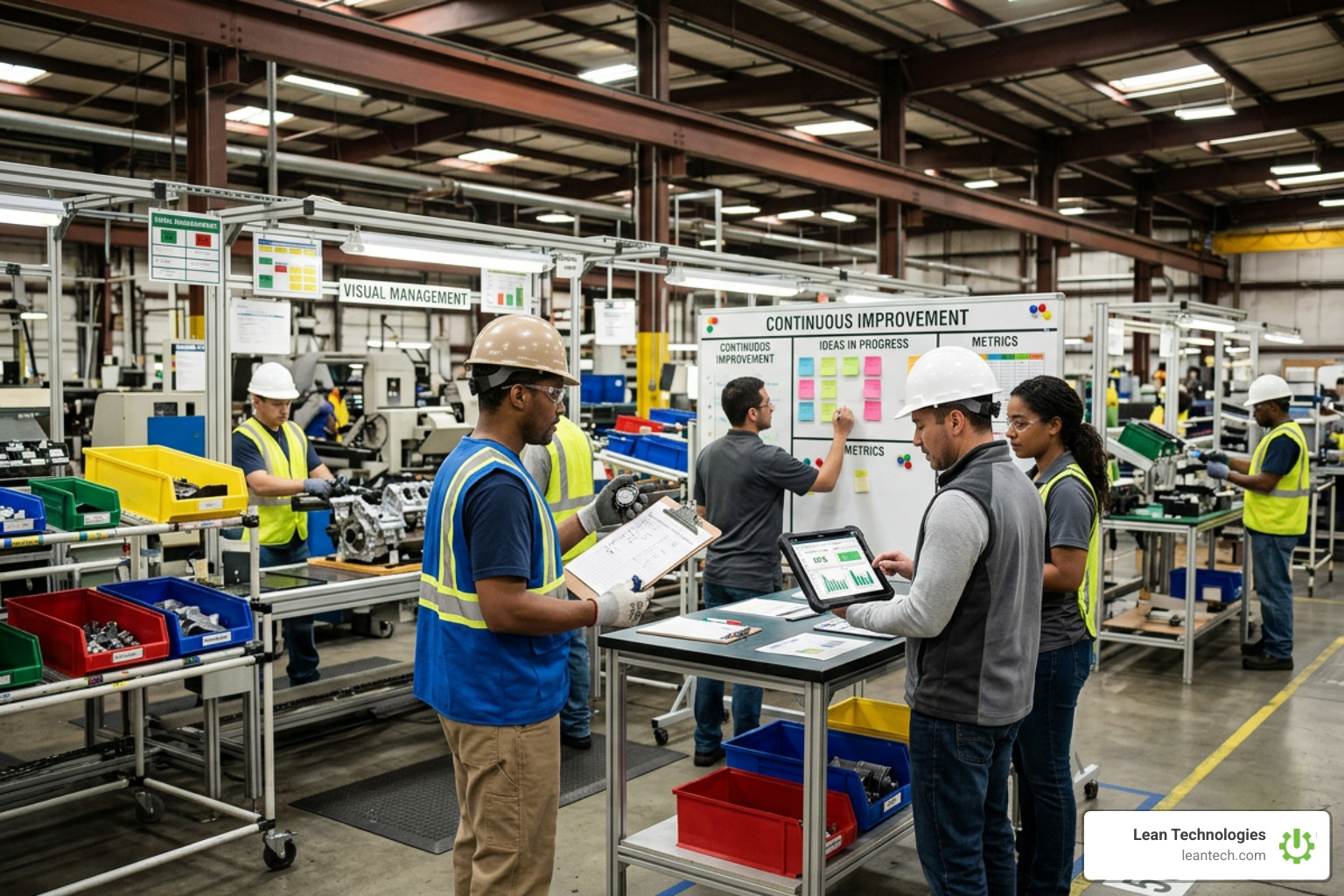
True operational excellence is not a one-time project; it is a daily habit. Building a continuous improvement culture means giving your frontline workers the tools they need to identify waste and suggest solutions easily.

By digitizing your lean workflows, you make it easy for operators to participate in problem-solving. To see where your plant stands today and identify areas for cultural growth, take our Lean Culture Assessment.
Sustaining Long-Term Gains with Process Improvement Best Practices
How do you keep your team from slipping back into old habits after the excitement of a new project fades?
Standardize the Workflow: Document the new process clearly.
Implement Leader Standard Work: Ensure supervisors have structured daily routines to audit and support the new standard. Read more about Leader Standard Work.
Use Action Item Tracking: When issues are raised, ensure they are tracked to resolution using Follow-up Tools on Action Items.
Frequently Asked Questions about Process Improvement
How long does a process improvement project typically take?
A quick-win project using PDCA or 5 Whys can show results within weeks. Larger, cross-functional initiatives involving Six Sigma or full system redesigns typically take 3 to 6 months to fully implement and measure.
What is the difference between process improvement and process reengineering?
Process improvement (BPI) focuses on incremental optimization of existing workflows. Business process reengineering (BPR) is a radical redesign of a process from the ground up, usually reserved for when a workflow is so fundamentally broken that minor tweaks will not suffice.
How do we prevent teams from slipping back into old habits?
The best way to prevent relapses is through digital standardization and continuous monitoring. When workflows are hardcoded into easy-to-use digital tools, there is no "old way" to slip back into. You can maintain complete visibility over this using Workflow Tracking.
What to Do Next
Stop managing your shop floor through spreadsheets, paper logs, and wishful thinking. If you want to eliminate waste, improve quality, and build a culture of continuous improvement that actually lasts, you need to put the right digital tools in the hands of your frontline team.
At Lean Technologies, we built Thrive—an all-in-one, customizable shopfloor software designed by manufacturing experts. Thrive doesn't replace your ERP or MES; it digitizes your lean work processes in real time, making it easy for operators to log issues, track actions, and drive operational excellence.
Ready to let your team run lean? Explore how Thrive CI can transform your shop floor visibility and performance today.