
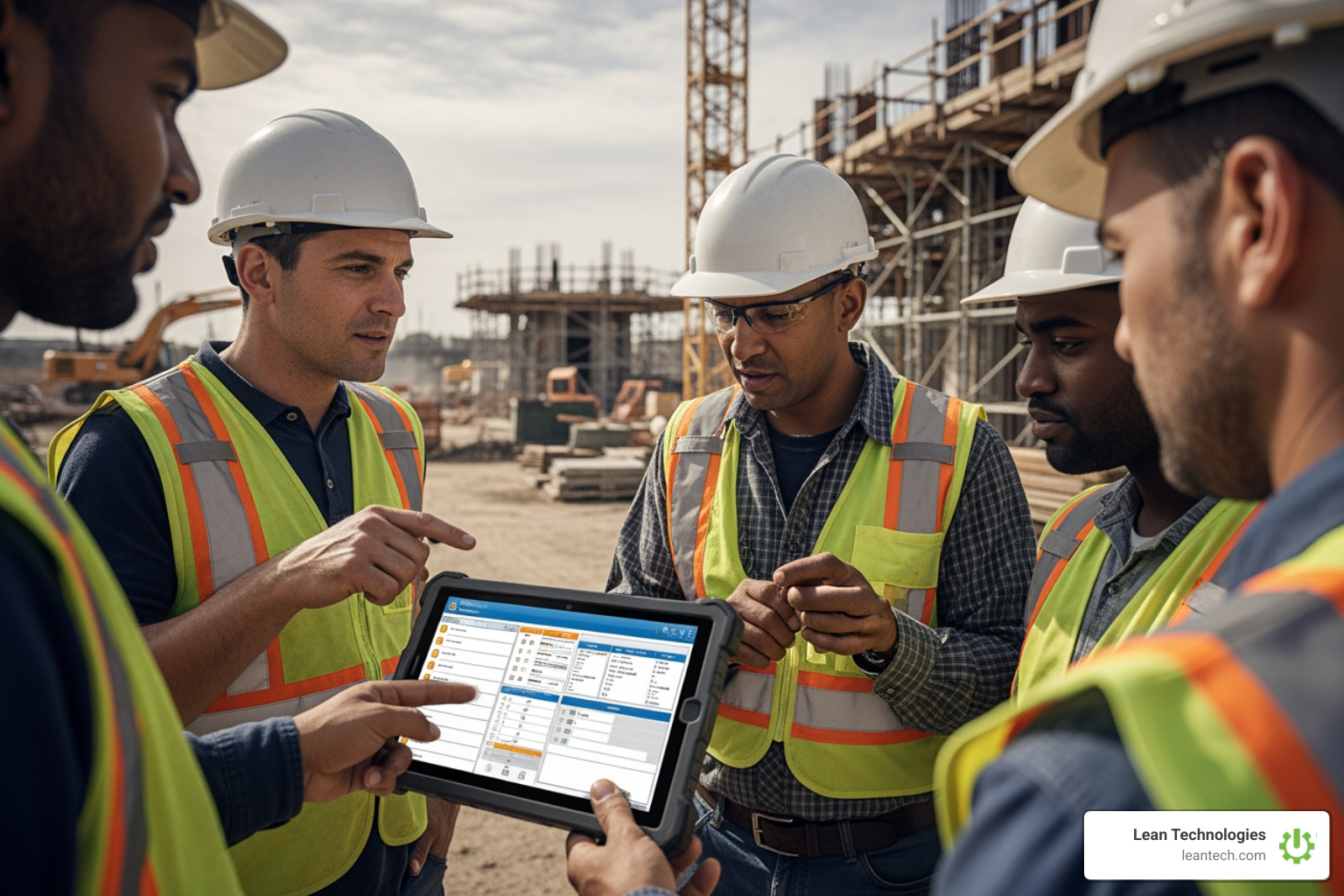
Dashboard to Documentation: Essential Safety Management Software
Why Safety Documentation Software Matters for Your Shop Floor
Safety documentation software helps manufacturing teams capture, track, and act on safety data in real time—without the chaos of paper logs or scattered spreadsheets. It's built to centralize incident reports, inspections, corrective actions, and compliance records in one accessible place.
What you need to know:
Centralized Control: All safety records stored digitally, accessible anywhere
Mobile-First Access: Operators log incidents and complete checklists from the floor
Real-Time Visibility: Managers see issues as they happen, not days later
Audit-Ready: Time-stamped trails for OSHA, ISO, and internal compliance
Automated Workflows: Turn hazard reports into assigned corrective actions instantly
Better KPIs: Track near misses, incident rates, and training completion in one dashboard
If you're still managing safety with paper binders and end-of-shift reports, you're already behind. Late data means late action. And late action means higher risk.
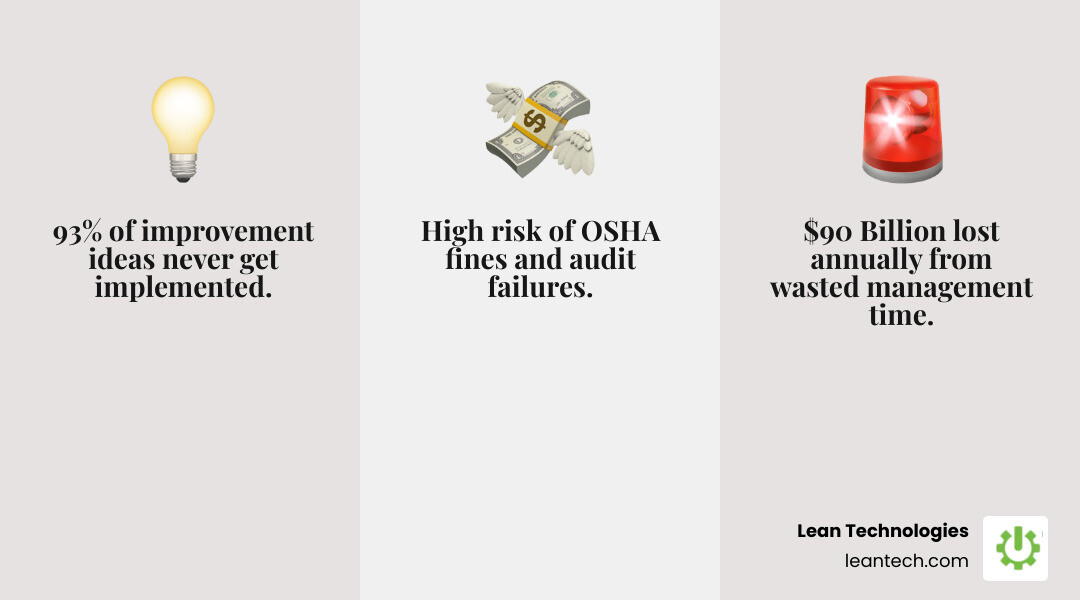
Here's the reality: 93% of managers have ideas for improvement, but only 55% of those ideas ever get implemented. Why? Because the data arrives too late to matter. By the time a supervisor reviews last week's near-miss log, the root cause is buried under production pressure and fading memory.
Modern safety documentation software flips that script. It puts safety data in your hands when it matters—not after the shift, not after the incident, but right now. That's the difference between catching a hazard and filling out an injury report.
The best part? Companies using digital safety tools report 60% less time spent on reporting and see real improvements in uptime, compliance, and team accountability. This isn't about checking boxes. It's about building a system your team actually uses—and one that keeps them safer.
Ditching the Clipboard: Why Paper Trails Hold You Back
Think about your current safety process. Is it a stack of forms, a labyrinth of spreadsheets, or a mix of both? If so, you're not alone. Many shop floors still rely on outdated, paper-based systems. The problem? These systems are slow, error-prone, and introduce significant risks to your operations.
Paper trails create data silos, meaning critical information gets stuck in departments or even individual binders. This leads to compliance headaches when auditors come knocking, as demonstrating a clear, consistent safety record becomes a monumental task. You get zero real-time visibility into safety trends, and incident response slows to a crawl because you're reacting to old news.
But it’s not just about compliance. It's about efficiency. Imagine slashing the time your team spends on reporting by 60%. That's what digital tools offer. They free up valuable time that your team can then dedicate to actual safety improvements, rather than shuffling paper.
If you want a deeper look at why documentation gaps drive incidents, resources like the National Institute for Occupational Safety and Health explain how better reporting and data quality directly support safer workplaces.

The Hidden Costs of Manual Documentation
The true cost of manual safety documentation goes far beyond printer ink and filing cabinets. It hits your bottom line in ways you might not even realize:
Lost Productivity: Hours spent transcribing notes, searching for forms, and manually compiling reports add up. This is time your team isn't spending on production or direct safety interventions.
OSHA Fines and Penalties: Inconsistent records, missing documentation, or delayed reporting can lead to hefty regulatory fines.
Higher Insurance Premiums: A poor safety record, often a symptom of ineffective documentation, can directly impact your workers' compensation and liability insurance rates.
Damaged Reputation: Workplace incidents, especially those that could have been prevented with better systems, can harm your brand and make it harder to attract and retain talent.
Inaccurate Data: Manual entry is ripe for human error, leading to skewed safety metrics and poor decision-making. You can't fix what you can't accurately measure.
Delayed Corrective Actions: Without real-time insights, hazards persist longer, increasing the risk of repeat incidents and injuries.
From Reactive to Proactive
Manual tracking leaves you with lagging indicators—you only see problems after they've already happened. This makes it nearly impossible to spot emerging trends or proactively address risks. You're always playing catch-up.
Digital safety documentation software changes this game. By capturing data at the source, in real time, it lets your teams spot issues early and act before they escalate. This shift from reactive firefighting to a proactive safety posture is crucial for a modern manufacturing environment. It's about using data to predict and prevent, rather than just report. For manufacturers, embracing this digital lean approach is a game-changer. You can learn more about digital lean for manufacturers.
What to Expect from Modern Safety Documentation Software
The right safety documentation software isn't just about digitizing paper forms. It's about changing your entire approach to workplace safety. It turns safety from a necessary compliance burden into a competitive edge, boosting efficiency and protecting your most valuable asset: your people.
Core Features of Safety Documentation Software
Modern safety documentation software provides a comprehensive toolkit designed for the realities of the shop floor. Here’s what you should expect:
Centralized Document Control: A single, secure repository for all safety-related documents—SOPs, MSDS, permits, policies, and more. No more searching through shared drives or dusty filing cabinets. This ensures everyone always accesses the most current version.
Mobile-First Access: Frontline teams can complete inspections, report hazards, and access critical safety information directly from their smartphones or tablets. This means data is captured at the source, in the moment, with features like voice-to-text, photos, and GPS tags for clarity and speed.
Digital Forms & Checklists: Customizable templates for everything from daily pre-start checks to complex job safety analyses. These forms guide workers through processes, ensuring consistency and completeness.
Incident and Hazard Reporting: Easy-to-use tools for logging near misses, incidents, and hazards in real time. This includes capturing details, photos, witness statements, and categorizing events for analysis.
Corrective Action Tracking (CAPA): A robust system to assign, track, and close out corrective and preventive actions. This ensures that reported issues lead to tangible improvements and accountability.
Audit and Inspection Management: Streamlined processes for conducting internal audits and preparing for external inspections. Features include customizable audit templates, scheduling, and automated reporting to demonstrate compliance.
Training Management: Track employee training, certifications, and due dates. Some systems even offer microlearning modules delivered directly to mobile devices, improving completion rates and knowledge retention.
Real-Time Dashboards and Analytics: Visual summaries of key safety metrics, allowing managers to monitor performance, identify trends, and make data-driven decisions instantly.
How These Features Improve Safety and Compliance
These core features aren't just bells and whistles; they fundamentally change how safety is managed on the shop floor:
Streamlined Workflows: Automated processes replace manual steps, reducing administrative burden and ensuring consistency. For instance, a reported hazard can automatically trigger a corrective action, assigned to the relevant team member.
Instant SOP Access: Workers can pull up standard operating procedures (SOPs) or safety guidelines on their mobile device right at their workstation, ensuring adherence to best practices. This is crucial for complex or high-risk tasks like LOTO procedures.
Real-Time Data Capture: Data is entered immediately, eliminating delays and improving accuracy. This means managers see an accurate picture of safety performance as it evolves, not days or weeks later.
Automated Alerts: Critical issues can trigger immediate notifications to relevant personnel, ensuring rapid response and preventing escalation. This is vital for lone worker safety, for example, where unusual activity can trigger alerts.
Closed-Loop Issue Resolution: From incident reporting to corrective action and verification, the entire process is tracked within the software, ensuring nothing falls through the cracks.
Standardized Processes: Customizable templates and guided workflows ensure that safety tasks are performed consistently across all shifts and sites, reducing variability and improving overall compliance.
Beyond Compliance: Real Business Value
While compliance is non-negotiable, the benefits of advanced safety documentation software extend far beyond simply avoiding fines. It's about open uping real business value:
Better Safety, Fewer Incidents: Proactive identification and resolution of hazards directly translate to a safer workplace and a reduction in recordable incidents.
Stronger Compliance, Audit-Readiness: With every action logged, timestamped, and easily retrievable, you're always prepared for audits, whether internal or by regulatory bodies like OSHA. This reduces stress and saves countless hours during audit periods.
Higher Productivity: By reducing time spent on reporting by 60% and decreasing unplanned downtime by up to 30%, your workforce can focus on production, improving overall operational efficiency.
Data-Driven Decisions: Real-time analytics provide insights that enable managers to make informed decisions, allocate resources effectively, and target areas for continuous improvement. This leads to 49% savings from safety and compliance improvements.
A Stronger Safety Culture: When safety processes are easy, transparent, and empower employees, it fosters a culture where everyone takes ownership and actively participates in maintaining a safe environment.
Companies that accept digital tools often see a 30% decrease in unplanned downtime and a 30% improvement in maintenance efficiency, directly impacting the bottom line. This isn't just a safety expense; it's a strategic investment. Explore Thrive’s CI tools to see how continuous improvement is driven by real-time data.
Tracking KPIs for a Safer Shop Floor
What gets measured, gets managed. Safety documentation software empowers you to track critical Key Performance Indicators (KPIs) that paint a clear picture of your safety performance:
Recordable Incident Rate (RIR): A measure of workplace injuries and illnesses per 100 full-time workers. Digital software makes calculating and monitoring this easier by centralizing all incident data.
Near Misses: Tracking near misses is crucial for proactive safety. These are opportunities to learn and prevent future incidents. The software makes it simple for anyone to report a near miss, fostering a culture of vigilance.
Safety-Related Downtime: Understanding how much production time is lost due to safety incidents helps quantify the financial impact and prioritize interventions.
Training Completion Rate: Ensures that all employees have received necessary safety training and certifications, crucial for compliance and competency.
Corrective Action Closure Rate: Measures the effectiveness of your CAPA process, ensuring that identified hazards are addressed in a timely manner.
Inspection Compliance Rate: Tracks how consistently inspections are being performed and completed according to schedule, indicating adherence to safety protocols.
By continuously monitoring these KPIs, you gain the insights needed to identify root causes, implement targeted improvements, and ultimately create a safer, more efficient shop floor.
Building a Strong Safety Culture
A strong safety culture isn't built on rules alone; it's built on engagement, accountability, and communication. Safety documentation software acts as the backbone for this, empowering every team member:
Employee Engagement: When safety tools are easy to use and accessible, frontline workers are more likely to participate in reporting hazards, completing checklists, and suggesting improvements. This shifts safety from a top-down mandate to a shared responsibility.
Accountability: Clear assignment and tracking of tasks, from inspections to corrective actions, ensure that everyone knows their role in maintaining safety. This accountability drives timely completion and follow-through.
Two-Way Communication: Digital platforms facilitate seamless communication between management and the shop floor. Management can push out safety updates, policy changes, and training materials, while workers can instantly report issues or provide feedback. This creates a responsive and informed environment.
Continuous Improvement: By providing real-time data and analytics, the software fuels continuous improvement cycles. Teams can identify patterns, analyze root causes, and implement targeted solutions, constantly raising the bar for safety performance.
Empowering Frontline Teams: Giving operators and technicians the tools to be active participants in safety—to report, inspect, and learn—fosters a sense of ownership and competence. This builds confidence and competence, making them your strongest safety advocates.
When safety is integrated into daily operations and supported by intuitive tools, it becomes an inherent part of how your organization works. Explore Thrive’s safety solutions to see how an integrated platform can foster this culture.
How to Choose the Right Safety Documentation Software for Your Plant
Choosing the right safety documentation software is a critical decision that impacts your entire operation. It's not just about features; it's about finding a system that integrates seamlessly with your existing workflows and genuinely empowers your team. Here’s a no-nonsense guide to finding the right fit for your manufacturing plant.
Assessing Your Specific Needs
Before you even start looking at vendors, sit down with your team. This isn't a decision for the IT department alone. Involve operations, maintenance, quality, and especially your frontline workers.
Identify Pain Points: What are your biggest frustrations with your current safety documentation? Is it lost forms, delayed reporting, audit stress, or lack of visibility into corrective actions? Pinpoint the exact problems you need the software to solve.
Define Goals: What do you want to achieve? Reduce incident rates by X%? Improve audit scores? Decrease time spent on reporting? Having clear objectives will guide your selection.
Involve Frontline Users: They're the ones who will use the software daily. Their input on usability, mobile access, and specific needs is invaluable. A system that isn't adopted by your team is a failed investment.
Consider Industry-Specific Requirements: Does your industry have unique regulatory demands (e.g., specific OSHA standards, ISO certifications)? Ensure the software can handle these nuances.
Key Criteria for Choosing Safety Documentation Software
Once you know what you need, evaluate potential solutions against these critical criteria:
Mobile-First Design: This is non-negotiable for manufacturing. Your team needs to access and enter data directly on the shop floor using smartphones or tablets, even offline. The interface must be intuitive and easy to use with gloved hands.
Customization Options: Every plant is different. Can the software adapt to your unique forms, workflows, and terminology without requiring complex coding? Look for configurable templates and fields.
Integration with Your Existing Systems: Will it play nice with your ERP, MES, CMMS, or HR systems? Seamless integration prevents data silos and automates data flow, providing a holistic view of operations.
User-Friendly Interface: If it's not easy to use, your team won't use it. Prioritize simple navigation, clear prompts, and minimal clicks to complete tasks.
Scalability: Can the software grow with your business? Will it support multiple sites, expanding teams, and increasing data volumes without performance issues?
Vendor Support and Training: What kind of support does the vendor offer during implementation and ongoing use? Is there comprehensive training available for your team?
Data Security (SOC2 Certification): Safety data is sensitive. Ensure the vendor adheres to rigorous data security standards, like SOC2 certification, to protect your information from breaches and ensure availability and confidentiality.
The Role of Automation in Modern Safety Management
Automation isn't just for production lines; it's a game-changer for safety management. In modern safety documentation software, automation streamlines processes, reduces human error, and provides real-time insights that manual systems simply can't match.
Automated Reporting: Instead of manually compiling data from various sources, the software can automatically generate compliance reports, KPI dashboards, and trend analyses on a schedule. This saves countless hours and ensures consistent, accurate reporting.
Fast Data Entry: Features like voice-to-text, photo capture, and dropdown menus accelerate data input on the shop floor. This means less time spent filling out forms and more time focusing on the task at hand.
Automated Workflows: Automation can trigger actions based on specific events. For example, a reported incident can automatically notify the safety manager, assign a CAPA to a team member, and schedule follow-up inspections. This ensures a closed-loop process where nothing is missed.
Action Tracking: The software automatically logs the status of all assigned actions, providing clear accountability and ensuring timely completion of corrective and preventive measures.
Real-Time Analytics for Risk Assessment: Automation continuously collects and analyzes data from inspections, incidents, and near misses. This allows the system to identify patterns, predict potential risks, and highlight areas needing immediate attention, shifting your approach from reactive to predictive.
Connecting Safety and Maintenance: By integrating safety documentation with maintenance management, you can create a truly closed-loop process. For instance, a safety inspection identifying a faulty machine part can automatically generate a work order in your CMMS. This ensures that safety hazards are addressed through maintenance, preventing future incidents and reducing unplanned downtime. Learn how Thrive’s maintenance solutions can integrate with your safety efforts.
A Look at Safety Documentation Software Solutions Built for Manufacturers
Not all safety documentation software is created equal, especially when it comes to the unique demands of a manufacturing plant. Generic solutions might digitize forms, but they often fall short on the contextual needs of a shop floor. Here’s how to spot the right fit for your team—without getting lost in buzzwords.
The All-in-One EHS Platform
These comprehensive systems offer a broad suite of modules covering Environmental, Health, & Safety (EHS) and often quality management. They are designed for large organizations with complex compliance needs across multiple domains.
Key Characteristics:
Extensive modules for air, water, waste, industrial hygiene, occupational health, and safety.
Deep regulatory compliance tracking for various jurisdictions.
Often require significant implementation time and resources.
Can be overkill for smaller to mid-sized manufacturers primarily focused on shop floor safety and operational excellence.
Examples of capabilities include managing SDS/chemical management, detailed incident reporting with root cause analysis, and comprehensive audit management.
The Mobile-First Field Solution
These solutions prioritize ease of use and accessibility for frontline workers, focusing heavily on inspections, digital forms, and on-the-go reporting. They are ideal for industries with dispersed teams or heavy fieldwork where data collection in remote or rugged environments is crucial.
Key Characteristics:
Strong emphasis on mobile apps for data capture, often with offline capabilities.
Intuitive interfaces for quick checklists, photo uploads, and voice notes.
Excellent for real-time data collection from varied sites.
While great for field data, they might lack the deeper integration with core manufacturing operations (like production, maintenance, or quality) that a plant needs.
Focus on critical documents and real-time answers, making them effective for site-based documents and quick access to permits and certificates.
The Integrated Operations Platform
This category is built specifically for the shop floor, connecting safety, quality, and maintenance into a unified system. It focuses on lean principles and provides real-time visibility across all operational aspects, making it perfect for manufacturers ready to digitize their entire shop floor.
Key Characteristics:
Designed with the manufacturing environment in mind, understanding the unique workflows and challenges.
Integrates safety documentation directly into daily operations, alongside quality checks and maintenance tasks.
Emphasizes real-time data entry at the source by operators and technicians.
Facilitates continuous improvement by linking safety data with overall operational performance.
Offers customizable templates for manufacturing-specific safety forms, work instructions, and audits.
The goal is to streamline operations, boost productivity, and improve profit through a cohesive, integrated platform.
This type of platform empowers frontline teams with the tools, knowledge, and confidence to work safely, meet higher standards, and improve every day. It's mobile-first and AI-powered, allowing for automated workflows, training, asset management, and task management. It helps organizations go paperless, reduce incidents, and accelerate onboarding. Explore Thrive for Safety to see how an integrated platform can transform your manufacturing operations.
What to do next
Stop managing your shop floor through spreadsheets and wishful thinking. The difference between a near-miss and a recordable incident is real-time visibility and a process your team trusts. For manufacturers ready to digitize safety, quality, and maintenance, Thrive is the flexible, operator-first platform to drive continuous improvement. It’s about making safety a seamless, integrated part of your daily operations, not an afterthought.
Safety documentation software isn't just a tool; it's an investment in your team, your productivity, and your future.
Ready to digitize your safety processes? Explore Thrive for Safety.
Frequently Asked Questions about Safety Documentation Software
How does safety documentation software help with OSHA compliance?
Safety documentation software creates a clear, time-stamped audit trail for all safety activities—inspections, incident reports, training, and corrective actions—making compliance and audit prep simple. It ensures that all required documentation is easily accessible and up-to-date, providing evidence of your commitment to workplace safety regulations.
Can I use safety documentation software on my phone or tablet?
Yes. Modern solutions are mobile-first, designed for the shop floor or field. Frontline workers can complete checklists, report hazards, and access documents instantly from any device, even when offline. This ensures data is captured at the source, in real-time, improving accuracy and efficiency.
How does this software contribute to a better safety culture?
By making safety processes easier and more transparent, safety documentation software empowers every employee to take ownership. Real-time reporting and feedback loops drive proactive participation, accountability, and continuous improvement, fostering a culture where safety is a shared responsibility rather than just a rule to follow.