Your Blueprint for a Safer Workplace: The Safety Management System
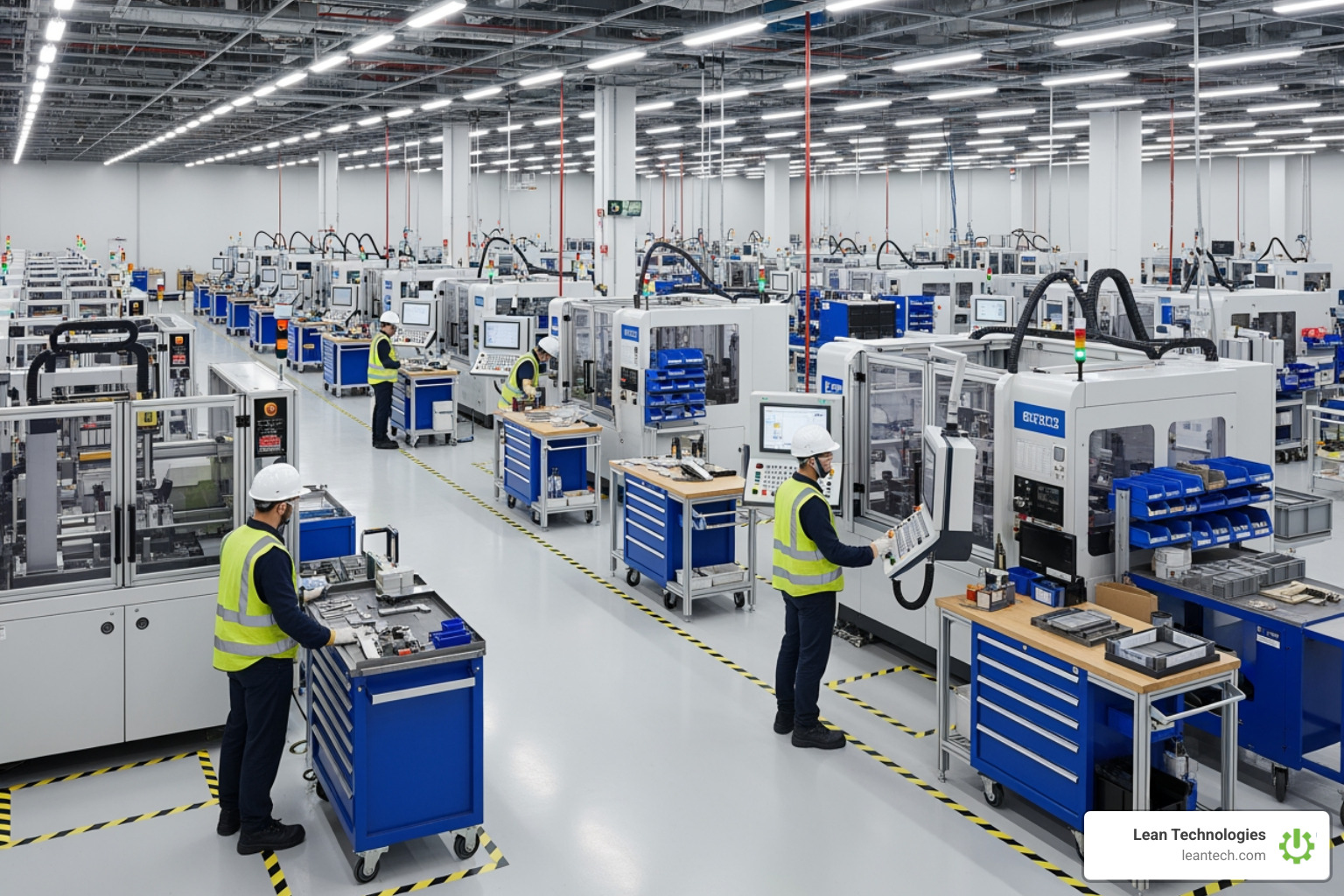
Why Every Shop Floor Needs a Safety Management System
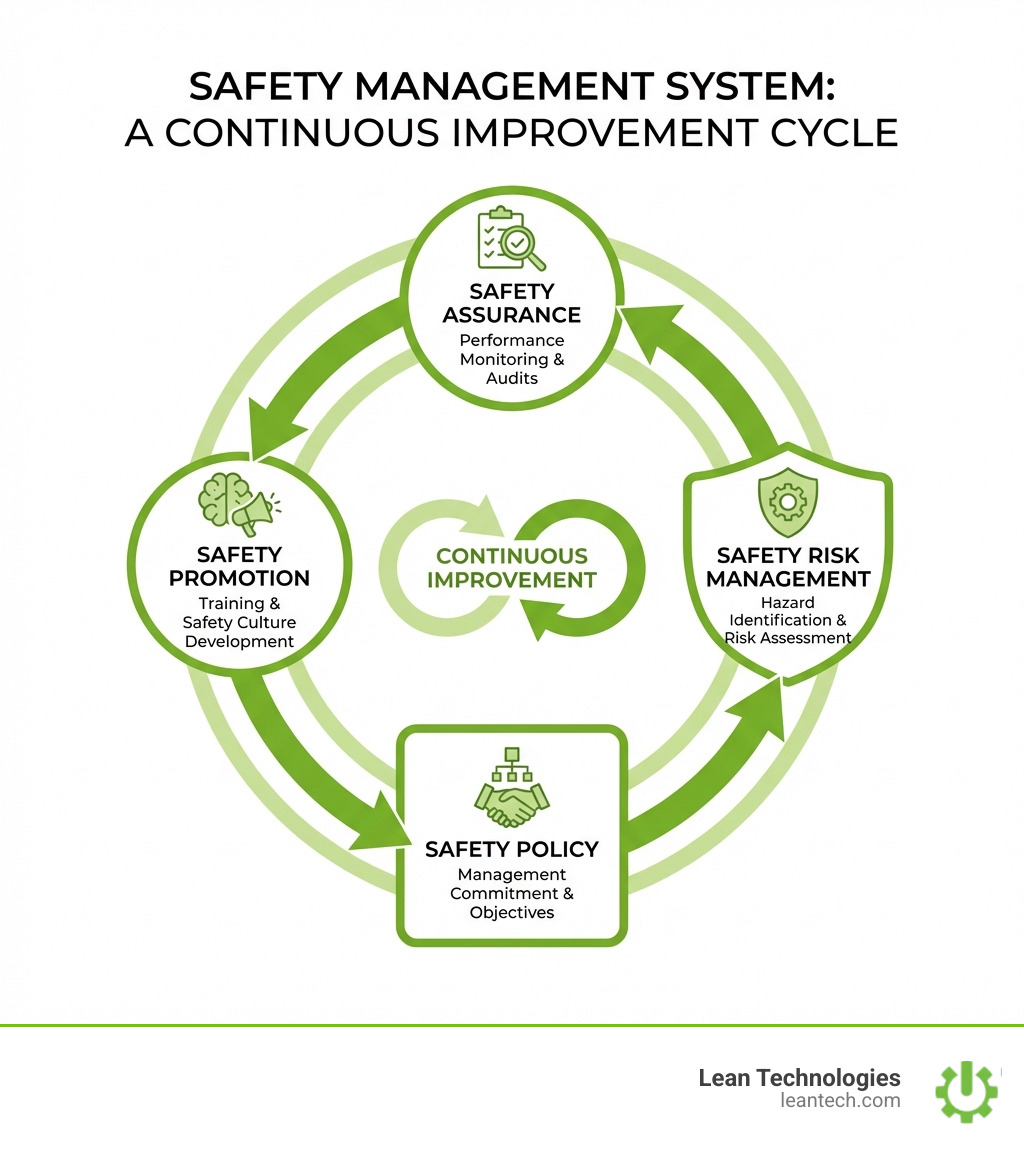
A safety management system (SMS) is a structured, organization-wide approach to identifying hazards and managing risks. It isn't just a compliance checklist; it's a business method that integrates safety into daily operations and company culture.
Key elements of an effective SMS include:
Safety Policy – Leadership commitment and clear objectives.
Safety Risk Management – Identifying hazards and implementing controls.
Safety Assurance – Monitoring performance and investigating incidents.
Safety Promotion – Training and building a positive safety culture.
In 2023, a worker died every 99 minutes from a work-related injury in the U.S. That’s 5,283 families impacted because a hazard wasn't identified or a control failed. For operations managers, this is a massive financial issue. The average workplace injury costs over $100,000 when factoring in downtime, legal fees, and insurance premiums. Indirect costs often dwarf direct costs, hitting your bottom line in ways that don't show up on incident reports.
Most shops still manage safety through paper logs and scattered spreadsheets. When a near-miss happens on the second shift, it gets scribbled on a form that sits in a drawer. That’s safety theater, not management.
A real SMS doesn't wait for accidents. It systematically identifies risks before they become injuries, gives operators a voice to report hazards without fear, and creates accountability loops. When implemented correctly, safety becomes part of how work gets done—not an extra burden.
What is a Safety Management System?
A safety management system (SMS) is a documented, business-like approach to safety. It’s a systematic way to continuously identify hazards and control risks while ensuring those controls actually work. It moves safety from reactive to proactive.
Historically, safety evolved from basic legislative responses to gross negligence into sophisticated systems that integrate safety into every fiber of an organization. The core purpose is to provide a structured method for managing operational risks, demonstrating corporate due diligence, and reinforcing safety culture.
There are three imperatives for adopting a robust SMS:
Ethical: Every employer has a moral obligation to ensure a safe workplace. No one should be injured by preventable hazards.
Legal: Regulations like OSHA’s General Duty Clause require workplaces to be free of recognized hazards. An SMS fulfills this obligation systematically.
Financial: Accidents are expensive. Beyond medical care, you face lost productivity, damaged equipment, regulatory fines, and reputational harm. An effective SMS reduces these exposures.
An SMS provides an extra layer of protection to continuously improve safety. For a deeper dive, explore the Safety management system overview.
The Core Components of a Safety Management System
An effective safety management system is a framework built from four interconnected pillars: Safety Policy, Safety Risk Management, Safety Assurance, and Safety Promotion. It shouldn't be an add-on; it must be an integral part of your business administration, scaling with your organization's size and hazards.
For more on how a modern SMS benefits operations, check out our safety services.

Safety Policy: The Foundation
The Safety Policy is a statement of commitment outlining goals, methods, and organizational structure. Top management must be visibly involved. The accountable executive holds ultimate responsibility for safety performance and ensures SMS implementation. Read more about demonstrating commitment daily.
Key elements include measurable safety objectives, clear accountability for all employees, and a non-punitive reporting system that encourages workers to flag hazards without fear of reprisal.
Safety Risk Management (SRM)
Safety Risk Management is where you systematically identify what could go wrong. It involves:
Hazard Identification: Spotting conditions like unguarded machinery or chemical spills.
Risk Analysis: Assessing the severity and likelihood of a hazard's effect.
Risk Assessment: Using a risk matrix to prioritize which risks need immediate attention.
Risk Control: Implementing the hierarchy of controls: Elimination, Substitution, Engineering Controls, Administrative Controls, and PPE.
SRM should be proactive, applied when implementing new systems or revising procedures. Refer to FAA SMS guidance for high-risk environment details.
Safety Assurance and Promotion
Safety Assurance (SA) monitors risk controls to ensure they work. Key functions include performance monitoring, internal audits, and incident investigations to find root causes. When controls fail, SA feeds back into SRM for re-evaluation.
Safety Promotion fosters a positive safety culture. It ensures everyone understands their role through:
Training and Education: Equipping employees with hazard identification skills. OSHA provides resources for education and training.
Communication Loops: Sharing lessons learned and performance updates.
Knowledge Sharing: Valuing and exchanging safety insights among team members.
Why Your Shop Floor Needs a Modern SMS
For too long, safety on the shop floor has been viewed as a necessary evil, a compliance burden, or something that HR handles. But the truth is, a modern, effective safety management system is a strategic asset. It's about protecting your people, your profits, and your future.
Here’s why your manufacturing operation can't afford to be without one:
Beyond Compliance, It's the Heartbeat of Operations: As the intro highlighted, preventing incidents isn’t just a legal requirement—it’s the heartbeat of a healthy operation. It means you're proactively addressing issues, not just reacting to them.
Massive Cost Savings (Direct & Indirect): We already touched on the average workplace injury costing over $100,000. These costs include direct expenses like medical treatment and workers' compensation, but the indirect costs are often far greater. Think about lost productivity from downtime, damaged equipment, legal fees, regulatory fines, increased insurance premiums, and the intangible cost of a damaged brand reputation. An effective SMS significantly reduces these financial hits.
Competitive Advantage & Talent Retention: Everyone deserves to go home safely after work every day. Workplace accidents damage employees’ trust and hurt your company’s ability to attract and keep top talent. A strong safety record and culture become a powerful recruiting tool. It also leads to stronger morale and higher productivity because employees feel valued and secure.
Reducing Downtime and Improving Efficiency: Many safety incidents cause operational disruptions. When equipment breaks down due to a preventable hazard, or a process needs to stop because of an injury, your production grinds to a halt. A robust SMS, especially when integrated with proactive maintenance strategies, minimizes unexpected equipment failures and prevents incidents that lead to costly downtime.
Lower Insurance Premiums: Insurers look favorably upon companies with proven, systematic approaches to safety. Fewer incidents mean lower risk, which can translate directly into reduced insurance costs.
Improved Brand Reputation: In today's transparent world, safety incidents can quickly become public knowledge. A strong commitment to safety protects your brand, builds trust with customers and the community, and demonstrates responsible corporate citizenship.
Streamlined Regulatory Compliance: While an SMS goes beyond mere compliance, it makes meeting regulatory obligations much easier. With structured processes, clear documentation, and continuous monitoring, you're always ready for an audit, reducing stress and potential penalties.
For a deeper dive into creating a safe work environment, listen to this Safe Work Environments podcast. An effective safety management system isn't just an expense; it's an investment that pays dividends in human well-being, operational efficiency, and financial health.
Implementing an SMS Using the PDCA Cycle
Implementing a safety management system follows the Plan-Do-Check-Act (PDCA) cycle, a simple approach to continuous improvement that works on real shop floors.
Plan: Laying the Groundwork
Define what "good" looks like and how the team will get there:
Gap Analysis: Compare current practices against standards like ISO 45001.
Baseline Data: Gather data on past incidents and near-misses.
Set Objectives: Define measurable goals aligned with your Safety Policy.
Action Planning: Outline responsibilities and timelines for new procedures.
Do: Putting the Plan into Action
Execute what was planned with clear ownership:
Implement Controls: Put new LOTO protocols or PPE requirements into practice.
Training: Conduct comprehensive training for all employees on their roles.
Communicate: Ensure everyone understands the purpose of the changes.
Check: Monitoring Performance
Verify the system is working in the real world, not just on paper:
Monitor KPIs: Track if incidents are decreasing and hazard reports are increasing.
Internal Audits: Verify that procedures are being followed.
Incident Investigation: Analyze near-misses to prevent recurrence.
Act: Continuous Improvement
Close the loop and make improvements stick:
Corrective Actions: Fix identified problems and prevent recurrence.
Standardize: If a control works, standardize it across the organization.
Management Review: Senior leadership should periodically review SMS performance.
Standards like ISO 45001:2018 and ICAO guidelines provide frameworks that improve safety, productivity, and morale.
Digitizing Safety: Moving Beyond Paper
Traditional safety management, paper checklists, binders, and scattered spreadsheets is where good intentions go to die. It is reactive and slow. If someone writes up a near-miss and it gets keyed in on Friday, it is already too late.
Digitizing your safety management system is how you get real-time visibility and real accountability. Platforms like Thrive help teams capture issues at the source and drive action to closure (without trying to replace your ERP or MES).
Real-Time Visibility: Log a hazard or near-miss the moment it happens, right from the line.
Mobile-First Systems: Operators can flag concerns with photos and pull up digital SOPs fast, without hunting for the latest revision.
Centralized Knowledge: One place for SOPs, SDS, training records, and corrective actions, so audits do not turn into scavenger hunts.
Action Tracking and Accountability: Assign owners, due dates, and verification steps so corrective actions do not stall out.
Digital Audit Trails: Automatic history of who did what and when, which simplifies reporting and strengthens compliance.
Digitizing your safety management system empowers the team to manage risk proactively and close the loop on improvements. For more, see our guide to digital lean manufacturing.
Frequently Asked Questions about Safety Management Systems
How do I determine if my organization needs an SMS?
If you have employees and machinery, you need a safety management system. It’s foundational for ethical operations and financial stability. If your incident rates, insurance premiums, or employee turnover are high, an SMS provides the structure needed to improve.
What are the most common challenges in SMS implementation?
Lack of Commitment: Leadership must allocate resources and make safety non-negotiable.
Resistance to Change: Overcome this with non-punitive reporting and strong safety promotion.
Complexity: Avoid excessive paperwork; the goal is efficiency.
Data Management: Use digital platforms to move beyond scattered spreadsheets.
How does an SMS integrate with other business practices?
An SMS shouldn't be a silo; it integrates with:
Quality Management: Safe practices often ensure product integrity.
Maintenance Management: Proactive maintenance prevents equipment failures that lead to incidents.
Human Resources: HR manages the training and accountability frameworks defined by the SMS.
Operations: Safety reduces downtime and ensures consistent production.
Integrating your SMS ensures all occupational risks are viewed holistically, leading to better prioritization.
In Summary
In the demanding world of manufacturing, a robust safety management system is no longer optional—it's essential. It’s the blueprint for a safer, more productive, and more profitable workplace. Moving beyond outdated paper-based systems and reactive approaches, a modern SMS integrates safety into every aspect of your operations, empowering your team to identify and mitigate risks proactively.
Lean Technologies offers Thrive, an all-in-one, customizable shopfloor software for manufacturing, developed by manufacturing experts to streamline operations, boost productivity, and improve profit through a cohesive, integrated platform. Thrive helps manufacturing teams digitize lean work processes in real time—without replacing ERPs or MES systems. It provides the structured, real-time data entry capabilities that eliminate paper workarounds and ensures that safety-related actions are tracked, completed, and contribute to continuous improvement. It's about closing the loop on CI.
Don't let your safety efforts be an afterthought. Stop managing your shop floor through spreadsheets and wishful thinking and accept a comprehensive safety management system that protects your people and your bottom line.