
The Best Safety Performance Metrics to Watch Right Now
Introduction: Stop Reacting, Start Preventing
Why Reacting to Incidents Is Already Too Late
A safety observation system is a structured process for identifying, recording, and acting on safe and unsafe behaviors and conditions in the workplace -- before they cause harm.
Here's what you need to know at a glance:
What It Does Why It Matters Captures safe and unsafe behaviors in real time Stops incidents before they happen Tracks trends across crews, shifts, and sites Reveals patterns invisible in incident reports Links observations to corrective actions (CAPA) Closes the loop on every identified risk Supports behavior-based safety (BBS) programs Builds a culture where safety is everyone's job Replaces paper checklists with mobile-first tools Faster reporting, better data, higher participation
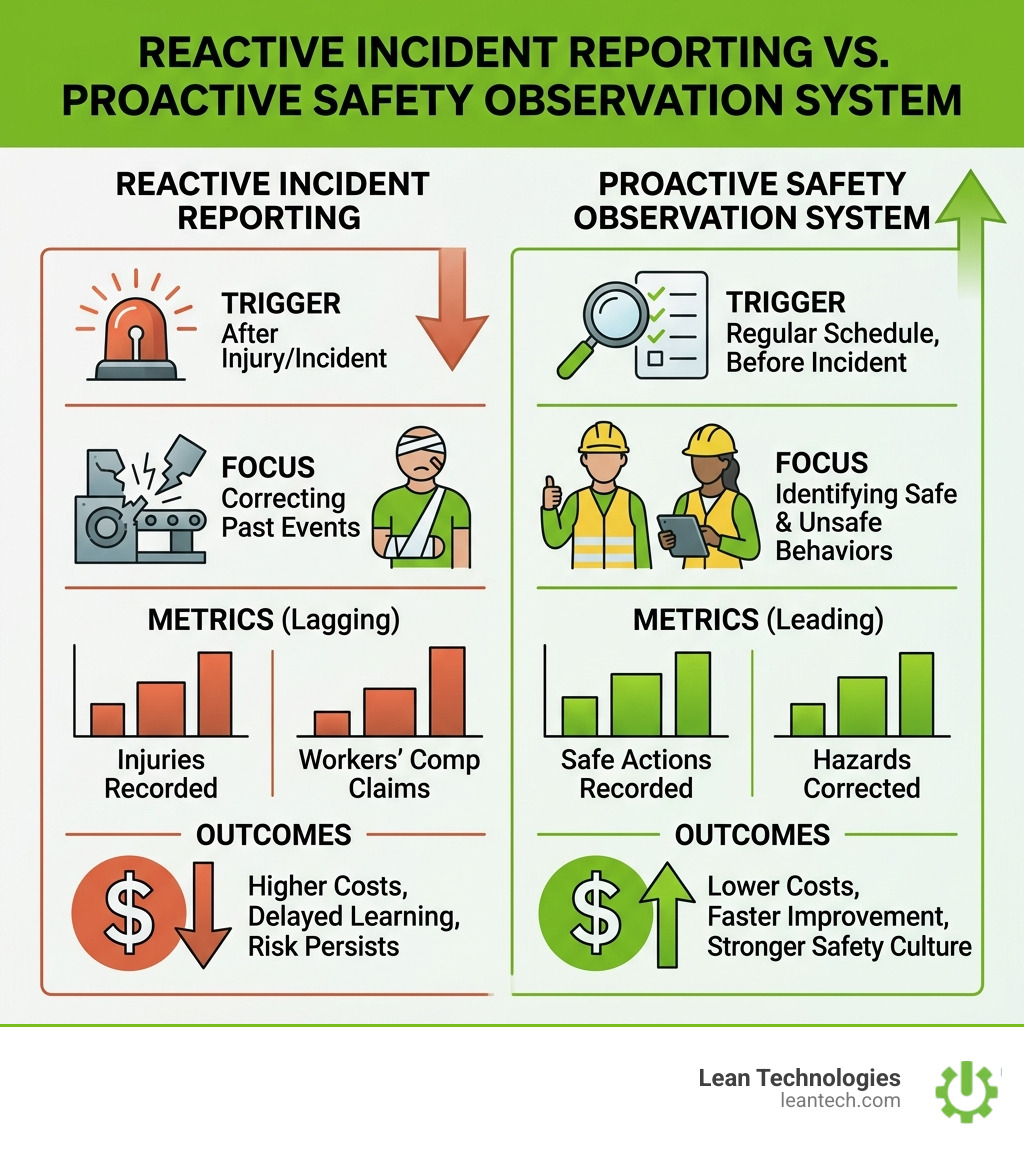
Most safety programs are built around lagging indicators -- injury rates, incident reports, workers' comp claims. The problem? By the time that data exists, someone has already been hurt.
The real opportunity is upstream. A proactive safety observation system gives your team a way to spot and fix hazards before they escalate into near misses or recordable incidents. According to the Liberty Mutual 2019 Workplace Safety Index, workplace injuries cost U.S. companies more than $1 billion every single week. That number doesn't shrink by reacting faster -- it shrinks by preventing incidents in the first place.
For operations managers juggling production targets, compliance requirements, and a team that's already stretched thin, this shift from reactive to proactive isn't just a safety win. It's a business one.
Why a Safety Observation System is Your Best Leading Indicator

If you only look at your incident rate, you're driving a car by looking through the rearview mirror. You see where you've been, but you have no idea what's in front of you. A safety observation system flips that script. It serves as a leading indicator -- a piece of data that predicts future performance.
By conducting a Risk Assessment, your team identifies the gaps between "how work is supposed to happen" and "how work is actually happening." When an operator logs that a colleague isn't wearing PPE or that a machine guard is loose, they are providing a gift: the chance to fix a problem before it costs a limb or a life.
The financial stakes are massive. Beyond the $1 billion weekly cost estimated by Liberty Mutual, research shows that companies using digital safety tools often see 30% to 96% lower reportable incident rates than industry averages. Moving beyond lagging indicators isn't just about compliance; it's about protecting your most valuable asset -- your people -- while keeping the production line moving.
Top Metrics to Track in Your Safety Observation System
Data is only useful if it’s actionable. If you’re just tallying up observations to hit a monthly quota, you’re missing the point. You need to track metrics that tell a story about your shop floor culture.
Key metrics include:
Safe vs. Unsafe Ratios: This is the pulse of your plant. A healthy system tracks both. Only tracking "unsafe" acts creates a culture of "gotcha" safety. Tracking "safe" acts reinforces good habits.
Severity Levels: Not all observations are equal. A trip hazard in a high-traffic forklift zone is more critical than a slightly messy workbench. Categorizing by severity helps managers prioritize Safety Audits and resources.
Observation Frequency: Are observations happening daily, or just right before a corporate visit? Consistency is key.
Participation by Department: If the welding shop has zero observations but the assembly line has fifty, you either have a perfect welding shop (unlikely) or a reporting bottleneck.
Manual Paper Tracking Digital Observation Systems Data is days or weeks old Data is instant (Real-Time) Hard to spot trends across shifts Automated dashboards show trends Paper gets lost or becomes unreadable Photos and videos provide clear context No accountability for follow-up Automated alerts for corrective actions
Measuring Behavior-Based Safety (BBS) Participation
A safety observation system lives or dies based on safety engagement. Behavior-Based Safety (BBS) focuses on the "why" behind worker actions. To measure this effectively, look at:
Anonymous Reporting Rates: Does your team feel safe reporting issues without fear of reprisal?
Positive Reinforcement Metrics: How often are supervisors recognizing safe behaviors?
Observer Quotas vs. Quality: Shift the focus from "how many" to "how detailed." A report with a photo and a suggested fix is worth ten "everything is fine" checkmarks.
Closing the Loop with CAPA Metrics
Nothing kills a safety culture faster than an operator reporting a hazard and seeing nothing change. Your Corrective and Preventive Action (CAPA) metrics ensure that Accident Investigations and daily observations actually lead to a safer workplace.
Resolution Time: How long does it take from "hazard spotted" to "hazard fixed"?
Open vs. Closed Actions: Track the backlog. If 80% of your safety tasks are "overdue," your team will stop reporting them.
Recurring Issues: If the same unsafe behavior keeps popping up in the same cell, your previous "fix" didn't address the root cause.
How Modern Software Supercharges Safety Observation Data
Paper checklists are where data goes to die. By the time a supervisor types a handwritten note into Excel, the risk has already been present for a full shift. Modern safety observation software changes the game by making the process "frictionless."
Key features to look for include:
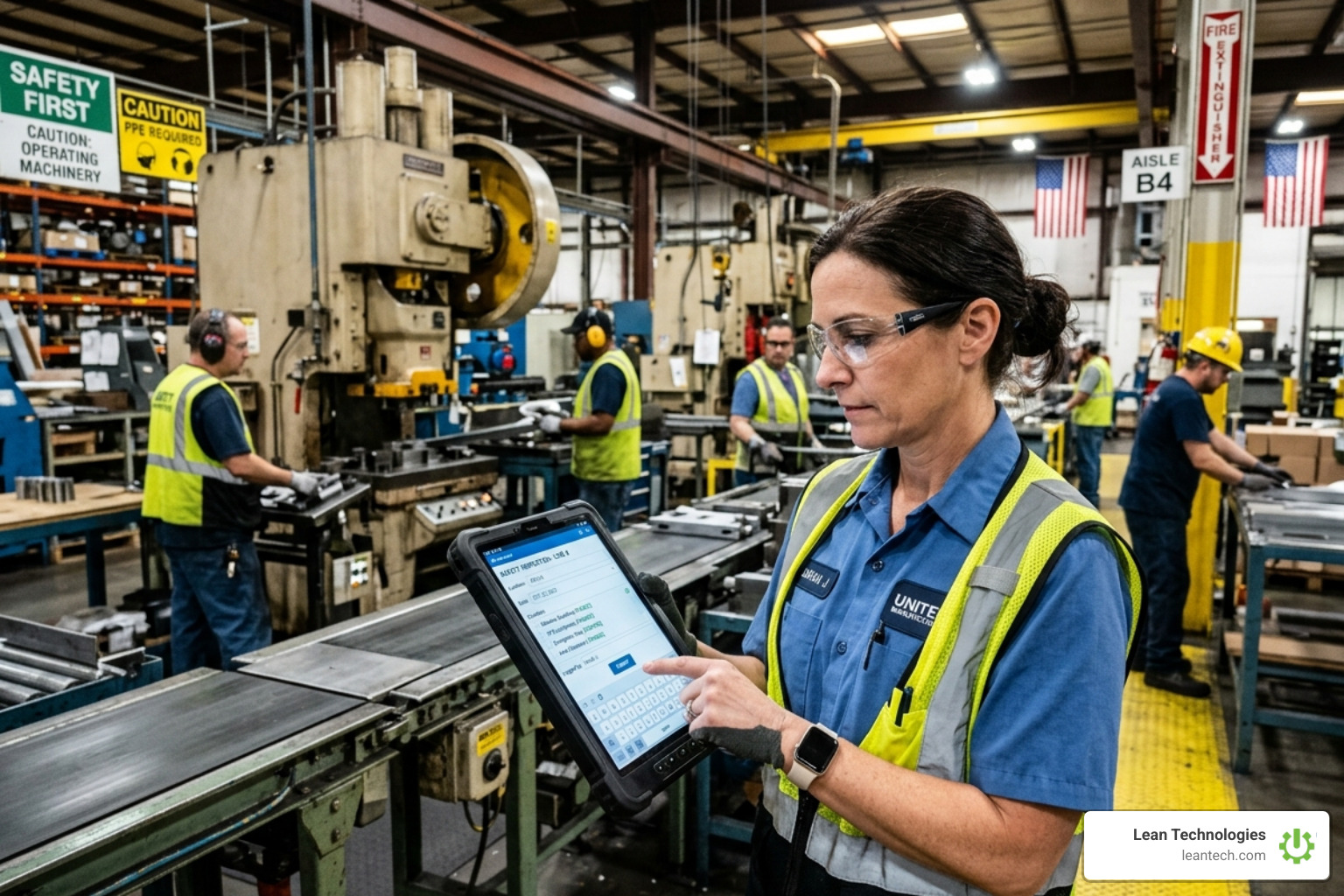
Mobile Accessibility: Operators should be able to snap a photo and log an issue in seconds using a tablet or phone.
Offline Sync: On a large shop floor or in a remote warehouse with spotty Wi-Fi, your app needs to work offline and sync when the signal returns.
Real-Time Alerts: High-severity hazards should trigger immediate emails or text alerts to the safety manager.
Integrated Resources: Imagine an operator spotting a chemical spill and instantly being able to pull up Safety Data Sheets Sds on their device.
AI and Analytics: Future-forward systems are beginning to use AI to analyze video feeds or photo submissions to automatically categorize risks and predict where the next incident might occur.
Best Practices for Effective Safety Observations
To get high-quality data, you need a high-quality process. You can't just hand someone a tablet and say "go observe."
Standardize Your Checklists: Use clear categories like PPE, Housekeeping, and Machine Guarding. This ensures that every observer is looking for the same things.
Focus on the "Unseen": Don't just look for physical hazards. Look for psychosocial factors like stress, fatigue, or rushed work, which often lead to shortcuts.
Provide Immediate Feedback: If a supervisor sees someone doing something right, they should say so on the spot. If they see an unsafe act, it’s a coaching moment, not a disciplinary one.
Establish Facts: Use photos and physical evidence. "The guard is broken" is okay; a photo of the cracked weld on the guard is better.
Integrating a Safety Observation System into Daily Workflows
Safety shouldn't be a "special event" that happens once a month. It needs to be part of the shop floor DNA.
Toolbox Talks: Use the data from yesterday’s observations to drive today’s morning meeting. "Yesterday, we saw three instances of improper ladder use—let's review the right way to do it."
Operator Ownership: When operators log their own observations, they take ownership of their workspace.
Real-Time Visibility: Display safety dashboards on large screens in the breakroom or on the shop floor. When the team sees the "Days Since Last Incident" and the "Number of Hazards Fixed" side-by-side, they see the value of their efforts.
Frequently Asked Questions about Safety Observations
What is the difference between a safety observation and a near miss?
A safety observation is proactive—it documents a condition or behavior before anything happens (e.g., seeing a worker without safety glasses). A near miss is an event where an accident almost happened (e.g., a tool fell from a height and narrowly missed a worker). Observations are the most proactive form of data because they catch the risk before it even becomes a "close call."
How frequently should safety observations be conducted for maximum effectiveness?
Consistency beats intensity. While formal Safety Audits might happen monthly, "one-off" safety observations should happen daily. High-risk industries like construction or heavy manufacturing benefit from shift-start checks and continuous "at-the-moment" reporting.
How can organizations encourage employee participation in safety observations?
The best way is to make it easy and show results. Use mobile tools that don't require complex logins. Support anonymous reporting to remove the fear of "snitching." Most importantly, show the team that their reports lead to real changes. When a worker reports a broken light and it’s fixed by the next day, they are much more likely to report the next issue they see.
What to do next: Elevate Your Safety Performance
Stop managing your shop floor through spreadsheets and wishful thinking. Real-time visibility beats real-late data every single time. If you’re tired of chasing paper trails and want to start preventing incidents before they hit your bottom line, it’s time to digitize.
Lean Technologies offers Thrive, an all-in-one, customizable shopfloor software designed by manufacturing experts. Thrive helps you move beyond basic checklists to a fully integrated safety observation system that connects your operators, supervisors, and safety managers in real time.
Ready to transform your safety program from reactive to proactive? More info about safety services is just a click away. Discover how Thrive helps you achieve real-time visibility and drive continuous improvement on your shop floor today.