

Intelligent Operations: A Deep Dive into Smart Manufacturing Platforms
Your Shop Floor Is Drowning in Paper. Here's the Fix.
Stop fighting fires with spreadsheets and sticky notes.
Real-time data beats "catch-up" every time.
If your team is still logging downtime on clipboards, tracking quality issues in Excel, or hunting down supervisors for approvals, you're not just behind—you're bleeding profit.
A Smart manufacturing platform is a digital toolbox that connects people and processes on the shop floor.
No sensors. No AI predictions. Just structured workflows that turn chaos into control.
Here's what it does for you:
Kills paper-based processes (and the errors that come with them)
Delivers real-time visibility (when operators enter data at the source)
Automates workflows (no more chasing signatures)
Works with your existing systems (we're not replacing your ERP)
Drives measurable ROI (less downtime, fewer defects, faster fixes)
Thrive gives you control, not chaos.
We're not about fancy sensors or million-dollar software projects.
We're about getting your operators to capture what matters—when it matters—so you can see problems before they snowball.
When data flows in real time from the shop floor to your dashboard, you stop guessing and start fixing.
No more end-of-shift reports that tell you what went wrong hours ago.
No more tribal knowledge that walks out the door when someone quits.
Just clear, structured data that helps your team make better decisions faster.
I'm Jamie Gyolai, Vice President at Lean Technologies.
I've spent over 20 years on the shop floor and in operations leadership roles—from assembly line manager to continuous improvement champion.
I've seen how the right Smart manufacturing platform can transform reactive firefighting into proactive problem-solving, and I'm here to show you exactly how it works.
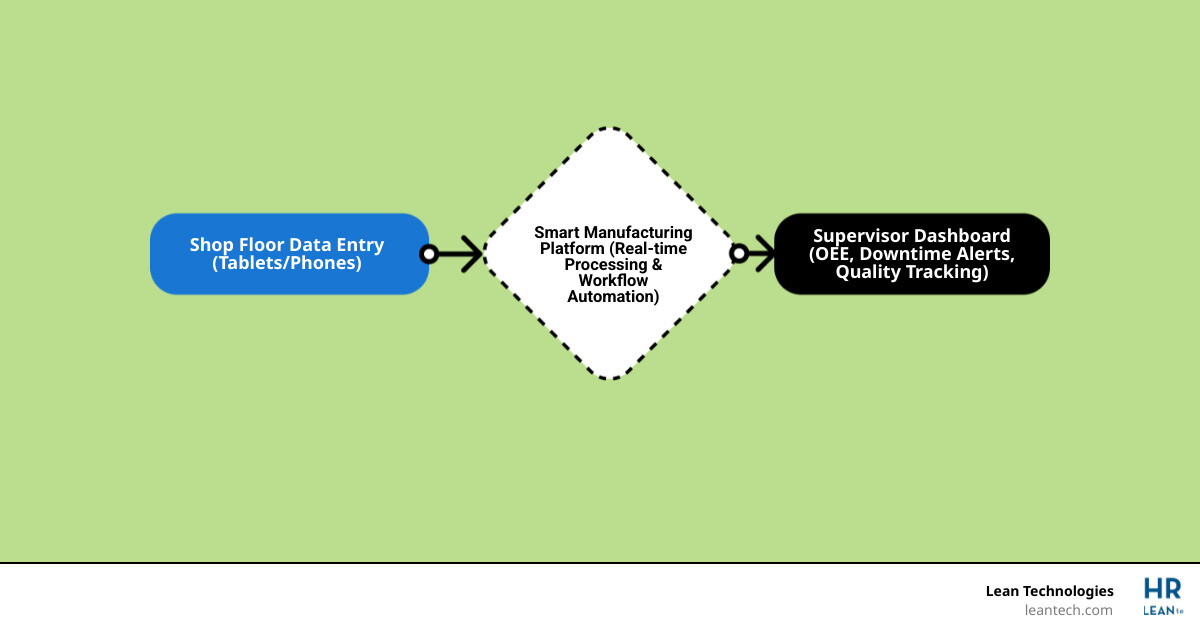
What a Smart Manufacturing Platform Actually Is (And What It Isn't)
Let's cut to the chase.
When we talk about a Smart manufacturing platform, we're not talking about another complex, expensive enterprise system that takes years to implement.
Not an ERP. Not an MES. Not a sensor network.
We're talking about a digital toolbox for your team—built for the shop floor, not the back office.
It's about empowering your operators and supervisors with the right information, at the right time, to make faster, smarter decisions.
Thrive connects people and processes—without forcing you to rip out what works.
It's the engine for your "Factory of the Future"—but you can start today, not next year.
Data-driven decisions, in real time. But only when your team enters it at the source.
This isn't magic.
It's practical.
At its core, it's about structured data collection and workflow automation.
This improves production efficiency and product quality.
Core Components and Capabilities
A robust Smart manufacturing platform isn't just one thing.
It's a collection of integrated capabilities designed to streamline your operations.
Here's what makes up the brain and brawn of such a system:
Data Contextualization (turns raw info into real insights) Raw data from manual input is just noise until it's given context. Thrive takes this fragmented data—what happened, where, and why—and transforms it into meaningful, actionable insights. It helps eliminate knowledge silos and opens up the power of data across your operations.
Workflow Automation (no more chasing signatures) This is where manual, paper-based processes get a much-needed upgrade. The platform automates routine tasks, approvals, and escalations. For example, an operator logs a machine fault on a tablet, which automatically triggers a maintenance work order and notifies the right people.
Analytics & Reporting (see what's working, fix what's not) Real-time data feeds into customizable dashboards and out-of-the-box reports. This allows you to drive continuous improvement at scale. You can compare machines, shifts, and part operations to understand performance drivers, find hidden capacity, and identify bottlenecks.
Simple, Operator-First Interface (mobile/tablet/desktop) This is crucial. A platform is only as good as its adoption rate on the shop floor. It needs to be intuitive and easy for operators to use on their preferred devices. If it's complicated, it won't get used.
Connects with what you already have (no rip-and-replace) Thrive is designed to integrate seamlessly with your current factory systems. It works alongside existing ERPs, MES, and SCADA systems, pulling in necessary data and pushing out results. This means you leverage your existing investments without a costly overhaul.
Want to see how we help with quality? More info about Thrive Quality
The Goal: Creating the 'Factory of the Future'
The ultimate ambition of a Smart manufacturing platform is to help you realize the 'Factory of the Future'.
This isn't some far-off sci-fi concept.
It's happening now.
It's about moving from reactive to proactive, from isolated to integrated.
Digital Change (ditch the paper) The first step is often simply digitizing your lean work processes. Replacing paper logs and spreadsheets with real-time digital entry. This alone can provide a huge reduction in paperwork.
Agile Operations (adapt fast) A smart factory is agile and efficient. It allows for quick adjustments based on real-time data, enabling you to optimize production on the fly. This means you can turn variability into agility.
Real-Time Visibility (see issues as they happen—when entered) Imagine knowing about a machine issue the moment an operator logs it, not hours later. This end-to-end visibility across the value chain is critical for proactive problem-solving. It allows you to identify bottlenecks, spot trends, and optimize the entire production process.
Connected Workforce (everyone on the same page) Thrive creates a cohesive environment where every aspect of the product lifecycle is interconnected and accessible. It connects people, operations, and supply chain, fostering better collaboration. Everyone, from operators to executives, sees the same facts.
Ready to digitize your lean processes? More info about digital lean manufacturing
The Tech That Makes It All Work
This isn't just "software."
It's a platform built for the realities of your plant.
It's designed to connect your people and processes into a single, cohesive workflow.
The goal isn't to add complexity with new sensors or AI projects.
It's to make the data your team captures useful.
Cloud, edge, or hybrid—deploy it your way.
Deployment flexibility is key.
You can run the platform in the Cloud for faster, simplified deployments.
Or, you can use Edge computing for reliable operations even with intermittent connectivity.
Some platforms offer a hybrid approach, combining the best of both worlds.

Integrating with Your Existing Factory Stack
One of the biggest concerns for manufacturers is the disruption caused by new technology.
We get it.
That's why Thrive is designed to be a complement, not a replacement.
Integration with your current systems (pull in orders, push out results) Thrive integrates seamlessly with your existing ERPs, MES, and PLCs. It can pull in production schedules and push out real-time performance data, ensuring you don't have to overhaul your entire IT infrastructure.
Works alongside your existing tools (no disruption) The goal is to improve, not disrupt. Thrive is designed to work alongside your current systems, often connecting via APIs. This allows you to leverage your investment in legacy systems while gaining new capabilities.
Simple APIs (connect what matters) Modern platforms use open standards and secure APIs for seamless integration. This allows for limitless connectivity and contextualization of data. It means you can connect what truly matters for your operations.
Thrive works with your current systems—no need to start from scratch.
The Power of a 'Digital Thread'
Imagine a single, connected data stream that flows through every aspect of your manufacturing process.
That's the power of a 'digital thread'.
It's about creating a unified source of truth.
Data Unification (one source of truth) A digital thread binds people, operations, and supply chain together. It means all relevant data, from design to delivery, is accessible and consistent. This eliminates inconsistencies and ensures everyone is working from the same information.
OT/IT Data (operators and managers see the same facts) This thread bridges the gap between Operational Technology (OT) on the shop floor and Information Technology (IT) in the back office. It contextualizes manufacturing data, turning raw numbers into actionable insights for both operators and managers.
No more data silos—just actionable info, everywhere you need it.
This continuous flow of data is what enables data-driven decision-making across the entire value chain.
Want to learn more about connecting your value chain? Watch: How digital lean connects your value chain
The Real-World Payoff: Solving Shop Floor Problems
A platform is only as good as the problems it solves.
If it doesn't make your life easier or your operations more profitable, what's the point?
Thrive attacks your biggest headaches: downtime, quality escapes, and missing accountability.
We're talking about the tangible, measurable improvements that impact your bottom line.
Turns raw data into action—so you can boost your bottom line.
When you move from paper to a digital platform, you start seeing immediate benefits.
You're no longer reacting to problems that happened hours ago.
You're getting ahead of them.
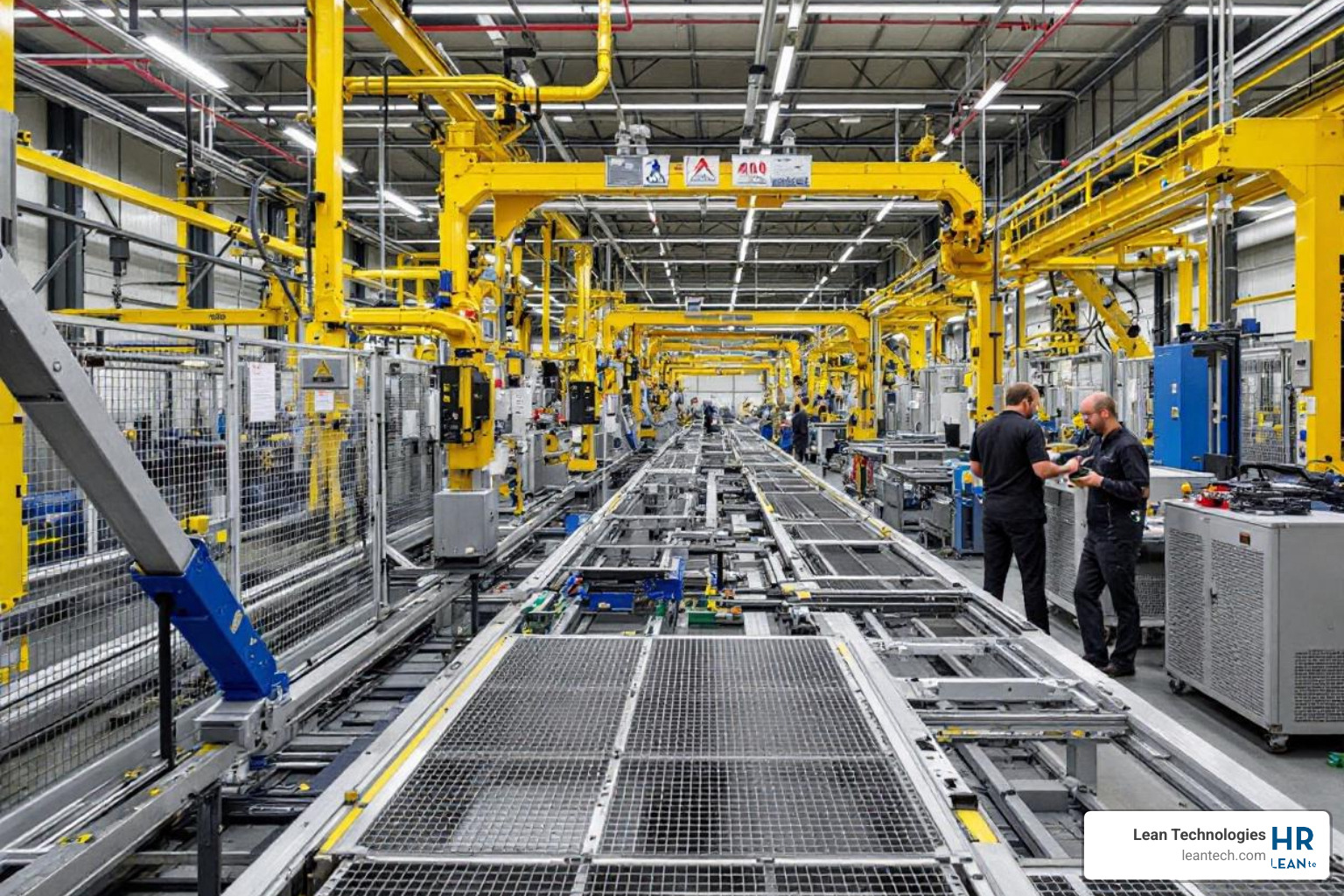
Key Benefits of a Smart Manufacturing Platform
The statistics speak for themselves.
Companies implementing a Smart manufacturing platform are seeing significant improvements across the board.
Reduced Downtime (20–30% less) Unplanned downtime is a killer for productivity. By capturing downtime reasons in real time (when operators log them), you can identify root causes faster. This enables smarter preventive maintenance and quicker responses, helping you get ahead of breakdowns before they take a line down.
Lower Maintenance Costs (10–20% savings) By shifting from reactive to proactive maintenance, you save money. Structured workflows and better data help you service equipment based on actual needs, not just a generic schedule. This can lead to a 10-20% reduction in maintenance costs.
Improved Quality (fewer escapes, less scrap) Real-time monitoring of quality checks and issues improves control. When operators can log defects instantly, you can contain problems before they multiply. This leads to a significant reduction in the cost of quality.
Increased Productivity (15%+) By streamlining workflows, reducing downtime, and providing real-time insights, platforms directly boost productivity. With less time spent on paperwork and chasing information, teams can focus on value-added work.
Higher OEE (up to 25% boost) Overall Equipment Effectiveness (OEE) is a critical metric. By giving you accurate data on availability, performance, and quality (when entered at the source), a platform helps you optimize setups, reduce changeovers, and increase asset uptime.
Want a deeper dive into how these metrics are commonly tracked in industry? See the overview of Overall equipment effectiveness.
How Platforms Support Sustainable Manufacturing
Beyond efficiency and cost savings, a Smart manufacturing platform plays a crucial role in building sustainable practices.
It's about doing good for the planet while doing good for your business.
Energy Efficiency (track and cut waste) By tracking machine states like idle time or downtime (when logged by operators), you can identify opportunities to reduce energy consumption. Better visibility helps you spot issues like air leaks or machinery left running unnecessarily.
Waste Reduction (spot problems early) By improving quality control and optimizing processes, platforms help reduce scrap and rework. When you can see and solve problems faster, you use fewer materials and generate less waste.
Resource Optimization (do more with less) Better visibility into production needs leads to more efficient use of materials and other resources. This helps achieve sustainability goals with comprehensive tracking.
Digital records for compliance and safety audits Moving from paper to digital records streamlines compliance and safety audits. It ensures everyone follows the right procedures, reducing risk. Platforms like Thrive help digitize operations to enforce safety guidelines and compliance standards.
Ensure your team is always safe and compliant. More info about safety
How to Make a Smart Manufacturing Platform Work for You
Getting started with a Smart manufacturing platform doesn’t have to be overwhelming.
Getting started is easier than you think.
It’s not about boiling the ocean.
It’s about identifying your biggest pain points and tackling them strategically.
Pick your biggest pain point.
Define your goals, measure what matters, and build a culture of data ownership.
When your entire team is aligned and understands the value of real-time data, that's when the magic happens.
Measuring Success and Calculating ROI
To truly make a Smart manufacturing platform work for you, you need to prove its value.
This means establishing clear metrics and tracking them diligently.
Key Performance Indicators (KPIs) Identify the KPIs that directly relate to your pain points. This could be OEE, cycle time, defect rates, or maintenance costs.
Overall Equipment Effectiveness (OEE) As we mentioned, OEE is a prime indicator. Tracking improvements here directly reflects better availability, performance, and quality.
Cost of Quality Measure the reduction in scrap, rework, and warranty claims. This directly impacts your profitability.
Man-Hour Productivity See how much more your team can achieve with the same resources, thanks to streamlined workflows and fewer disruptions.
Track these to prove value and win buy-in.
When you have hard data showing significant improvements, it’s much easier to scale your digital change efforts.
Effective project management is key to successful implementation. More info about project management
Security and Future-Proofing Your Operations
In today’s connected world, security is paramount.
A Smart manufacturing platform handles sensitive operational data, so it must be built with robust security from the ground up.
Data Encryption All data, both in transit and at rest, should be encrypted using industry-standard protocols to protect your valuable information.
User Access Control Implement user and role-based access controls. This ensures that only authorized personnel can access specific data and functionalities.
Zero Trust Architecture Some leading platforms adopt a Zero Trust architecture, which means no user or device is trusted by default. This provides improved security, often backed by certifications like ISO 27001.
Thrive is built to grow with you—composable, secure, and ready for what’s next.
The future of manufacturing requires platforms that are scalable and can adapt to new challenges and technologies.
A composable architecture means you can start small and add capabilities as you grow, without being locked into a rigid system.
Frequently Asked Questions about Smart Manufacturing Platforms
How is a smart manufacturing platform different from traditional systems?
Traditional systems like an ERP or MES are usually rigid and focused on high-level production control.
They might tell you what did happen, long after the fact.
A Smart manufacturing platform like Thrive is flexible, operator-first, and built for action on the shop floor.
It helps teams log issues, manage workflows, and drive improvement in real time.
It's about proactive problem-solving, not just historical reporting.
It empowers your team to make decisions at the source.
Can I implement a platform without replacing my old machines?
Absolutely.
This is a common misconception.
You don't need to rip out your existing infrastructure or buy all new equipment.
Start by connecting your people and processes.
Operators can enter data on tablets or phones—no new machine sensors are required to get started.
The immediate value comes from digitizing your human-driven processes.
You can then gradually integrate machine data over time if it makes sense for your operations.
What's the first step to getting started?
Don't get stuck in analysis paralysis.
Pick your biggest pain point—downtime, quality, or accountability.
Focus on one area where you know you're losing time or money.
Run a pilot.
Get your team capturing data in real time for that specific process.
Quick wins build momentum and get your team on board.
Measure the results, celebrate the improvements, and then expand.
Does Thrive collect sensor data or predict machine failures?
No.
Thrive doesn't collect sensor data or run predictive machine alerts.
We organize and drive action from machine data—but only if it's entered by your team or imported from other systems.
We're focused on helping your people capture and act on what matters, not adding more sensors to your equipment.
How quickly can we see results?
Fast.
Most teams see improvements within weeks, not months.
When you move from paper to digital, you immediately eliminate lag time in problem-solving.
Real-time visibility means you catch issues before they snowball.
The key is starting small, proving value, then scaling.
In Summary: Stop Firefighting, Start Winning
Managing your shop floor with paper, spreadsheets, and gut feelings is a recipe for missed problems and slow progress.
It means you're always reacting, always playing catch-up.
A Smart manufacturing platform like Thrive gives your team real-time visibility and structured workflows—so you can win, not just react.
It's about empowering your people to solve problems at the source.
Turn tribal knowledge into a repeatable process.
Empower your operators to solve problems on the spot.
Stop letting good data die on a clipboard.
Let your team run lean—with a tool built for the job.
No sensors. No AI predictions. Just structured workflows that turn chaos into control.
Lean Technologies.
Ready to boost your continuous improvement with a Smart manufacturing platform? More info about Thrive CI