
The True Cost Of Poor Documentation In Manufacturing
Why “Good Enough” Documentation Isn’t Good Enough
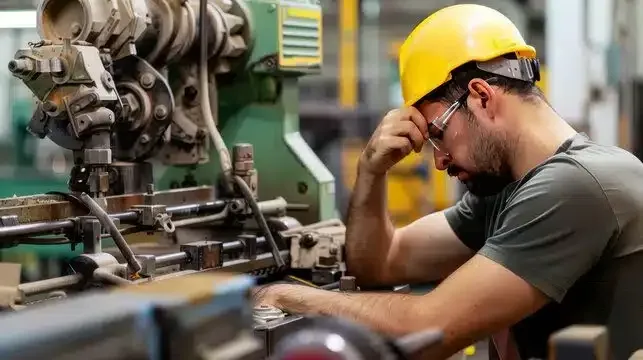
Picture this. A single shift grinds to a halt because one minor piece of equipment fails. The maintenance team rushes out, only to realize there are no clear, current instructions available. Technicians guess, waste time, and escalate the issue. A fix that should have taken fifteen minutes now burns through five hours of downtime. Tens of thousands of dollars vaporized. Morale crushed. Customers unhappy.
This happens every day on shop floors across the country — not because people don’t care, but because the information they need isn’t where they need it, when they need it. Poor documentation in manufacturing isn’t just an annoyance. It’s a silent killer, bleeding profits, eroding quality, and setting up leaders to fail before they even start. Today, let’s rip the cover off this hidden cost and get real about what it’s doing to manufacturers.
The Real Costs That Manufacturers Ignore
Production Downtime That Escalates Fast
One of the most devastating impacts of poor documentation is the way it turns minor problems into full-scale production disasters. When teams can’t find accurate work instructions, maintenance histories, or calibration procedures, every hiccup on the floor becomes a major delay. Lost minutes stack into lost hours, and lost hours destroy production schedules.
Onboarding Costs That Spiral Out of Control
Poor documentation also torpedoes onboarding and training. Instead of learning from clean, step-by-step standards, new employees are forced into a painful scavenger hunt. “Just ask Joe, he’s been here forever,” becomes the de facto training program. The learning curve stretches longer than necessary, and tribal knowledge hardens into brittle habits. When onboarding costs already hit $3,000–$15,000 per worker, this waste becomes impossible to ignore.
Quality Slips, and Customers Notice
Inconsistent or missing documentation creates massive variability in production. Operators on one shift do it one way; the next shift does it differently. Over time, small variations grow into major defects, rework piles up, and customers start complaining — or worse, switching suppliers. Manufacturing lives and dies on consistency, and without solid documentation, consistency is dead on arrival.
Compliance Risks That Can Shut You Down
When documentation fails, regulatory trouble follows. OSHA violations, failed ISO audits, missed IATF requirements — they all tie back to unclear, outdated, or missing documents. Regulatory bodies aren’t sympathetic when paperwork is messy. Instead, they fine you, suspend operations, or both.
Lean and Continuous Improvement Hits a Wall
Continuous improvement sounds great until teams realize they can’t agree on how things are supposed to work today. Without consistent documentation, there’s no reliable baseline. Every kaizen event feels like guesswork. Projects sputter. Leaders burn out. Improvement grinds to a halt.
Why Poor Documentation Happens (And How to Spot It Early)
No Single Source of Truth
Many manufacturers never establish one place where all documentation lives and breathes. Instead, documents are scattered across dusty binders, outdated spreadsheets, random email chains, and personal laptops. Every team thinks their version is right, and nobody can prove otherwise.
Legacy Systems That Create Bottlenecks
Updating documentation inside old-school systems often requires jumping through hoops. A simple change can take weeks to get approved, especially if IT controls access. When the process to update is harder than the work itself, frontline teams naturally start bypassing it.
Lack of Clear Ownership
In a lot of plants, no one truly owns the documentation. Maintenance points in engineering. Engineering points to quality. Quality points at operations. Without clear ownership and accountability, documents rot in place, quietly causing bigger problems day after day.
Disconnect Between IT and Manufacturing
IT focuses on rigidity, security, and system-wide consistency — essential priorities, no question. But manufacturing thrives on flexibility, speed, and point-of-use access. When documentation tools cater to IT’s needs instead of the shop floor’s realities, nobody on the line uses them. Shadow systems and workarounds multiply.
The Financial Reality: How Poor Documentation Destroys Profit
The True Cost Equation
If you want leadership buy-in, speak the language they respect: numbers. Calculating the hidden cost of poor documentation is simple. Add up the downtime hours caused by missing information. Layer in extra training hours because new hires have no clear standards. Include rework, scrap, warranty claims, audit fines, and safety penalties. Then multiply by your loaded labor rate.
A Real-World Example
Take a plant facing just fifty downtime hours per year from documentation gaps, one hundred extra training hours, $75,000 in scrap, and $25,000 in fines. With a loaded labor rate of $50/hour, the real cost easily clears $107,500 annually — and that’s on the conservative side. Multiply that across divisions, facilities, or shifts, and the hidden tax becomes staggering.
Let’s not forget the less visible—but equally damaging—costs tied to poor documentation: throughput loss, customer dissatisfaction, and employee morale. When operators can’t find the right information at the right time, production slows or halts entirely, reducing output and delaying delivery schedules. Customers notice when shipments are late or quality dips, leading to lost trust, churn, and potential revenue loss. Internally, unclear standards and repeated errors frustrate teams, sap motivation, and increase turnover risk. Poor documentation doesn’t just erode profit margins—it weakens the entire foundation of performance, culture, and customer loyalty.
How Thrive Makes Documentation an Asset, Not a Liability
Designed for the Shop Floor, Not the Back Office
Thrive changes the entire equation by focusing on what manufacturing teams actually need: fast, mobile, easy-to-use documentation. Operators, supervisors, and engineers can update documents at the point of use without waiting weeks for IT tickets or formal change requests.
Real-Time Visibility, Real-Time Action
Every user sees the latest approved standard instantly, no matter where they are. When updates happen, they’re tracked automatically. Version histories stay clean and audit-ready. There’s no more guesswork about “which SOP are we using now?”
Empowering the People Who Do the Work
Thrive puts ownership where it belongs — with the people closest to the process. By decentralizing control (without sacrificing visibility), Thrive turns documentation from a painful compliance exercise into a living, breathing part of daily operations. The result is faster improvements, tighter quality, and stronger operational discipline.
Frequently Asked Questions About Documentation Costs
Why Does Poor Documentation Stick Around So Long?
Because fixing it feels overwhelming at first. Leaders know it’s a problem, but often underestimate how deep it runs. Meanwhile, urgent production issues pull focus away from structural fixes like documentation.
How Often Should Documentation Be Reviewed?
Best practice says at least once per quarter. Every time parts, processes, equipment, or materials change, procedures should be updated immediately. Real-time updates should be the goal, not the exception.
Can You Really Manage Documentation Digitally Without Losing Control?
Absolutely. In fact, digital systems like Thrive give you more control, not less. You gain visibility, audit trails, permission structures, and immediate update capability, all without the chaos of fifteen binders and sticky notes.
What’s the Fastest Way to Start Fixing Documentation?
Pick one critical work area. Digitize their SOPs. Train their team. Show quick wins. Once people see the value, momentum builds naturally. Speed matters more than perfection when you’re changing a culture.
Conclusion: Document or Die (Economically Speaking)
Manufacturing is a high-stakes game. The companies that survive and thrive are the ones that eliminate hidden waste, protect consistency, and empower their people. Poor documentation silently erodes all of that — one missed procedure, one costly mistake, one failed audit at a time.
The best manufacturers in the world don’t treat documentation as an afterthought. They treat it like oxygen. It’s what allows every operator, every maintenance tech, every leader to act with confidence. It’s what lets lean systems flourish instead of floundering. It’s what separates the plants that survive recessions and supply chain disruptions from those that crumble under pressure.
If you’re serious about lean, serious about operational excellence, and serious about future-proofing your business, fix your documentation — and fix it fast. Because if you don’t, your competitors will.
If you enjoyed this blog post, then you will surely enjoy our new eBook!
Learn more about shop floor automation and how it can benefit your business.